








Introduction:Explore top-quality Arabica coffee from the Kona region of Hawaii's Big Island. From volcanic soil and microclimates to refined processing methods, this article offers a comprehensive analysis of its unique flavor profile. Not only does it take you into the heart of Kona’s prime coffee-growing areas and historical background, but it also provides a detailed comparison with Jamaica Blue Mountain coffee in terms of altitude, processing methods, and flavor profiles. Additionally, it includes expert roasting recommendations and brewing references to help you find your ideal island-flavored coffee beans.
Although Hawaii is the only coffee-producing region in the United States, it holds a notable place in the global specialty coffee market. Among its offerings, the Arabica coffee produced in the Kona region of the Big Island is renowned for its delicate taste and distinctive flavors, making it a dream bean for many coffee enthusiasts. Aside from Kona, other major Hawaiian islands such as Oahu, Maui, Kauai, and Molokai also grow coffee, but in terms of both yield and international reputation, Kona remains unmatched.
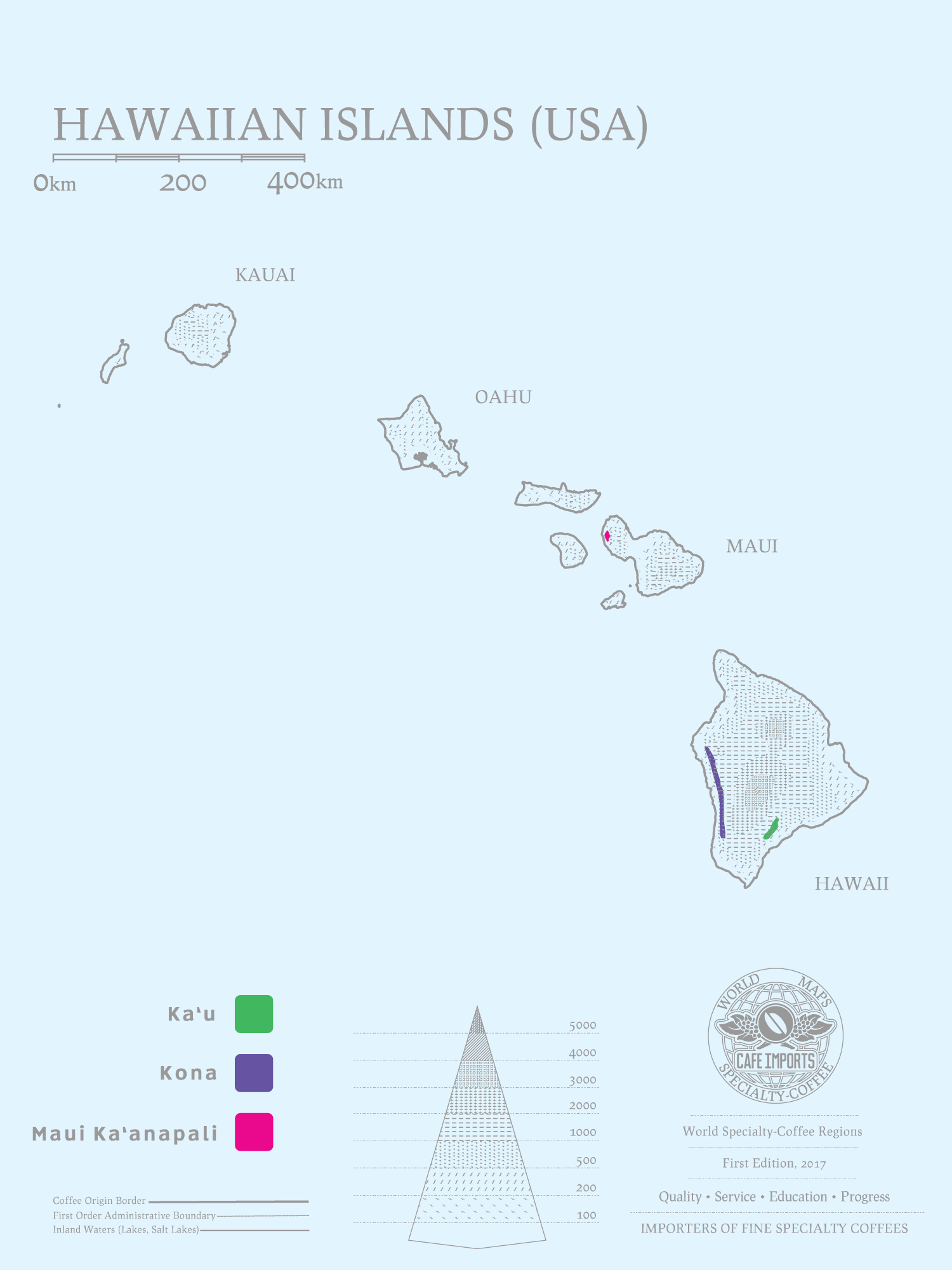
Kona coffee is primarily cultivated on the volcanic slopes of the western and southern parts of the Big Island, at elevations of approximately 800 to 1,100 meters — within the ideal growing range for Arabica coffee. This region enjoys a mild climate, abundant sunshine, frequent afternoon cloud cover, and active trade winds, all of which provide a stable environment for coffee trees. Particularly unique is the local volcanic soil, rich in minerals, which contributes to the coffee beans’ more complex flavor layers.

Kona coffee farming is mostly carried out by family-run operations. The harvest season runs from late August each year through January of the following year. Farmers pick red coffee cherries in batches based on ripeness, then process them via the washed method to remove the pulp and mucilage, ultimately yielding high-quality green beans. It’s worth noting that Kona coffee achieves relatively higher yields per unit area compared to other regions. Statistics show that Kona produces about 2,240 kilograms of coffee beans per hectare, far exceeding the market average.
Among the many farms in the Kona region, Queen Farm stands out for its premium-grade coffee beans and has received high praise. The farm has consistently ranked highly in local benchmark evaluation competitions, with its special grade beans accounting for over 70% of its total yield. These beans are predominantly of the Typica variety and, through the washed processing method, exhibit exceptional cleanliness and unique aromatic characteristics.
In terms of roasting, Kona coffee beans, due to their relatively low density, are recommended to be roasted at a medium-light level to preserve their inherent flavors and delicate balance of acidity and sweetness. A typical roasting curve is suggested as follows: the charge temperature is controlled at 200°C. Once the bean surface turns light yellow and moisture is adequately released, the temperature is gradually increased until the first crack. After the first crack, development is moderately extended, with the final drop temperature around 193.4°C. This approach helps retain the coffee’s fruity aroma, honey-like sweetness, and soft nutty tones.
Brewed Kona coffee often features a sweet main note reminiscent of osmanthus honey. It feels smooth on the palate with distinct layers, accompanied by a light acidity and enchanting mulberry aroma. The aftertaste reveals a malt-like warmth and, even when cooled, retains a gentle fruit-tea flavor. It’s well-suited for drinkers who appreciate balanced mouthfeel and delicate lingering sweetness.
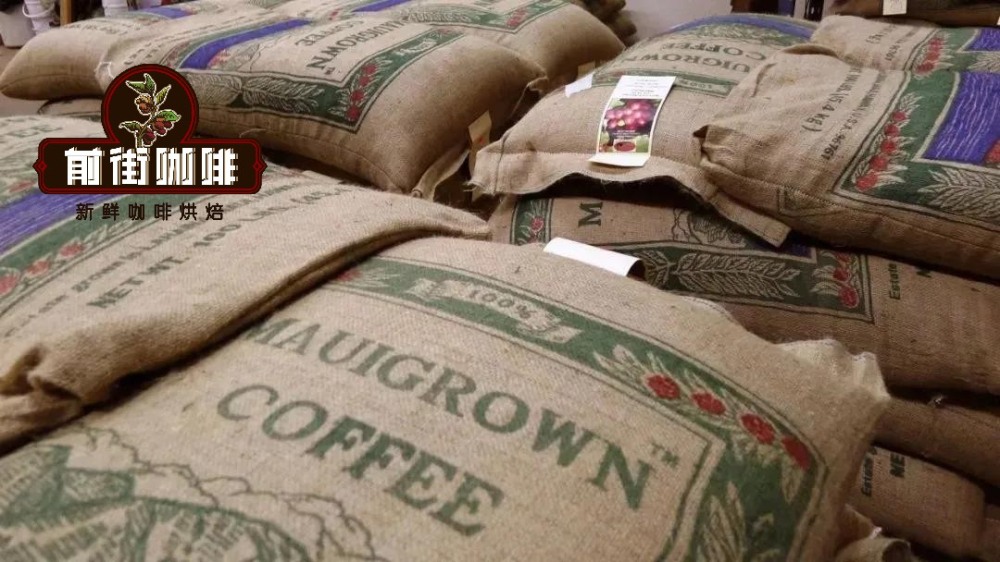
If we compare Kona coffee with another renowned island-origin coffee — Jamaica Blue Mountain — although both are of the Typica variety and share similar growing altitudes and latitudes, they present distinctly different flavor personalities due to variations in climate, soil, and processing methods. Blue Mountain coffee is grown in the Blue Mountains of eastern Jamaica, at elevations above 800 meters, with peaks reaching up to 2,256 meters, though only areas below 1,700 meters are suitable for coffee cultivation.
The Blue Mountain region features a humid, foggy climate with annual rainfall as high as 1,980 millimeters, minimal diurnal temperature variation, and fertile volcanic soil. These conditions produce coffee beans that are rich in flavor yet well-balanced. Authentic Blue Mountain coffee is processed exclusively via the washed method and requires prolonged sun drying and aging to fully develop its signature chocolate, nutty, and full-bodied finish.
Jamaica Blue Mountain coffee mainly comes from four renowned estates: the Clifton Estate, which holds tropical rainforest certification; the Styx Estate, closely linked to the Japanese market; the Golden Cup Estate, which combines resources from two century-old estates; and the RWS Coffee Estate, which integrates three historic plantations. Among them, Clifton Estate’s Blue Mountain coffee is celebrated for its excellent balance of acidity, body, and aroma, making it a popular choice in the market.
Overall, Jamaica Blue Mountain coffee typically exhibits rich chocolate and nutty notes, with a stable and deeply layered flavor; whereas Hawaiian Kona offers brighter fruit acidity, honey-like sweetness, and a soft nutty aftertaste, catering to those who prefer refreshing and fruity profiles. Whether you’re drawn to bold and full-bodied flavors or gentle, fruit-forward notes, these two island-grown specialty coffees can satisfy a wide range of palates.
The above content is compiled by CoffeeHunters, a coffee news website.


