








Introduction:Understanding the two common coffee processing methods—natural (sun-dried) and washed—can help you choose coffee beans with your desired flavor profile more accurately. This article delves into the processing steps, pros and cons, and flavor characteristics of both methods, and through a comparison of the differences in silver skin between green and roasted beans, takes you to fundamentally understand the causes of coffee flavors.
When purchasing coffee beans, we often see labels on the packaging such as “natural,” “washed,” or “honey processed.” These terms actually represent different coffee bean processing methods, which have a profound impact on the final flavor. Among them, natural and washed are the two most traditional and widely used processing methods. This article will start from the basic structure of the coffee cherry and gradually break down the complete processes, technical details, advantages and disadvantages of these two methods, and deeply analyze how they shape distinctly different coffee flavor profiles.
The Basic Structure of the Coffee Cherry
A coffee cherry, from the outside in, can generally be divided into: the outer skin (exocarp), the pulp (also called the mucilage layer or fruit flesh), the parchment (also known as the inner skin or seed coat), the silver skin, and at the very core, the coffee seed (what we call the coffee bean). Common processing methods remove the external unnecessary tissues through various techniques, preserving the most precious coffee seed, which is eventually roasted into the familiar coffee beverage.
Currently, the mainstream processing methods can be divided into three major categories: natural, washed, and honey processed (which falls between the two). This article focuses on the two fundamental and distinctly contrasting methods—natural and washed—helping you grasp their essential differences.

Natural Processing Method: The Traditional Art of Sun Drying
The natural processing method is the oldest and relatively simplest way of processing coffee, primarily relying on sunlight and time to allow the coffee cherries to slowly dry naturally, reducing their moisture content to around 12%, which is suitable for storage and subsequent processing. This method originated in dry-climate regions, doesn’t require complex equipment, but demands strict climatic conditions.
In terms of processing steps, harvested coffee cherries are first placed in a water tank for flotation. Mature and healthy cherries will sink to the bottom, while unripe or overripe ones will float, and these defective cherries are then removed. In some water-scarce areas, manual sorting may be used instead of flotation.
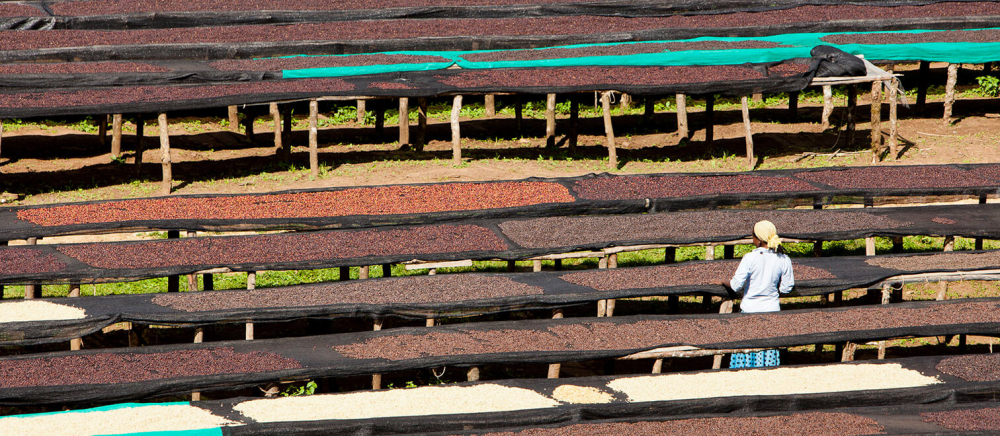
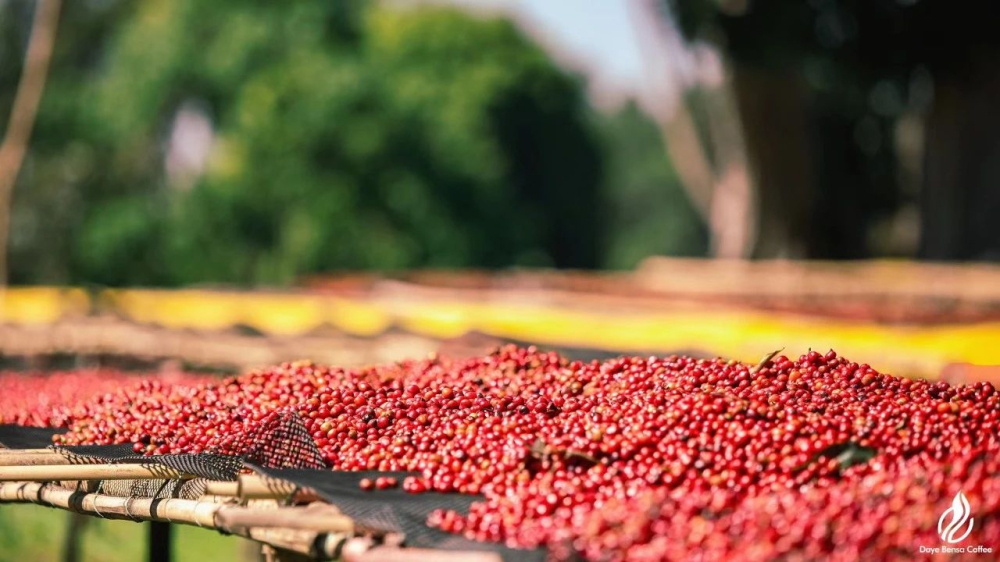
After flotation, the whole coffee cherries (including skin, pulp, and mucilage layer) are spread out directly on concrete surfaces or African-style raised beds to dry naturally. This process usually takes two to four weeks, depending on local temperature, humidity, and sunlight intensity. Once dried, the cherries are then depulped using a hulling machine to remove the hard outer skin, pulp, and parchment, leaving behind the inner green coffee bean.
However, this method also has obvious drawbacks. Since it requires long-term exposure outdoors, weather changes (such as rain or high temperatures) can directly affect drying quality. If not managed properly, it can easily lead to over-fermentation, mold, insect damage, or rot, resulting in a higher proportion of defective beans. Additionally, because fermentation mainly relies on natural conditions, if piled too densely or with poor ventilation, it is more likely to produce off-flavors or unstable taste profiles. Also, since sorting is only done initially, natural processed beans typically have a higher defect rate than washed processed beans.
However, successful natural beans often exhibit rich sweetness, full body, and complex fruit tones and fermentation aromas, which are their greatest charms.
Two Forms of Natural Processing: Traditional and Refined
The natural processing method can be divided into traditional and refined types. Traditional natural processing usually involves directly sun-drying the coffee cherries, which may use African raised beds or courtyard grounds, and requires regular turning to avoid mold or overheating. It is overall time-consuming and experience-dependent. The dried cherries appear dark black to nearly black, with intense dried fruit, caramel, and even wine-like complex aromas.
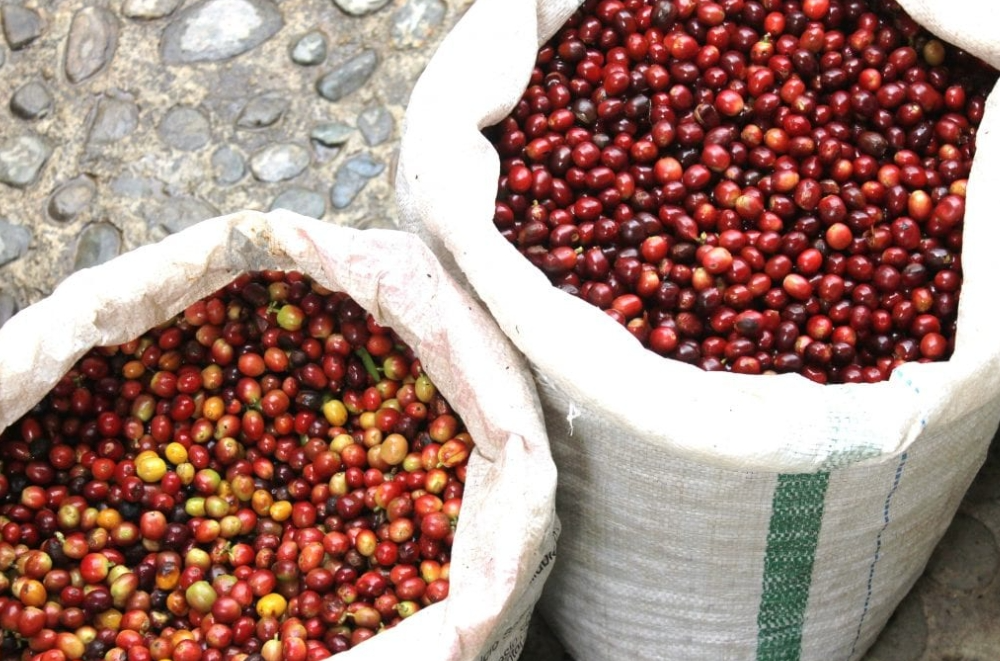
Refined natural processing, on the other hand, introduces stricter quality control and techniques based on the traditional method, such as using a refractometer to select cherries of consistent ripeness, employing elevated drying racks to promote even airflow, and precisely controlling drying time and environment. This method can more stably bring out high-quality sweetness and fruit tones, while reducing the risk of defects.
Washed Processing Method: The Clean and Precise Modern Technique
Compared to natural processing, the washed method originated in the 18th-century Dutch colonies and is a processing procedure that emphasizes precision, hygiene, and efficiency, especially suitable for rainy regions. Its main feature is the removal of the pulp and mucilage layer before drying, which can effectively reduce fermentation risks and impurity interference, resulting in flavors with higher acidity and clarity.
Its steps include: soaking the harvested cherries in a water tank for about 24 hours, during which unripe or overripe cherries will float and be removed. Next, a pulper is used to remove the outer pulp, leaving the coffee beans coated with mucilage. This mucilage layer needs to be broken down through a fermentation process, which takes about 18 to 36 hours, and is divided into wet (with water) and dry (without water) methods. Fermentation affects the purity and detail expression of the final flavor, and over-fermentation or unclean environments can easily produce undesirable off-flavors.
After fermentation, the beans are rinsed with water to remove residues. At this point, the beans are still wrapped in parchment, with a moisture content as high as 50%. They then need to be dried either by sun exposure (usually taking 1–3 weeks) or mechanical drying to reduce the moisture content to 12%. The dried beans are finally sent to a factory to remove the parchment and silver skin, yielding clean and consistent green beans.
The advantage of the washed method lies in stable quality, low defect rates, and because each step effectively removes impurities, the appearance of green beans is relatively uniform, making it suitable for commercial trading and high-quality demands. In terms of flavor, washed beans typically have bright acidity, clear fruity notes, and a refreshing taste profile.
But the disadvantages include high equipment and water costs, difficulty in managing fermentation, and if not handled properly, can produce fermentation odors. Also, the overall processing procedure is more complicated and time-consuming.
Comparison of Natural and Washed Beans: Observations from Green to Roasted Beans
To more intuitively understand the differences between the two processing methods, the following uses two classic bean varieties from Ethiopia’s Yirgacheffe region as examples: a certain coffee shop’s Natural Red Cherry (Heirloom, Atlan Estate, natural processed) and Washed Gedi Dingding (Heirloom, Gedi Dingding Cooperative, washed processed).
Observing the green bean state, natural beans appear yellow-green, with more silver skin that adheres tightly to the bean; washed beans appear blue-green, with relatively less silver skin. But interestingly, after roasting, the silver skin of natural beans has mostly naturally fallen off, resulting in a cleaner appearance; whereas washed beans often show residual silver skin, especially more noticeable at the fissures.
This is because the prolonged soaking in the washed process causes the silver skin to separate from the bean, making it easier to be removed during hulling; whereas natural beans, due to the long-term adhesion of pulp and silver skin, have a firmer connection between the silver skin and the bean, and during roasting, the silver skin is more likely to come off in whole pieces, making the roasted beans look cleaner.
Differences in Flavor Expression
In terms of flavor, natural beans, due to the fermentation and drying of the entire fruit (including pulp and mucilage), often carry noticeable sweetness, wine-like notes, berry tones, and complex fermentation layers, with a rich and full-bodied mouthfeel. Washed beans, on the other hand, have less influence from fermentation due to the early removal of the pulp, better highlighting the coffee’s inherent acidity, floral, and citrus-like clear flavors, resulting in an overall cleaner and crisper profile.
In summary, natural and washed methods not only have fundamental differences in processing procedures, but also directly influence the appearance of the coffee beans, the distribution of silver skin, and the final flavor expression. Understanding these differences can help you make more directed choices when selecting coffee beans according to your personal taste preferences.
The above content is compiled by CoffeeHunters, a coffee news website.


