







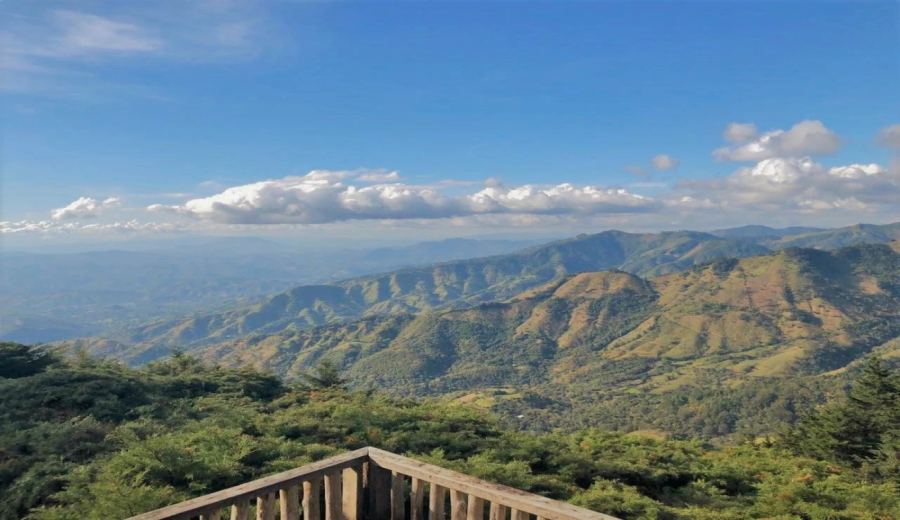
Introduction:Although El Salvador is the smallest country in Central America by land area, it boasts premium specialty coffee-growing regions with immense potential. This article will take you through the development of El Salvador’s coffee industry—from the transition away from the indigo economy, the impacts of civil war and disease, to the current layout of its nine major producing regions and the distribution of key coffee varieties. You’ll also gain insight into the stories behind high-quality coffees such as Pacas and Pacamara. Practical pour over parameters and flavor profiles are provided to help you master this uniquely flavorful coffee bean.
El Salvador is the smallest country in Central America by land area, yet its deep-rooted history in coffee cultivation and quality potential should not be underestimated. From the late 18th century when coffee was first introduced, to now having nine renowned producing regions, the coffee grown here reflects a rich tapestry in terms of industrial transformation, varietal diversity, and flavor characteristics. This article will delve into the development of El Salvador’s coffee, its main producing areas and variety distribution, and through a washed Pacas lot from the Sonsonate Izalco region, we’ll explore its recommended pour over parameters and refined flavor profile.
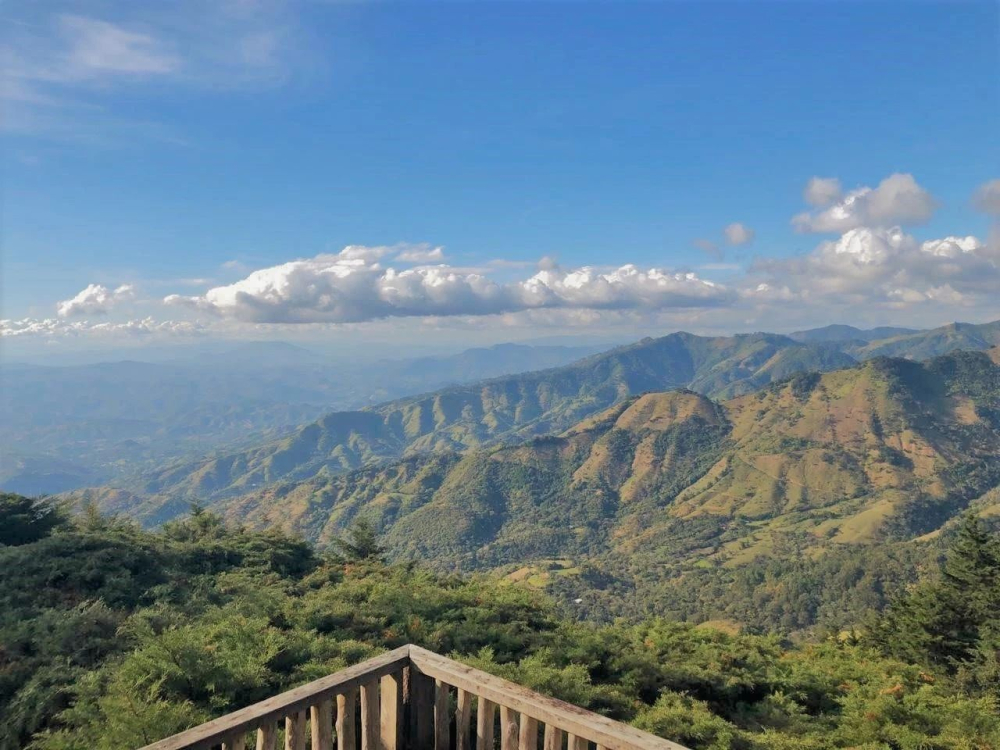
The origins of coffee in El Salvador can be traced back to the mid-18th century. At that time, the region’s primary cash crop was indigo—a natural dye extracted from the leaves of the “Jiquilite” plant—which supported the local economy for over a century. However, with the rise of synthetic dyes following Europe’s Industrial Revolution, the indigo industry quickly declined. Historical records indicate that coffee was first introduced to El Salvador between 1779 and 1796, with the first coffee trees planted on the land of two farmers in what is now the Ahuachapán region. But it wasn’t until the mid-19th century that the government officially promoted coffee cultivation, gradually establishing the industry through a series of supportive policies.
Entering the 20th century, especially during the 1930s and 1940s, improved credit conditions led to coffee exports accounting for over 90% of the country’s total agricultural output at one point. The coffee-growing regions expanded from the original Ahuachapán to Santa Ana and Sonsonate, then further into the western part of San Vicente, the mountainous areas around Berlin, and the zones surrounding the Chaparrastique volcano. These areas laid the foundation for what would later become El Salvador’s nine major coffee-producing regions.
In the 1950s, rising coffee prices encouraged farmers to adopt new planting strategies—such as intercropping shade trees, applying fertilizers, and moderately increasing planting density—which effectively boosted yields per unit area. Benefiting from these efforts, El Salvador rose to become the world’s fifth-largest coffee producer and fourth-largest exporter by the mid-1970s, harvesting 5 million quintals annually. However, the good times didn’t last. The civil war that erupted in the 1980s and 1990s dealt a severe blow to the coffee industry. Many smallholder farms were disrupted by conflict, farm operations were halted, and coffee exports were even temporarily nationalized. As a result, production plummeted significantly between 1997 and 2001, with ICO data showing a decline of more than 34%.
To make matters worse, a nationwide outbreak of coffee leaf rust occurred in 2013. At that time, less than 3% of coffee trees in the country had resistance to the disease, leading to a near 60% drop in harvest during the 2014 season. It wasn’t until 2014, under the leadership of Agriculture Ministry official Orestes Ortéz, that the CENTA coffee division was established. With guidance from coffee expert Dr. Adán Hernández, the division gradually restored the coffee-growing environment through technical support, disease control, and the development of new resistant varieties. This initiative not only provided effective fungicides but also successfully bred rust-resistant varieties, helping farmers rebuild high-quality plantations.
Currently, El Salvador has over 130,000 hectares of coffee-growing land, about half of which are low-altitude regions, 33% are mid-to-high altitude, and only 16% are high-altitude. In terms of producer structure, up to 85% are smallholders managing farms of less than 7 hectares, indicating that the industry remains largely family-operated.
The country is divided into nine major coffee-producing regions, including the southwestern areas of Apaneca, Apaneca Llamatepec, El Balsamo-Quetzaltepec, Cacahuatique, and Santa Ana; the central-northern regions of Chalatenango, Chichontepec, and Metapan; as well as river valley regions such as Tecapa-Chinameca. These geographical areas, due to differences in altitude, microclimate, and soil, each produce coffee with unique characteristics.
In terms of varieties, Salvadoran coffee farming originally focused mainly on Typica, but as leaf rust spread, most farms shifted to Bourbon starting in the 19th century. By the mid-20th century, a natural mutation of Bourbon known as Pacas emerged. Promoted by El Salvador’s Institute of Coffee Research (ISIC), Pacas quickly gained popularity. To this day, Bourbon and Pacas together account for over 80% of the country’s coffee production, with Bourbon making up over 60% and Pacas nearly a quarter.
Among the many varieties, Pacamara stands out for its exceptional cup quality and has won accolades multiple times in El Salvador’s Cup of Excellence (COE) competitions. This variety was developed by ISIC through a cross between Pacas and the large-beaned Maragogype, which was introduced from Brazil. Not only does it produce notably large beans, but it also combines Pacas’ delicate flavor profile with Maragogype’s full body. Its flavor is layered and complex, often featuring bright acidity, vivid notes of biscuit, intense juiciness, outstanding mouthfeel, and excellent crema texture.
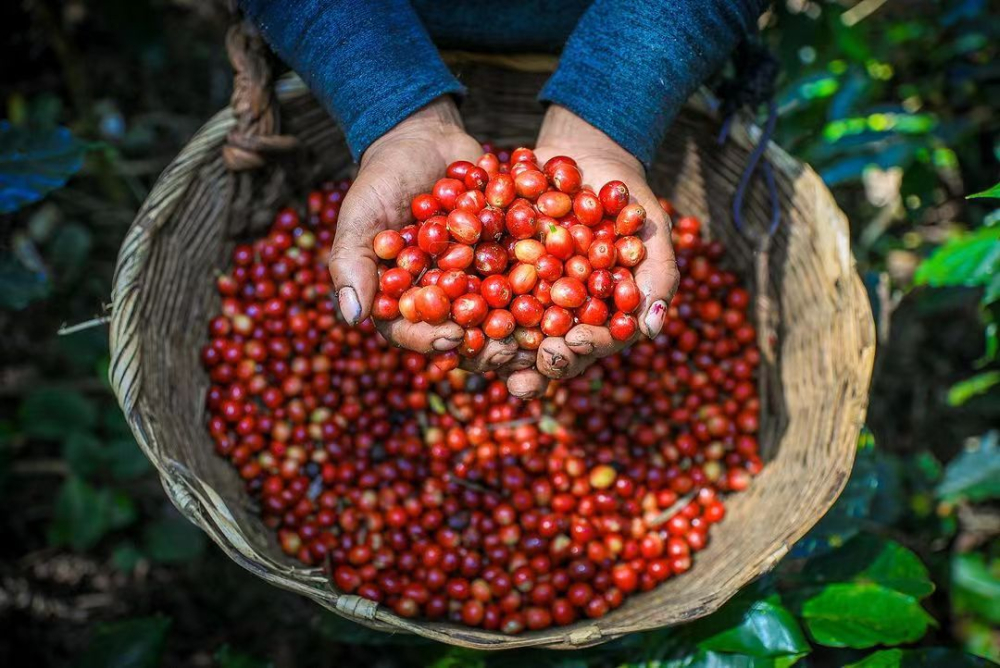
Take, for example, a washed Pacamara lot from Finca Ataisi in the Sonsonate Izalco region. It is graded as SHG (Strictly High Grown), grown at an altitude of 1,800 meters. Processed using the washed method, this coffee exhibits a rich flavor profile of nuts, chocolate, cream, strawberry jam, and passion fruit—making it highly suitable for pour over brewing.
【Pour Over Recommendations】
Filter: V60
Brewing Temperature: 90°C
Coffee-to-Water Ratio: 1:15
Grind Size: Approximately 80% passing through a standard Chinese No. 20 sieve, similar in coarseness to fine sugar
Steps: Place the ground coffee into the V60 filter. Begin with a bloom using twice the amount of water by weight of the coffee grounds for about 30 seconds to help release the aromas. Then pour water in small streams, moving evenly in circles from the center outward. When the total water volume reaches 125 grams, perform the first pour. Once the coffee bed descends to the middle of the filter, continue pouring with the same fine stream until you reach 225 grams for the second pour. Finally, keep pouring until approximately 225 grams of brewed coffee has dripped through. The entire process takes about 2 minutes.
Flavor Experience: The cup entry is smooth and delicate, with bright and layered fruity acidity that continues the serene tonality characteristic of the Pacamara variety. The mid-palate reveals vibrant berry-like acidity paired with the gentle aroma of hazelnuts, while the finish showcases a distinct caramel sweetness with a lingering, refined aftertaste.
The above content is compiled by CoffeeHunters, a coffee news website.


