








Introduction:Latin America is a major source of specialty coffee globally, renowned for its rich body and balanced acidity and sweetness. This article delves into the geographical characteristics, processing techniques, and typical flavor profiles of Brazil and Colombia, two of the region’s key producing countries, while also analyzing the unique features of representative origins within each. It aims to help readers grasp the essential points for selecting Latin American coffee beans—whether for pour over or espresso brewing—so you can find the perfect match for your taste.
Latin American coffee is celebrated for its consistent balance, moderate body, and soft fruity acidity. Its flavor profile often features the gentle texture of cocoa and dark chocolate, making it a popular choice for many coffee beginners. Compared to Asian origins, which often exhibit heavy herbal and earthy notes, Latin American beans showcase a clearer and brighter complexity. In terms of processing methods, washed and honey processes dominate, with Brazil commonly employing honey and natural processes due to its terrain and climate, resulting in beans with a fuller body.

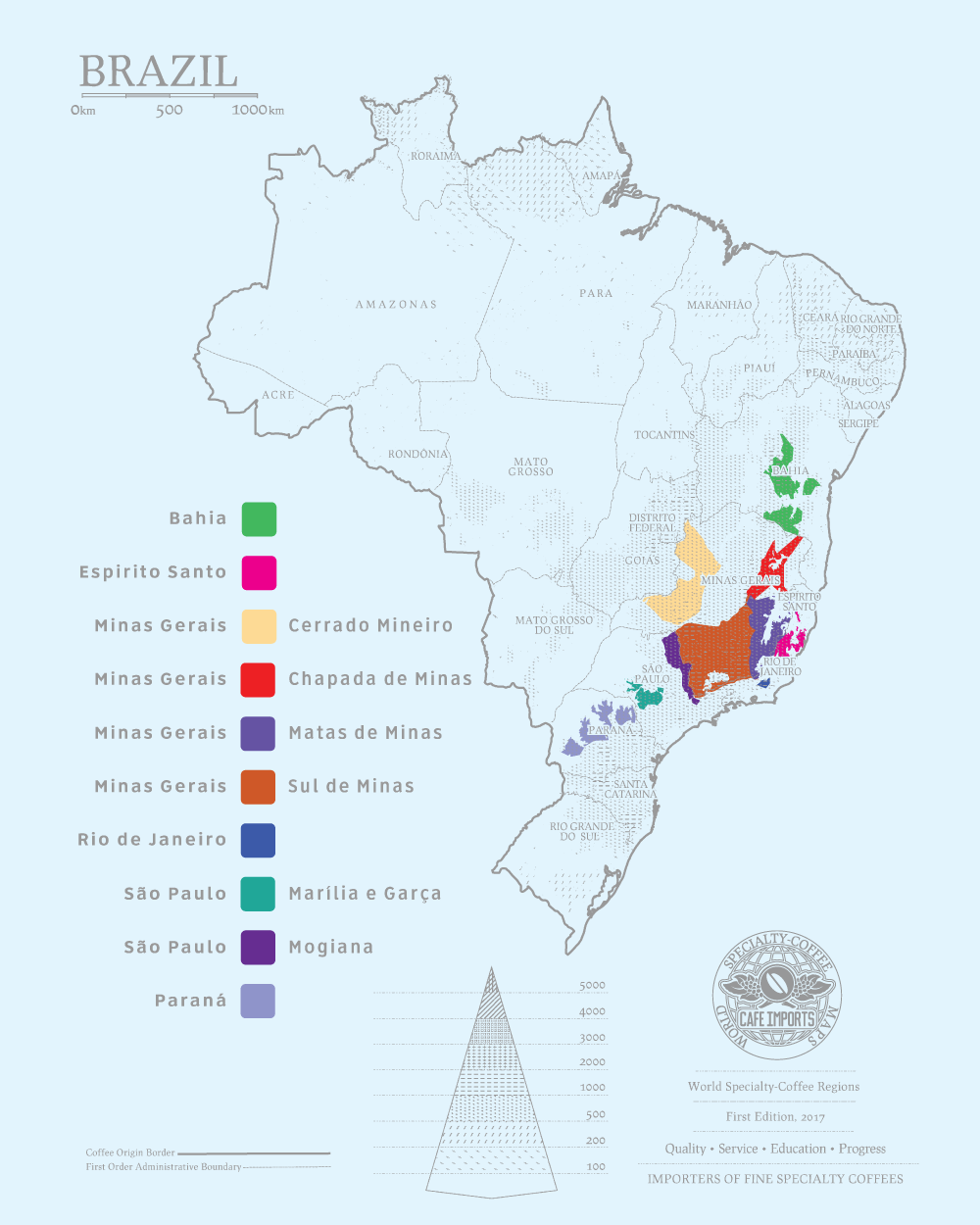
As the world’s largest coffee producer, Brazil manages to maintain stable output despite variable weather challenges. Beyond its vast cultivation area, this is thanks to continuous varietal improvement and optimized processing techniques. Although generally grown at lower altitudes, precise agronomic management and post-harvest processing still allow for the production of distinctive specialty-grade coffee. The country’s main producing regions are concentrated in the states of Minas Gerais, São Paulo, Bahia, and Espírito Santo, which together account for over 90% of its total exports.
Among Brazil’s many producing areas, the Cerrado and Sul de Minas regions in Minas Gerais stand out due to their relatively high altitudes (above 750–1200 meters). The flat terrain of the Cerrado plateau yields coffee with a rich body and low acidity, often featuring notes of cream, almond, and chocolate—making it ideal for those who prefer a bold flavor profile. A certain brand’s honey-processed Cerrado beans are one representative example showcasing the characteristics of this region. As for the higher-altitude Mogiana region in São Paulo, the Yellow Bourbon variety grown by Fazenda Rainha and processed using the natural method exhibits intense caramel and nutty aromas at elevations of 1400–1950 meters, offering an excellent choice for enthusiasts seeking deeper flavor dimensions.
Colombia, on the other hand, boasts a diverse range of microclimates thanks to its unique geography. The country is divided into multiple coffee-growing zones, each presenting distinct flavor profiles based on altitude and season. As the world’s third-largest coffee producer, Colombian coffee is known for its balance, combining a nutty foundation with bright acidity. Its sweet and sour notes are well harmonized, and the aftertaste is long-lasting. The country’s complex terrain ranges from tropical rainforests to highland climates, with southern regions such as Huila, Cauca, Nariño, and Tolima—where altitudes generally exceed 1500 meters—producing numerous specialty-grade coffees.
In southern Huila Province, coffee farms are mostly located in high-altitude mountainous areas, with the harvest season running from April to June. This complements the northern producing regions, enabling Colombia to supply fresh green beans year-round. A certain brand’s Sidra variety coffee, grown at Finca La Línea in Huila at an altitude of 1900 meters and processed using anaerobic natural methods, showcases unique fermentation aromas and complex layers—it’s a great entry point for exploring Colombia’s specialty coffee. In addition, traditional varieties such as Maragogype also express distinctive fruity notes and a full body due to their adaptation to local terroir, appealing to coffee lovers who enjoy diverse flavor experiences.
In summary, although both Brazil and Colombia belong to the Latin American coffee-producing region, their distinct geographical conditions, varietal selections, and processing techniques result in markedly different flavor profiles. Brazilian coffee is characterized by a rich, full body, low acidity, and chocolatey notes, catering to those who prefer bold flavors. Colombia, in contrast, excels in balanced acidity and sweetness, with a nutty foundation and bright complexity, aligning more closely with the diverse expressions of specialty coffee. Whether you choose pour over or espresso brewing, understanding the characteristics of each origin and the details of their processing methods will help you find the Latin American coffee beans that best suit your personal taste.
The above content is compiled by CoffeeHunters, a coffee news website.


