








Introduction:Kenyan coffee is renowned for its vibrant acidity and layered fruity notes, particularly the interplay of blackberry and grapefruit, making it a favorite among pour over enthusiasts. This article delves into the key processing method behind it—the K72 double anaerobic washed process—as well as the flavor profile of the popular "Little Tomato" coffee beans from the Asali washing station in the Thika region. It also provides pour over recommendations for lightly roasted Kenyan beans, including filter choice, water temperature, grind size, and a three-stage pouring technique to help you fully unlock the bright and lively flavors of Kenyan coffee.
Kenyan coffee is world-famous for its unforgettable acidity, rich aroma, and complex taste, often featuring delicate fruit notes such as blackberry, grapefruit, and dark plum. It is considered a flagship single origin by many coffee aficionados. With its distinct flavor layers and refreshing acidity, it’s also ideal for making iced coffee in the summer, and pairing with citrus fruits or acidic desserts can further highlight its complexity. Understanding the regional characteristics, processing methods, and pour over techniques of Kenyan coffee will help you more fully appreciate its unique charm.
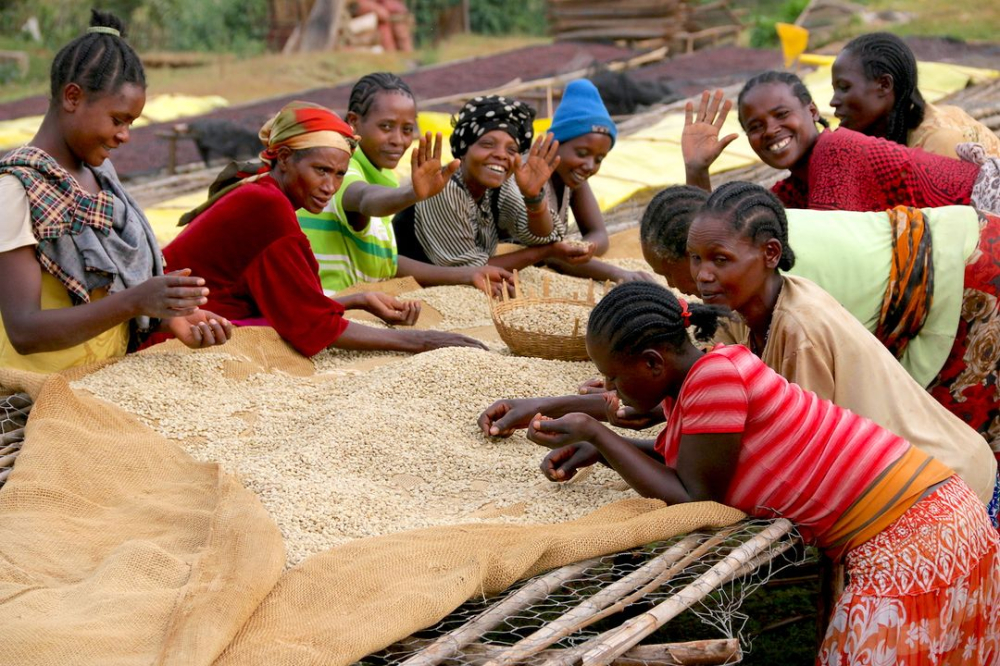
Most Kenyan coffee is not produced on large plantations but is jointly cultivated by countless smallholder farmers through cooperative models. In fact, smallholders account for up to 60% of production, far exceeding common expectations. The Kenyan government enforces a strict coffee grading system based on bean size, shape, and hardness. Washed beans are classified into seven grades, with AA or AA+ being the highest, followed by AB, PB, C, E, TT, and T. It’s worth noting that larger, visually appealing beans do not necessarily equate to the best flavor—a key consideration when selecting your beans.
Kenyan coffee is primarily grown in high-altitude volcanic slopes, especially areas above 5,000 to 6,000 feet. Large estates at lower altitudes often produce coffee of only moderate quality, whereas cooperatives composed of hundreds or even thousands of smallholder farmers are typically located at higher elevations and can collectively invest in washed processing equipment to ensure each bean undergoes rigorous quality control. Government-funded processing stations manage post-harvest coffee cherries uniformly, including sorting, pulping, fermentation, washing, and drying. Each step is closely supervised by the official Coffee Board of Kenya, resulting in the stable, high-quality Kenyan coffee we know today.
When discussing the distinctive flavors of Kenyan coffee, one cannot overlook the widely adopted K72 double anaerobic washed process. Unlike traditional washed processing, which involves fermentation for only 24 to 48 hours, the Kenyan K72 method extends fermentation to a full 72 hours, divided into three cycles of 24 hours each. After each fermentation round, the beans are thoroughly rinsed with clean river water before beginning the next cycle. This method gradually extracts aromatic compounds and acidity from the beans in a low-temperature environment, resulting in a brighter, cleaner, and more complex flavor profile.
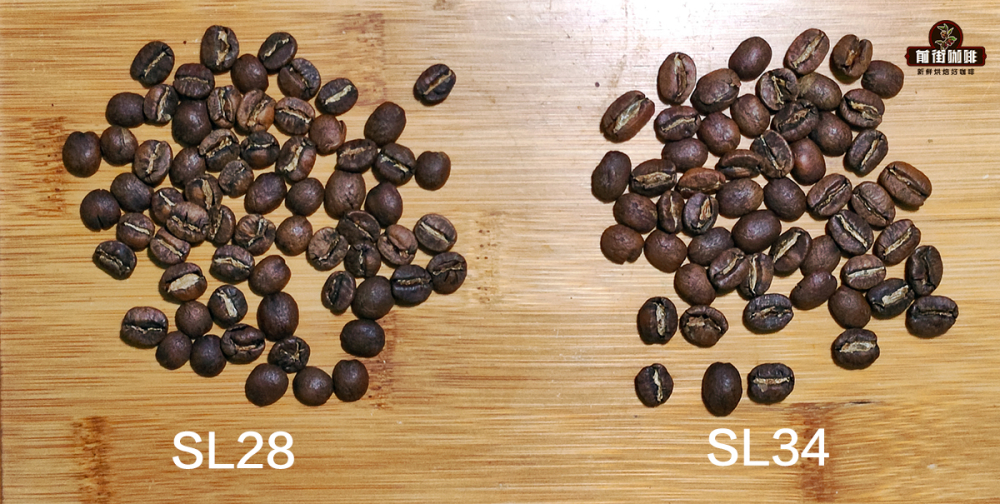
Take the “Little Tomato” coffee beans from the Asali washing station in the Thika region as an example—this is a classic representation of the K72 washed process. Grown at elevations between 1,550 and 1,750 meters, the beans are of the classic SL28 and SL34 varieties, and their flavor profile is striking: the cup opens with intense dark plum acidity, followed by a bright, tomato-like fruity acidity reminiscent of cherry tomatoes, and finishes with a soft sweetness of pears, brown sugar, and plums. This flavor combination allows it to maintain exceptional clarity and layering even when lightly roasted.
For pour over brewing of lightly roasted Kenyan beans like the Kenya · Little Tomato, there are several key parameters and techniques worth noting to help fully express their bright fruit acidity and delicate flavors:
1. Filter Cup Selection Recommendation:Because lightly roasted beans have less expansion and higher bean density, grinding can release more fine particles, which may lead to uneven extraction and channeling in the later stages. It is recommended to use a filter cup with a faster flow rate, such as the V60. Its unique spiral ridges help release trapped gases in the coffee bed, accelerating water flow while also improving the volatility and dissolution efficiency of aromatic acids.
2. Water Temperature Control:The ideal water temperature range is 90°C to 93°C. If you prefer a brighter acidity and a tea-like aftertaste, aim for 90°C to 91°C. If you want to enhance the richness and body of the fruit acidity, increase the temperature to 92°C to 93°C to create a more three-dimensional flavor profile.
3. Grind Size and Extraction Time:Grind size directly affects total extraction time, so adjustments should be made based on actual brewing results. Generally, when using 15 grams of coffee for a three-stage pour, if the total time is under 1 minute and 40 seconds, the grind is too coarse, leading to under-extraction and sour, sharp flavors. If it exceeds 2 minutes and 20 seconds, over-extraction may occur, resulting in bitter, heavy flavors. A recommended coffee-to-water ratio is between 1:15 and 1:16, which can be fine-tuned according to personal taste. For example, 1:15 highlights the boldness of oolong tea and berry notes, while 1:16 helps bring out the clarity of white floral and citrus acidity.
In practice, the following three-stage pouring process is recommended: First, pour 30 grams of water for a 30-second bloom, starting the timer simultaneously. Use a small stream and circle from the center outward to ensure even saturation. Next, in the second stage, pour 95 grams of water with a slightly larger stream, reaching a total of 125 grams by around 55 seconds. This lifts the coffee bed and promotes even extraction. Finally, in the third stage, when the liquid level drops to about half, slowly pour 100 grams of water in small circles with a fine stream, totaling 225 grams, aiming to finish within about 2 minutes for optimal balanced extraction.
In summary, the charm of Kenyan coffee lies in its bright acidity and richly layered fruitiness, and the K72 washed process is the key to achieving all of this. By understanding the regional background, processing methods, and suitable pour over parameters, you’ll be able to more deeply appreciate the nuance and vibrancy of Kenyan coffee—whether for everyday enjoyment or as part of your journey into the world of specialty coffee, you’re sure to be rewarded with delightful surprises.
The above content is compiled by CoffeeHunters, a coffee news website.


