







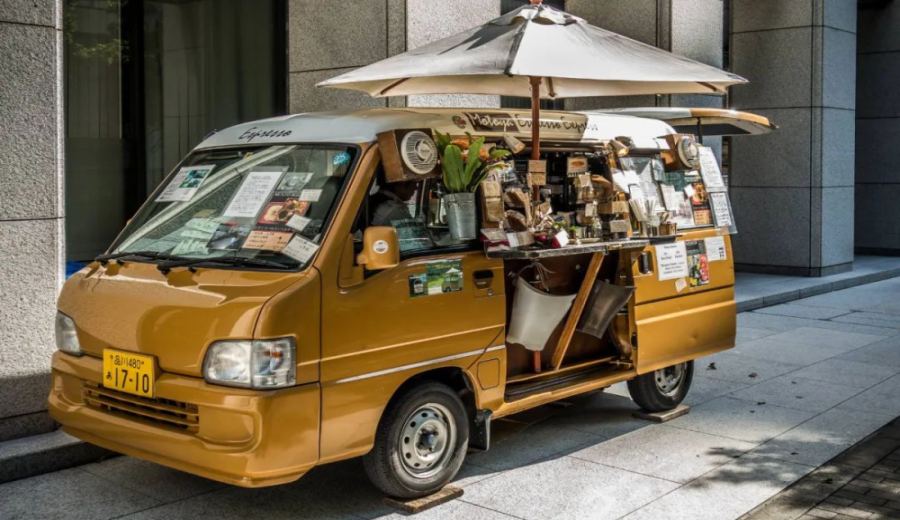
Introduction:Mobile coffee trucks have emerged as a new business model in urban areas in recent years, but operating them legally involves multiple challenges such as licensing, location selection, and profit models. This article delves into the practical issues brought about by Wheelys Café’s entry into the Chinese market, covering everything from documentation and vending strategies to cost control. Drawing on the experiences of industry practitioners, it provides a comprehensive guide to avoiding pitfalls and helps prospective entrants rationally assess feasibility.
Mobile coffee trucks have become a trend in recent years. Driving around the city selling coffee may seem romantic, but it comes with many real-world challenges. When Wheelys Café entered the Chinese market, the business model of “selling coffee from a vehicle” sparked renewed discussion: Is this kind of business even legal? Do you need to apply for a business license and health permit? How should you choose your vending locations? And can you actually make a profit? Through the shared experiences of actual practitioners, we take a comprehensive look at the current state of mobile coffee truck operations—from initial motivations and profit expectations, to equipment setup, licensing, vending tactics, and potential risks.
Many entrepreneurs are drawn to the freedom and flexibility of mobile coffee trucks. Driving through the streets and brewing coffee on a whim makes for an unrestrained way of doing business, allowing for more natural and intimate interactions between baristas and customers. Without the barrier of a fixed storefront, the distance between people instantly shrinks—whether among customers themselves or between them and the barista—connections can be formed during even brief stops. Especially in the corners of a city at night, the lights of a coffee truck become a warm gathering spot where people exchange stories and form a unique community atmosphere.
However, whether a mobile coffee truck can actually make money depends on multiple factors. If you have entrepreneurial experience, professional coffee knowledge, and operational skills, it is indeed possible to turn a profit—but this is by no means a stable source of income, and it is advisable to treat it only as a side business. On the other hand, if you lack basic understanding and blindly jump in just because you see others making money, the risks are extremely high. In addition, the choice of vending location and parking strategy is also crucial. Don’t try to save costs by parking illegally, or you risk being shut down by urban management or traffic police, causing all your initial investment to go to waste.
For those who approach it with only a side-business mindset, the key is to control costs and equipment investment reasonably. Choose coffee machines and grinders that offer good value for money, ensure the freshness of your coffee beans and milk, and put care into making every cup. That way, you can build up a good reputation. While it’s hard to earn huge profits, steady operation can still help you recover costs and expand your network.
In terms of equipment preparation, a basic version of a mobile coffee truck only requires a vehicle with ample trunk space, a coffee machine, a grinder, fresh coffee beans, bottled water, a portable power supply, espresso-making tools, cleaning supplies, takeaway packaging, simple lighting, and a drink menu—along with a passionate barista to run it. If you’re aiming for higher quality, you can upgrade with pour over equipment, insulated milk and ice boxes, outdoor tables and chairs, decorative stickers, rooftop lights, and a sound system to create a more attractive coffee experience space.
When it comes to licensing, operating a mobile coffee truck legally is absolutely essential. Although policies vary by location, you typically need to apply for a business license, a health permit, and a street occupation permit. It’s important to note that health permits and business licenses usually require a fixed dining establishment as a prerequisite, so mobile coffee trucks must apply according to local food vendor management regulations. If you’re only treating it as a side business, you might temporarily avoid these requirements, but you’ll still face the risk of being shut down—and you shouldn’t choose high-traffic areas with strict urban management enforcement.
The choice of vending location also requires strategy. It’s recommended to pick areas with stable foot traffic but fewer urban management patrols, and try to park in legal parking spots. If you want to cultivate a regular customer base, you should vend at fixed times and locations. Even if you change spots, consistent appearances can help attract returning customers through word of mouth. A stable vending schedule helps build customer trust and improves your chances of success.
Regarding the risk of complaints, as long as you follow basic operational standards—not obstructing traffic, not creating noise, and keeping the environment clean—you’re unlikely to attract complaints. Many operators say that as long as you don’t bother others, running a coffee truck is relatively low-key and can actually earn the approval of passersby. Many customers understand how hard it is to start a business, and even if they don’t buy anything, they’ll still show support. This positive feedback becomes an important motivation to keep going.
All in all, running a mobile coffee truck is by no means easy, and the chances of getting rich from it are extremely low. But if you view it as a side business or a hobby, you can not only pursue your passion for coffee but also gain connections and enjoyment in life. The key is to rationally assess your own conditions, avoid blindly following trends, and improve the quality of your operation through careful management—only then can you find your own path to survival amid the challenges.
The above content is compiled by CoffeeHunters, a coffee news website.


