







Introduction:Blue Mountain coffee, widely recognized as one of the world’s top specialty beans, often deters people due to its high price. However, its unique flavor and growing conditions give it an extraordinary status in the hearts of coffee enthusiasts. This article delves into the authentic origin, altitude, and climate factors of Blue Mountain coffee, introduces the grading standards and flavor profile of Blue Mountain No. 1, and provides practical pour over parameters to help you better understand the essence of this “King of Coffee.”
Blue Mountain coffee holds an unshakable position in the coffee world, yet many enthusiasts, despite having heard of its fame, have yet to taste it due to its premium price. In fact, Blue Mountain coffee is not just about its reputation—its exceptional growing environment and strict grading system result in a well-balanced and rich flavor, making it a prized choice among seasoned coffee connoisseurs.
So, where exactly is Blue Mountain coffee grown? What are the grading standards for the highly esteemed Blue Mountain No. 1? What kind of flavor characteristics does it possess, and how should it be brewed to bring out its best? The following will take you on a comprehensive journey to discover this legendary coffee from Jamaica.
The origin of Blue Mountain coffee is located on the island of Jamaica in the Caribbean Sea. Although the island is not large, it features undulating mountain ranges, with Blue Mountain being just one of them, situated northeast of Jamaica’s capital, Kingston. Interestingly, the origin of the name “Blue Mountain” is said to come from early British soldiers who observed the mountain peaks appearing to have a light blue halo under the sunlight and sea mist, hence naming it the “Blue Mountain.” Additionally, the surrounding ocean reflects sunlight onto the mountains on clear days, giving Blue Mountain an ethereal blue hue that adds to its mystique.
Most of the peaks in the Blue Mountains exceed 1,800 meters in elevation, with the highest reaching 2,256 meters, making it the tallest point in the entire Caribbean region. This area is not only a renowned tourist destination but also an ideal environment for coffee cultivation. The unparalleled flavor of Jamaican Blue Mountain coffee is inseparable from its geographical conditions. Located within the coffee belt around 25 degrees north latitude, the region enjoys cool weather, fresh and nearly pollution-free air, fertile young volcanic soil, as well as abundant and evenly distributed rainfall—all crucial elements for growing high-quality coffee.
Notably, the Blue Mountain area is often shrouded in clouds and mist in the afternoon, which not only provides good shading for the coffee trees but also increases air humidity, greatly benefiting the maturation of coffee cherries and the accumulation of flavor. Moreover, the significant day-night temperature variation in the Blue Mountain region helps with the slow accumulation and development of flavors inside the coffee beans, resulting in a rich and balanced taste profile.
However, not all coffee grown in the Blue Mountains can be called “Blue Mountain coffee.” According to official regulations, only coffee beans grown at an altitudebetween 900 and 1,700 meterswithin the Blue Mountain range qualify to be labeled as “Blue Mountain coffee.” Some coffee enthusiasts even believe that only those grown in the extremely high-altitude areas close to 2,256 meters can be considered the most premium Blue Mountain coffee. Generally speaking, the moderate altitude range, combined with favorable soil, water, and climatic conditions, is more conducive to producing high-quality Blue Mountain beans with both aroma and taste.
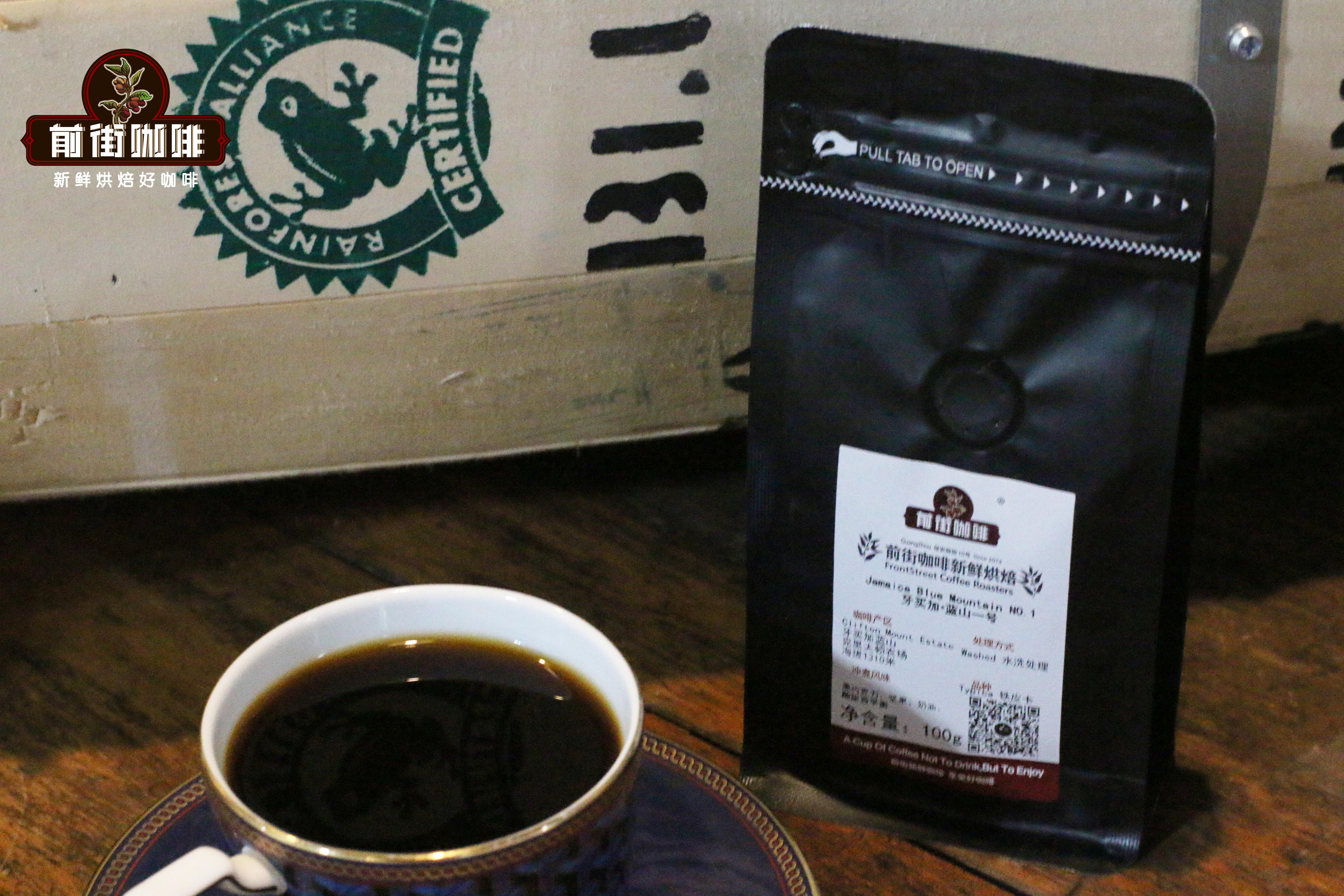
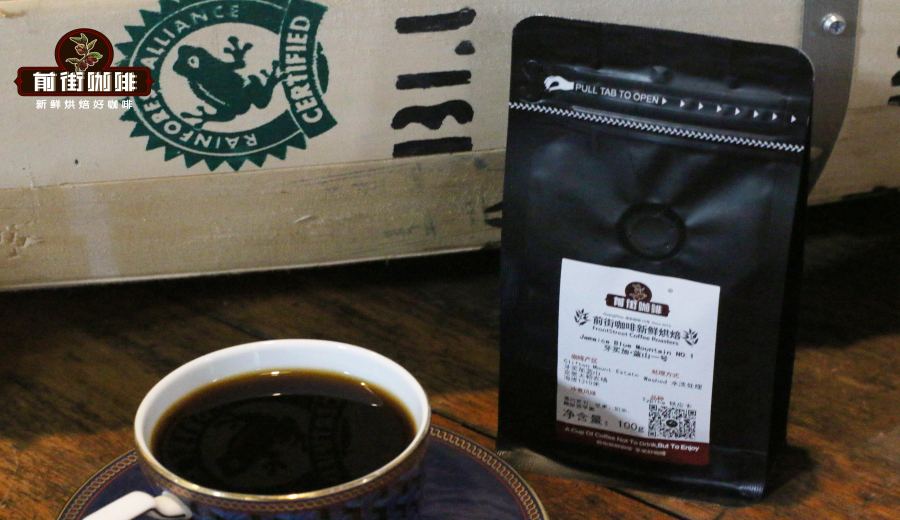
Currently, the most readily available and widely recognized Blue Mountain coffee on the market comes from the northernClifton Mount Estate. This coffee, often referred to as “Blue Mountain No. 1,” is one of the highest-rated grades of Blue Mountain coffee, with only green beans that meet strict criteria being classified under this category.
A certain coffee brand uses Blue Mountain No. 1 from Clifton Mount Estate in the Jamaican Blue Mountain region,grown at an altitude of approximately 1,310 meters, with the classicTypicavariety, processed using the washed method. Such green coffee beans are clearly labeled on the export barrels with the estate name and the prestigiousgreen frog seal, which is also one of the certification symbols of officially exported Blue Mountain beans.
According to the official grading system of Blue Mountain coffee, Blue Mountain No. 1 green beans must meet the following criteria: bean size must be17 mesh or above, with a defect rate lower than2%, and a moisture content of around13%. A certain coffee brand inspects each batch of Blue Mountain No. 1 green beans upon receipt to ensure quality compliance. Upon visual inspection, the beans are found to be plump, uniformly sized, and exhibit the bright blue-green color typical of washed beans.
In terms of flavor, Blue Mountain No. 1 exhibits an exceptionally balanced taste—gentle acidity, pronounced sweetness, and a well-measured bitterness that is never overpowering. The overall profile is clean and layered. Cupping often reveals distinct notes of dark chocolate, nuts, and caramel, paired with a creamy mouthfeel. The aftertaste is smooth and lingering, earning it recognition by many baristas as the “King of Coffee.”
If you’d like to try pour over brewing Blue Mountain No. 1 at home, the following parameters are recommended to fully unlock its potential: use a fan-shaped filter like the Kono dripper, control the water temperature at88°C, set the brew ratio at1:15, use about15 gramsof coffee, and grind to a medium fineness, roughly around70% passing through a 20-mesh sieve. For brewing, you may adopt the classic three-pour method: the first pour of30 grams of waterfor a 30-second bloom; followed by the second pour up to125 grams, then wait until the water level drops halfway before the final pour up to225 grams, with a total extraction time of about2 minutes and 10 seconds, effectively highlighting the delicate and full-bodied nature of Blue Mountain No. 1.
In summary, the reason Blue Mountain coffee is both expensive and highly esteemed lies not only in its scarce origin and challenging cultivation, but also in its rigorous quality control and unique natural environment. If you’ve ever been drawn to Blue Mountain coffee, start by understanding its growing region, grading, and flavor characteristics, then explore its true charm through proper pour over techniques.
The above content is compiled by CoffeeHunters, a coffee news website.


