








Introduction:The Coffee Taster’s Flavor Wheel is a key tool for appreciating coffee. From its initial release in 1995 to the comprehensive sensory map updated in 2016, the two generations have undergone major changes in classification logic, flavor description, and scientific basis. This article will delve into the design background, structural differences, and practical cupping techniques of the two versions of the Flavor Wheel, helping you more accurately grasp the aroma and flavor layers of coffee.
In the world of coffee tasting, the flavor wheel is an indispensable tool for every coffee enthusiast and professional. From the first introduction of the Coffee Taster’s Flavor Wheel by the Specialty Coffee Association of America (SCAA) in 1995 to the newly upgraded sensory map in 2016, the two generations of flavor wheels have shown significant evolution in flavor classification, structural design, and sensory science foundations. By comparing the design concepts and practical applications of these two versions, you can gain a deeper understanding of the complex flavors of coffee and improve the accuracy of your cupping and tasting.
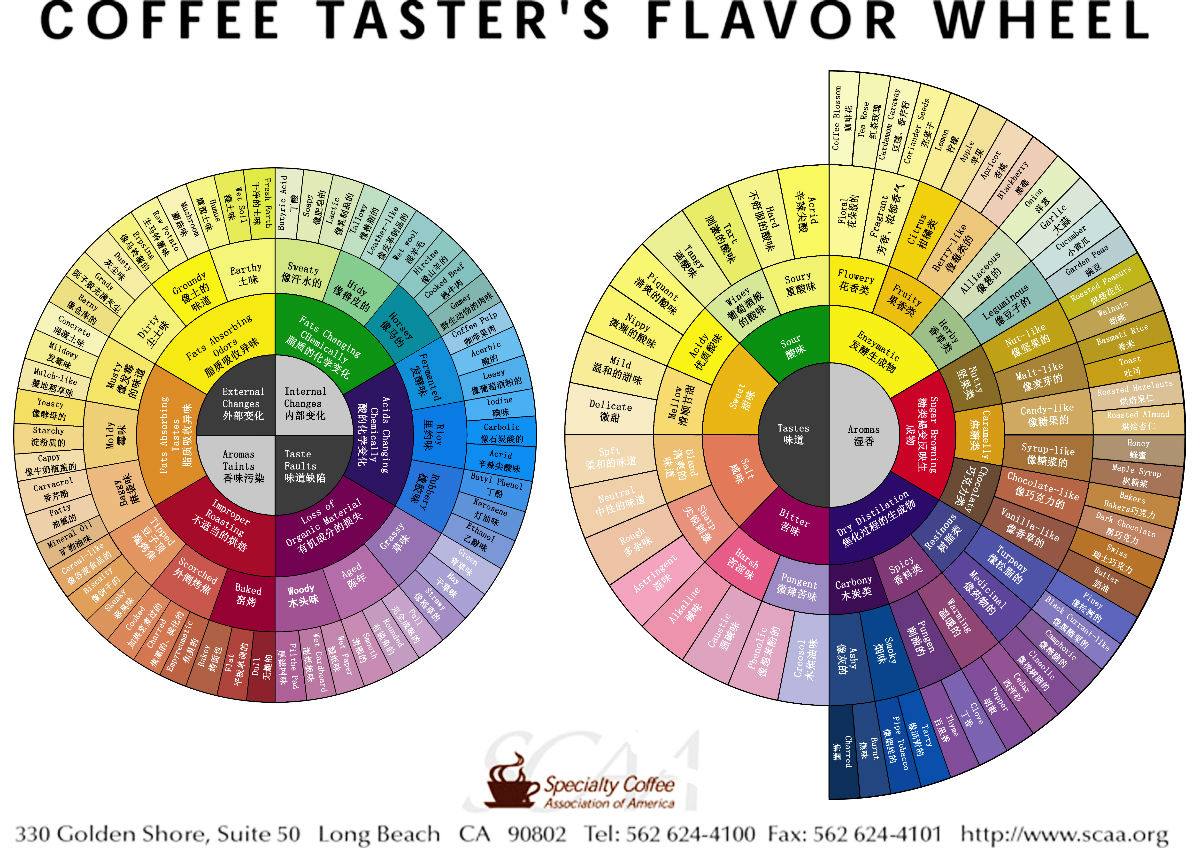
The original Coffee Taster’s Flavor Wheel was born in 1995, led by Mr. Ted Lingle of the SCAA. At that time, the coffee industry lacked a unified vocabulary for flavors, and for aromas and defect tastes in coffee, the industry often had differing opinions, making it difficult even for consumers to specifically describe what they were tasting. Therefore, the launch of this first-generation flavor wheel provided the industry with a standardized reference framework, which not only helped identify types of flavors but also made preliminary judgments on whether a flavor was a positive or negative characteristic.
The original flavor wheel was mainly divided into two major sections:The left side is the reverse flavor wheel (defect flavors), listing undesirable tastes caused by improper processing, poor storage, or roasting mistakes, such as moldy, chemical, or woody flavors, helping users quickly identify the source of the problem.The right side is the positive flavor wheel, categorized by taste (taste perception) and smell (dry and wet aromas), and arranged from light to strong in terms of flavor intensity. Its underlying logic also corresponds to the three key reaction stages in the coffee roasting process—enzymatic reactions, caramelization reactions, and dry distillation reactions—thus reflecting the gradual flavor changes from light to dark roasts, as well as under varying levels of extraction.
Entering 2016, the SCAA collaborated with the World Coffee Research (WCR) and other parties to launch a completely revamped new version of the Coffee Taster’s Flavor Wheel. This upgrade was not just a visual change, but based on extensive scientific data and sensory research. The research team analyzed the flavor characteristics of a total of 105 coffee samples from 13 major coffee-producing countries and compiled the World Coffee Research Sensory Lexicon, which became the theoretical foundation of the new flavor wheel.
To establish more detailed flavor connections, the research team invited29 untrained general coffee drinkers, as well as43 coffee industry experts, to test the relationships between different flavors. Ultimately, coffee flavors were categorized into nine major groups, including: floral, fruity, sour/fermented, green/vegetative, other, roasted, spices, nutty/cocoa, and sweet. Among them, sweetness, fruit, and floral flavors were considered similar to each other, while the ‘other’ and ‘floral’ categories were positioned at relatively opposite ends.
The most obvious difference in the new flavor wheel is its higher information density; at first glance, it may appear more complex, but in fact, every detail has been scientifically validated. If you place the two versions of the flavor wheel side by side, it’s not hard to see that the 2016 version offers more nuanced flavor descriptions, and the arrangement of distances between different flavors is intentional.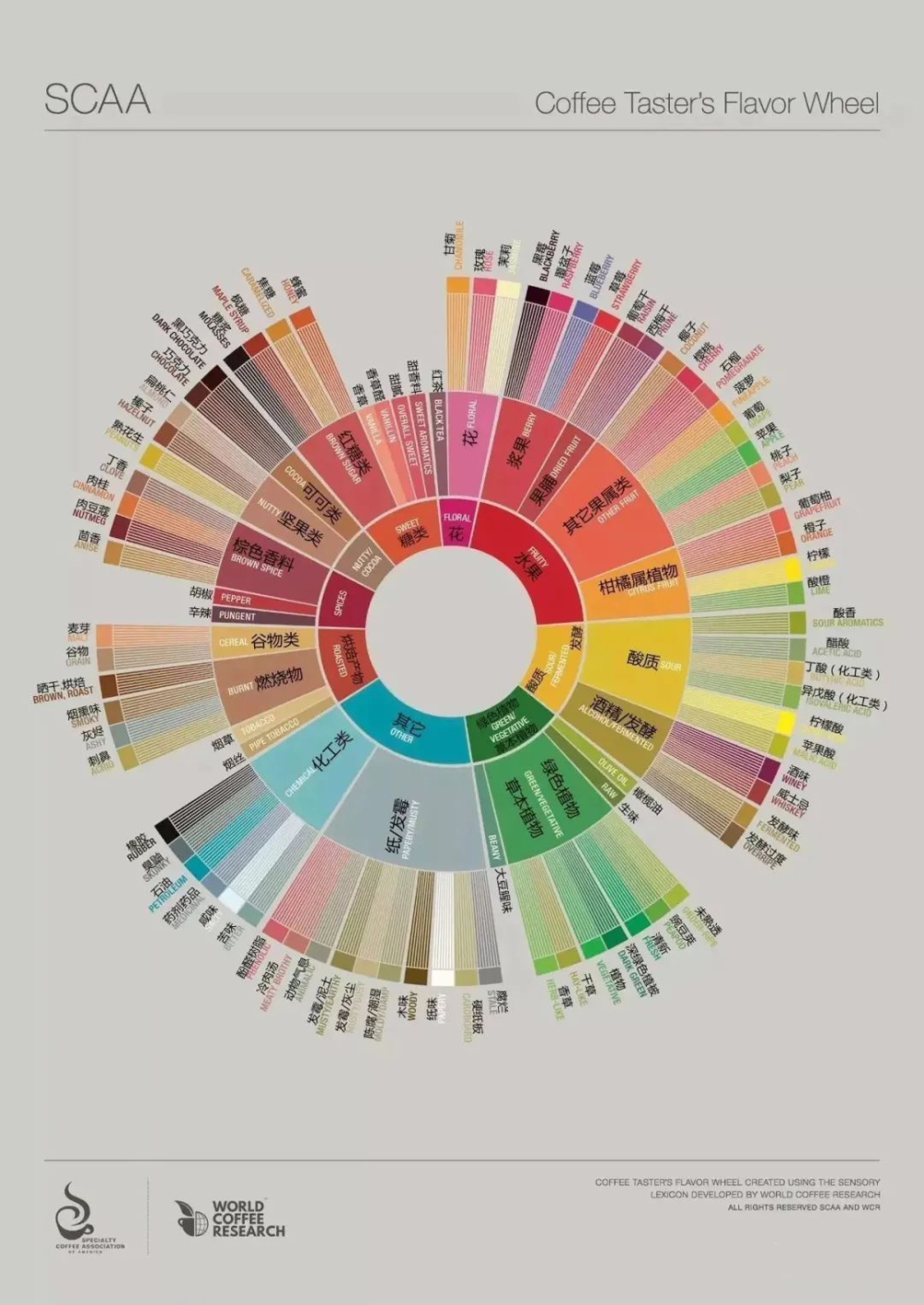 In this map, the spacing between flavors represents the degree of sensory similarity: the smaller the distance between two flavors, the more similar they are in terms of smell or taste; conversely, a larger distance indicates a clear difference. This design helps cuppers or coffee enthusiasts more accurately identify and describe the complex flavor combinations they perceive when tasting.
When using the new flavor wheel in practice, it is recommended to start from the inner circle to identify the major category of the flavor, such as whether it belongs to the fruit or roasted category; then move outward to view more detailed subcategories, such as citrus, berries, caramel, or chocolate; and finally, use the outermost layer’s detailed descriptions to pinpoint the specific characteristics of that flavor. This inside-out reading method can help you build a more systematic flavor memory and cupping logic.
Additionally, the application scenarios of the two versions of the flavor wheel are slightly different. The 1995 version is suitable for beginners to establish basic flavor concepts and understand the difference between defects and positive flavors; whereas the 2016 version is more suitable for advanced cupping, professional evaluation, or enthusiasts who wish to deeply explore the layers and variations of coffee aromas. Whether you are a beginner or an experienced barista, comparing these two generations of flavor wheels can give you a more comprehensive understanding of the sensory world of coffee.
The above content is compiled by CoffeeHunters, a coffee news website.


