







Introduction:Although Rwanda is a small inland country in Africa, its high-altitude terrain and volcanic soil nurture specialty coffees with delicate and layered flavors. This article delves into Rwanda’s main coffee varieties, washed processing methods, regional characteristics, and rigorous grading system. Through practical cupping experiences, it also highlights the flavor differences between Rwandan and Kenyan beans, serving as a practical guide for those new to African coffee or seeking premium bean sources.
Located in Central Africa, Rwanda is a landlocked country surrounded by highlands and is often referred to as the "Land of a Thousand Hills." Its high-altitude environment and fertile volcanic soil give Rwandan green coffee beans balanced acidity and sweetness, clean profiles, and a solid body—making it one of the must-try specialty origins for many coffee enthusiasts. This article will comprehensively introduce Rwanda’s growing conditions, major producing regions, core varieties, washed processing techniques, and grading standards, offering you a deeper understanding of this promising coffee nation.
Rwandan coffees often present berry, apple, green tea, and apricot notes on the cupping table, with a clear and layered overall flavor profile. Many cuppers note that their acidity is bright yet not harsh, often accompanied by soft fruit sweetness and subtle floral aromas, while the aftertaste lingers like black tea. During actual cuppings, Rwandan Red Bourbon varieties emit fresh apple and green tea aromas even before brewing, with a hint of elegant floral notes. Once hot water is poured, the berry and green tea scents become more vibrant. The first impression on the palate is a mild sweet-tartness from the berries, followed by the sweet flavors of apple and apricot, with an aftertaste that continues with the refreshing essence of green tea and fruit. Overall, the performance is very balanced and pleasant.

Rwanda’s geographical conditions are highly favorable for coffee cultivation. Coffee trees are mostly grown at altitudes between 1,700 and 2,000 meters. This elevation not only helps the coffee cherries ripen slowly but also aids in the accumulation of flavor compounds. Nearly all of the country’s coffee is grown by smallholder farmers, with an average holding of just 0.1 to 0.2 hectares per household—far smaller than commercial farms in places like Brazil. Although this smallholder model operates on a modest scale, it is a common production method in many parts of Africa and infuses each batch of coffee with rich human and regional character.
Rwanda’s specialty coffee-producing regions are primarily concentrated in the southern and western parts of the country. Southern areas such as the Huye Mountains and Nyamagabe, due to their higher altitudes, often produce coffees with pronounced floral and citrus notes. Meanwhile, the Nyamasheke region near Lake Kivu in the west is known for its aromatic, fruity, and juicy coffees. Although the flavor differences between regions are not extreme, professionally trained cuppers can still discern subtle characteristics—something that requires long-term tasting experience and in-depth knowledge of regional traits.
Looking back at the development of Rwanda’s coffee industry, its origins can be traced back to the German and Belgian colonial periods in the early 20th century. Coffee was introduced by missionaries, and although planting areas and yields expanded rapidly under colonial policies, exploitation of labor, low purchase prices, and high export taxes led to consistently poor coffee quality. Even so, after gaining independence, Rwanda gradually improved its production system by establishing the official body OCIR. Production steadily increased from the 1960s to the 1980s, peaking in 1986, but then stagnated due to political unrest in the early 1990s. Fortunately, after 1995, active assistance from the government and international organizations helped the industry recover. However, in recent years, the market has faced challenges due to the impact of the COVID-19 pandemic.
In terms of varieties, over 90% of Rwandan coffee consists of Bourbon and its derivatives, which are known for their good resilience, particularly suited to high-altitude environments. Bourbon originated on the island of Réunion and was introduced to Brazil in 1860, where it became widely cultivated across Latin America. Generally, Bourbon grown at high altitudes tends to have richer aromas and brighter acidity, with some even exhibiting complex flavors reminiscent of red wine. Compared to Bourbon varieties in Latin America, Rwandan Bourbons still hold competitive advantages in disease resistance and flavor expression, which is one of the reasons they stand out in the international market.
In the past, Rwanda faced challenges in post-harvest coffee processing management. Due to inadequate infrastructure, harvested coffee cherries were often delayed in processing, piled up for too long, and exposed to poor ventilation, leading to mold and spoilage. This affected overall quality and produced unpleasant defect flavors. Additionally, since washed processing was mostly provided by cooperatives or individual smallholder farmers—with each farming household owning only about 183 coffee trees—it was relatively difficult to track the consistency of quality for a single origin or producer. This also posed a major obstacle to upgrading to specialty-grade.
To address these issues, in 2000, with funding from USAID, Rwanda launched two key initiatives: PEARL and SPREAD, aimed at rebuilding the coffee industry chain. With the push of these programs, Rwanda successively established 46 modern washed processing factories, significantly improving processing efficiency and quality control capabilities. This also helped transform coffee exports into a key pillar of the national economy.

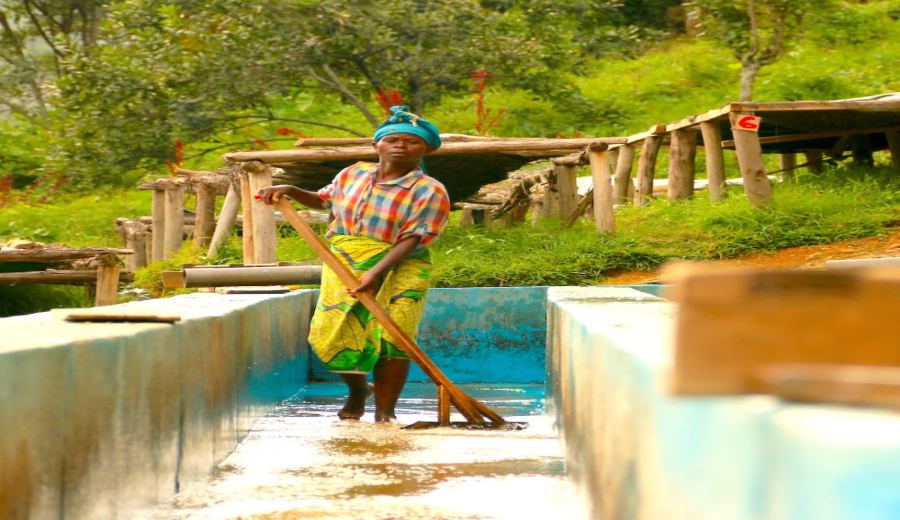
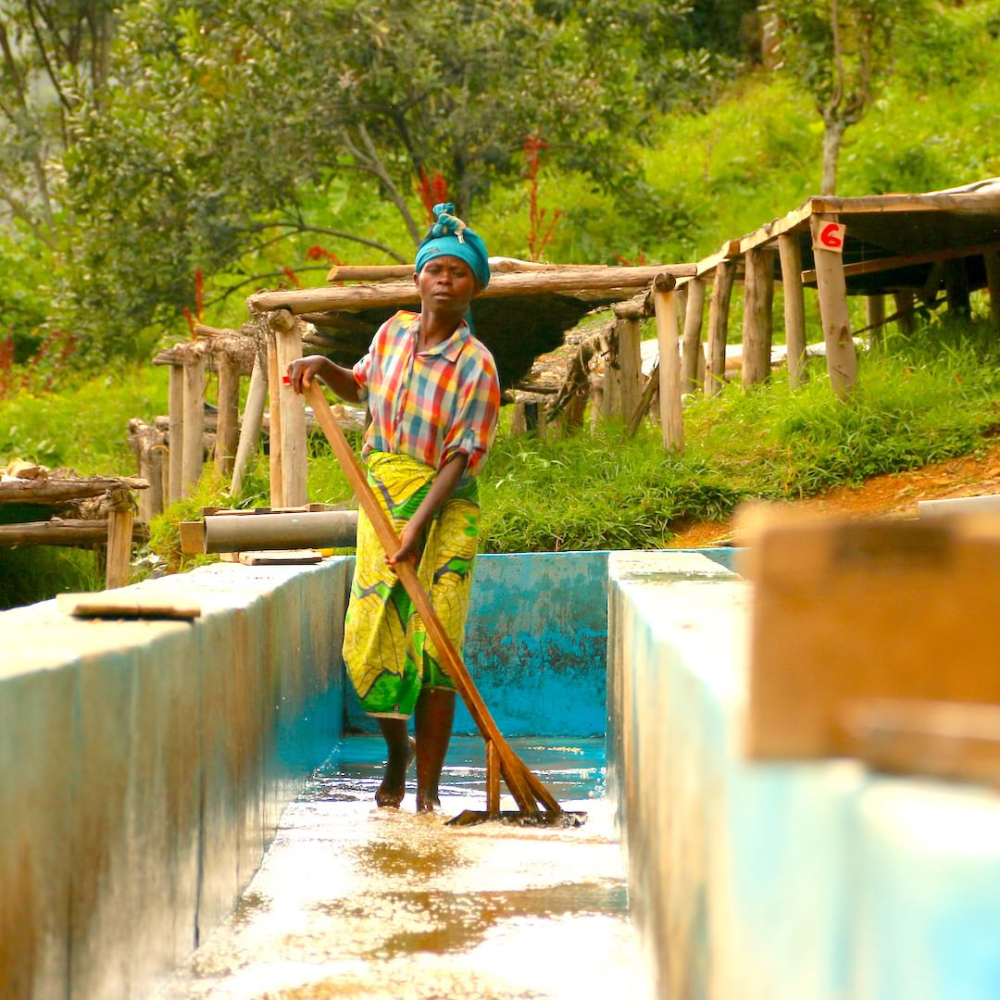
Currently, Rwanda mainly employs the washed processing method. The process includes: manually selecting ripe red cherries, removing the pulp and skin, conducting 12 to 18 hours of water fermentation to remove the mucilage, and finally evenly spreading the beans to dry until the moisture content drops below 14%. This method effectively highlights the intrinsic flavors of the coffee, minimizing impurity interference. As a result, specialty institutions often prioritize washed beans when recommending specific origins, enabling consumers to more clearly experience the unique flavor characteristics of the region.
In terms of grading, Rwanda classifies beans based on size and defect rate. The main grades include: AA grade (above 18 mesh, largest beans, highest price), SC grade (above 15 mesh with a defect rate below 5%, requiring strict manual selection), TT grade (13 to 14 mesh, or above 14 mesh but with a higher defect rate), T grade (below 12 mesh), and STL grade (broken beans, typically from lower-grade parchment beans). Among them, specialty coffee usually uses only SC grade or higher, whether washed, honey-processed, or naturally processed beans, and must pass strict evaluations such as the SCAA cupping form with a score of 85 or above to be classified as specialty grade. Furthermore, to ensure profitability, processing stations need to maintain a milling yield of at least 70% for SC grade coffee beans, reflecting the importance of grading and quality control for regional development.
The above content is compiled by CoffeeHunters, a coffee news website.


