







Introduction:This article delves into Bolivia, a niche yet highly promising coffee-producing country, focusing on the Caranavi region situated at elevations exceeding 1,660 meters and the six-hectare Vallecito Estate. It highlights the rare Java variety grown locally, paired with washed and cocoa natural processing methods. From the growing environment and varietal characteristics to processing techniques, cupping, and pour-over brewing, it offers a comprehensive exploration of the full flavor profile of high-altitude Bolivian coffee.
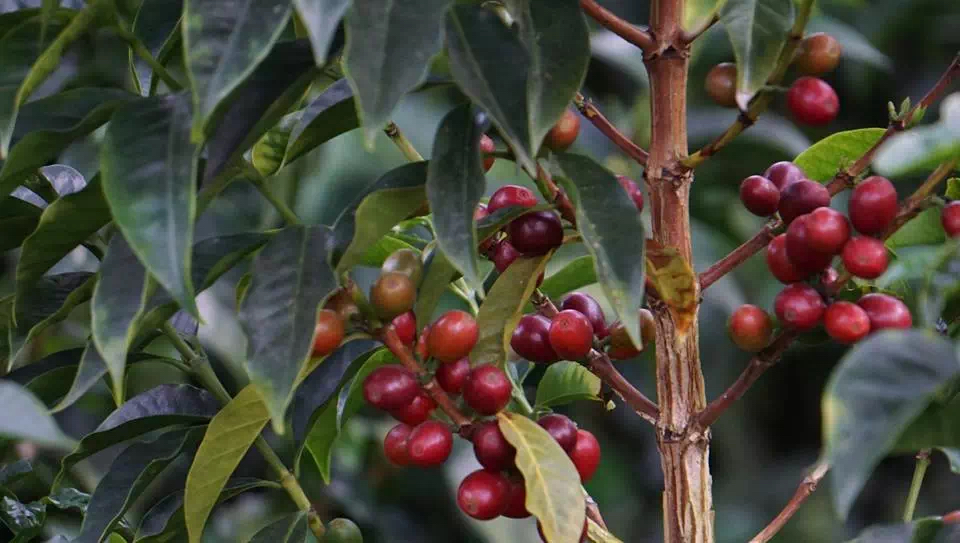
Although Bolivia’s coffee output is not significant on the global stage, the specialty coffee produced in its high-altitude regions boasts highly distinctive flavor profiles. Located within Bolivia’s core coffee belt, the Caranavi region is home to the small-scale Vallecito Estate, spanning just six hectares and sitting at an altitude above 1,660 meters. The consistently cool climate extends the ripening period of the coffee cherries, facilitating the accumulation of sugars and flavor compounds, resulting in pronounced sweetness and a soft citrus character.
Bolivian coffee from this region not only excels in sweetness but also often features berry-like flavors and delicate acidity. In slightly lower-altitude areas, the coffee tends to showcase a chocolatey richness and a balanced, gentle acidity. To highlight its unique personality, the Bolivian coffee beans from Vallecito Estate are mostly lightly roasted to preserve the nuances of their original flavors.
Lightly roasted coffee often exhibits brighter acidity, in contrast to the bold bitterness of medium-dark or dark roasts. However, factors influencing the final flavor of coffee go beyond roast level—the processing method also plays a crucial role. For instance, washed coffee typically delivers a clean and layered taste, while natural (sun-dried) processing accentuates sweetness and aromatic richness. For beginner coffee enthusiasts, it is recommended to start with washed beans, gradually explore natural-processed ones, and then further delve into high-altitude or special variety estate-level coffees.
Regarding varieties, the main coffee cultivars planted in Bolivia include Typica and Caturra, but the most distinctive is undoubtedly the “Java” variety. Although sharing the same name as Indonesia’s S-795 variety from West Java, Bolivia’s Java is entirely different. Its origins can be traced back to Ethiopia, and it is an elongated bean—earning its name due to its slender shape. Locally, the Java variety not only demonstrates strong resistance to leaf rust, making it suitable for smallholder farmers, but its flavor performance is also on par with the market-favorite Geisha variety.
It is worth noting that many consumers may easily confuse Bolivia’s Java with the honey-processed beans from the Edelweiss Estate in Indonesia’s West Java region. In reality, the Indonesian Edelweiss beans belong to the S-795 variety, characterized by complex aromas of mango, jackfruit, and red wine, whereas Bolivia’s Java has an entirely different genetic background and flavor profile. The two share only a similar name and should not be mistaken for each other.
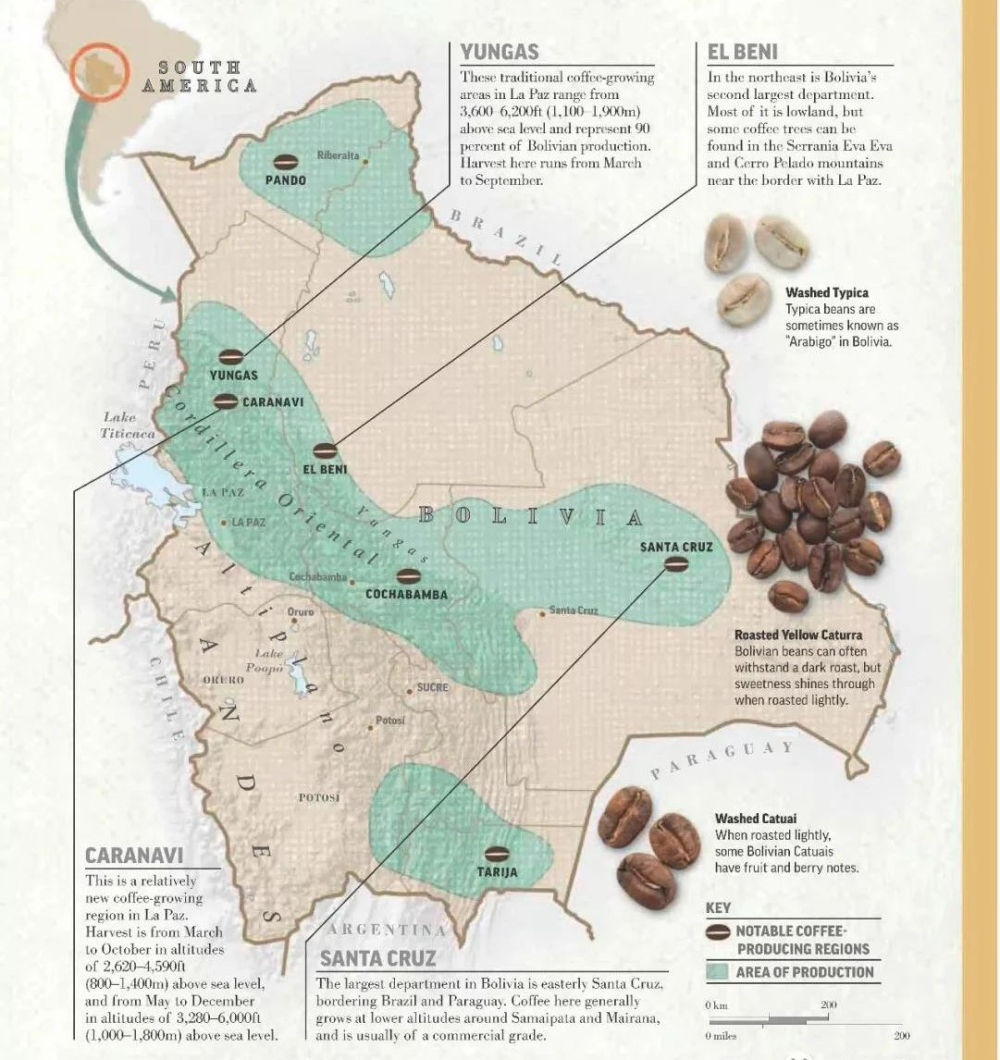
Bolivia’s coffee industry faces numerous challenges, particularly in transportation and infrastructure. Due to the country’s relatively underdeveloped economy, regions such as the Yungas lack well-established washing stations and transportation networks. The infamous “Road of Death” further poses high risks during the transportation of coffee cherries, including potential fermentation spoilage and off-flavor development—all of which directly affect export quality and market acceptance.
In terms of processing methods, most Bolivian farmers still employ the washed process: harvested coffee cherries are first depulped by a pulper to remove the outer skin and part of the fruit pulp, then the mucilage-covered beans are soaked in water for approximately 24 hours of fermentation. Afterward, the remaining mucilage is washed away with running water, and the moisture content is reduced to around 12% through sun drying or mechanical drying. Finally, the parchment layer is removed for storage. Additionally, in some high-altitude areas with cold climates, farmers opt for natural processing. However, to overcome issues like insufficient sunlight and unstable weather, many producers have adopted the cocoa natural process as an alternative to traditional sun drying.
The so-called cocoa natural process involves using low-temperature cocoa dryers to slowly and steadily dry the coffee beans, minimizing external environmental interference during the drying process. This technique was first promoted by Pedro of the Rodriguez family in the region. The process includes: carefully selecting ripe coffee cherries, washing them, and initially placing them on African-style raised beds with daily turning. After about a week, they are transferred to the cocoa dryer for low-temperature drying and finally stored in warehouses. This method effectively stabilizes quality, especially in high-altitude regions with unfavorable climatic conditions.

Based on actual cupping experience, sun-dried Bolivian coffee beans exhibit rich layers of aroma. Using a standard 200ml cupping bowl and a grind size with 70%-75% passing rate through a #20 sieve (approximately 11.3g of coffee), with water temperature controlled at 94°C, the dry fragrance initially reveals distinct hazelnut notes. After pouring water, the wet aroma emits the fermented fruity scent of ripe fruits. Overall, the flavor profile presents a creamy and hazelnut sweetness upon entry, with citrus and tropical fruit acidity gradually emerging as the temperature drops, accompanied by subtle fermented wine notes.
To better replicate everyday brewing scenarios, a V60 dripper can also be used for pour-over. The V60’s conical shape and large-bore design, combined with its unique spiral ribs, enhance water flow and air circulation. While the resulting cup may be less body-heavy, it clearly showcases the origin’s acidity, sweetness, and aromatic characteristics. Recommended brewing parameters are: water temperature 90-91°C, grind size BG#6m (granulated sugar size), brew ratio 1:15, total coffee dosage 15 grams.
During actual pour-over brewing, a simple three-pour method can be employed: begin with a 30g bloom for about 30 seconds to allow the coffee grounds to fully expand; at the 54-second mark, pour 125g of water, and when the water level drops to two-thirds of the coffee bed, proceed with the third pour, adding water up to 225g total by the 1 minute and 40-second mark, with a total brew time of approximately 2 minutes and 10 seconds. After brewing, gently swirl the coffee to enjoy its subtle fermentation notes, grape-like tones, nutty aromas, and delicate floral fragrances. With medium acidity, the overall profile presents a refreshing, juice-like mouthfeel.
The above content is compiled by CoffeeHunters, a coffee news website.


