







Introduction:Jamaican Blue Mountain coffee is hailed as one of the world’s finest coffees, renowned for its balanced and delicate flavor profile, and highly esteemed by coffee enthusiasts. This article delves into the background of the Blue Mountain coffee-growing region, the official grading classification standards, with a special focus on the rare status and actual flavor characteristics of Blue Mountain No. 1. It also provides professional cupping insights and pour over brewing parameter recommendations to help you gain a more comprehensive understanding of this classic coffee bean variety and master the optimal extraction method.
Blue Mountain coffee holds an almost mythical status in the hearts of coffee lovers—even those who have never tried it have likely heard of it. Compared to the various trendy coffee varieties popular today, Blue Mountain coffee is celebrated for its exquisite balance of acidity, sweetness, and bitterness, coupled with a rich and smooth mouthfeel. The key to this unique flavor lies in the exceptional geographical and climatic conditions of Jamaica’s Blue Mountain region. This article will take you on a deep dive into the origins of Blue Mountain coffee, the strict grading system established by the Jamaica Coffee Industry Board (CIB), and explain the rare value of Blue Mountain No. 1 in the global market. Additionally, we’ve compiled the cupping flavor characteristics of the Clifton Mount Estate Blue Mountain No. 1 and recommended pour over parameters to help you uncover the true nature of this top-tier coffee.
For many newcomers to coffee, Blue Mountain coffee is often regarded as something of a legend—even to the point where people have “heard of it before tasting it.” In numerous films and TV shows, Blue Mountain coffee is frequently depicted as a high-end beverage on the desks of corporate elites. Unlike the flashy, trendy coffee varieties popular today, Blue Mountain coffee emphasizes the harmonious coexistence of acidity, sweetness, and bitterness, offering a rich yet smooth taste. Due to its flavor profile, some regard it as the epitome of specialty coffee, while others feel it lacks distinct personality or character.
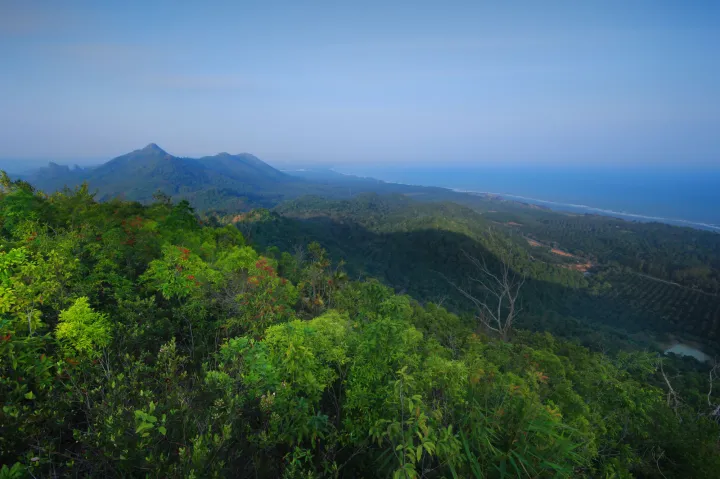
The uniquely special flavor of Jamaican Blue Mountain coffee is closely tied to its growing environment. The name “Blue Mountain” originates from the Blue Mountains in eastern Jamaica. Surrounded by the Caribbean Sea, when the skies are clear, the blue-tinted light reflected off the ocean illuminates the mountain range, hence the name “Blue Mountain.” The coffee trees are primarily planted within virgin forests, where a dense canopy offers shade, and the tropical rainforest climate—with its constant fog and abundant rainfall—provides ideal growing conditions.
It’s worth noting that although Jamaica’s natural environment is well-suited for coffee cultivation, the country is not the origin of coffee. Coffee was introduced by European colonists, with the earliest records dating back to the late 1720s, when Sir Nicholas Lawes, the then Governor of Jamaica, brought over Typica coffee from Martinique and planted it at the foothills of the Saint Andrew Parish. Subsequently, the Blue Mountain region gradually became an important coffee-growing area.
Currently, the main producing areas of Blue Mountain coffee include the four administrative regions of Saint Andrew, Saint Thomas, Saint Mary, and Portland. However, not all coffee produced in these areas can be called Blue Mountain coffee. According to the regulations of the Jamaica Coffee Industry Board (CIB), coffee beans are classified into three major grades based on altitude: Blue Mountain coffee, High Mountain coffee, and Jamaica Prime coffee. Only beans grown at altitudes above 1,000 meters qualify as Blue Mountain coffee.
[Grade Standard Details]
• Blue Mountain Coffee: above 1,000 meters in altitude
• High Mountain Coffee: between 500 and 1,000 meters in altitude
• Jamaica Prime Coffee: below 500 meters in altitude, not limited to the Blue Mountain region
Within the Blue Mountain and High Mountain grades, beans are further subdivided into No. 1, No. 2, No. 3, and PB (Peaberry) based on bean size and defect rate. Only those with a defect rate below 2% and meeting specific screen size criteria can be categorized into higher grades. Among them,Blue Mountain No. 1 beans must have a screen size of 17/18.It is the top-grade item within the Blue Mountain classification. Due to production area restrictions and stringent standards, the yield of Blue Mountain No. 1 is extremely limited—in the past, over 90% of its production was purchased by the Japanese market.
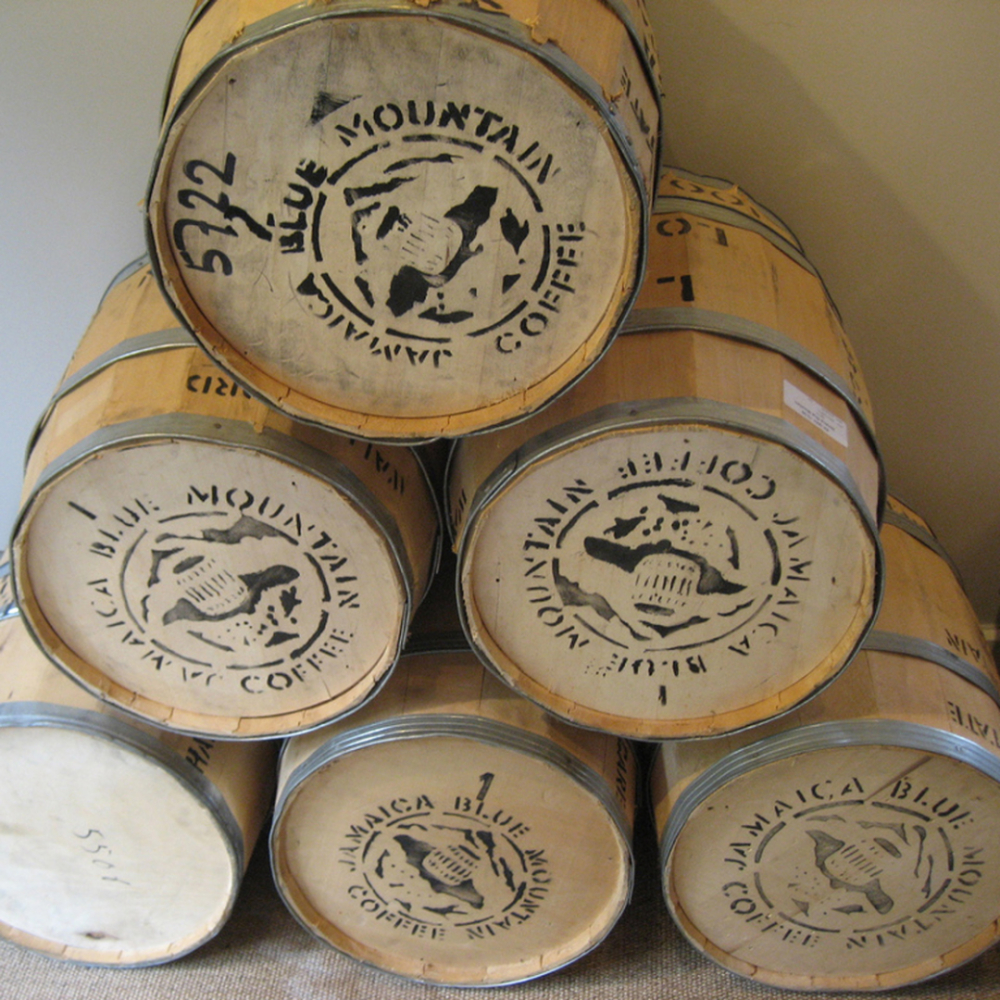
Nowadays, as Japanese demand has slowed, Blue Mountain coffee has gradually entered other markets. Though still rare, it is no longer entirely out of reach. However, market labels such as “Blue Mountain blend” or “Blue Mountain flavor” often confuse consumers. To identify authentic products, look for their traditional wooden barrel packaging and the official Jamaican origin certification—these are usually visible at specialty coffee shops.
Among the many Blue Mountain coffee brands on the market, the Blue Mountain No. 1 produced by Clifton Mount Estate is highly regarded. Located near Catherine’s Peak, this estate is one of the oldest coffee plantations in Jamaica. It fell into disuse for many years after the owner’s wife passed away, until it was taken over by the Sharp family in 1978, who began focusing on coffee cultivation in 1984. After years of effort, the estate was recognized as a high-quality coffee producing area by the Jamaican Ministry of Agriculture for the 2017/2018 season. Its washed-process Blue Mountain No. 1 beans are known for their nutty and dark cocoa flavors, and are often regarded by professional baristas as one of the representative coffees of the region.
To brew Blue Mountain coffee to bring out its optimal flavors, we’ve compiled a set of practical parameters. We recommend using a KONO filter, with water temperature controlled at 88°C, a coffee dosage of around 15 grams, a coffee-to-water ratio of 1:15, and a grind size based on 75% passing through a Chinese standard 20-mesh sieve. Since freshly roasted beans may still contain relatively high levels of gas even after 4–7 days of resting, it’s advisable to begin with a 30-second bloom to facilitate subsequent flavor release.
The specific steps are as follows: first, pour 30 grams of hot water for a 30-second bloom, then slowly circle-in water from the center using a fine stream until you reach 125 grams. When the water level is about to expose the coffee bed, continue circling-in water until you reach 225 grams. The total extraction time is approximately 2 minutes. Using this method will fully showcase the rich nutty and dark cocoa aromas of Blue Mountain coffee, delivering a thick, smooth mouthfeel with a balanced interplay of acidity, sweetness, and bitterness.
The above content is compiled by CoffeeHunters, a coffee news website.


