







Introduction:From the rugged flavors dominated by natural processing in the early days to today's clean washed profiles featuring bright citrus and lemon notes, Ethiopia's Yirgacheffe and Sidamo have long become classics in the hearts of specialty coffee enthusiasts worldwide. This article delves into the origins of the local heirloom variety, the differences between washed and natural processing methods, and uses three single-origin beans as examples to detail their flavor characteristics, roasting strategies, and pour-over parameters—helping readers from beginners to advanced levels fully master the brewing techniques of these flavor stars.
Ethiopia’s Yirgacheffe has always been a star region in the global specialty coffee map, with its bright, floral-fruity aroma and balanced acidity-sweetness setting it apart from many other origins. However, in its earlier days, Yirgacheffe was not so “clean”—it was primarily processed using traditional natural methods, with inconsistent quality and often earthy or off-flavors. It wasn’t until 1972, when Latin American washed processing techniques were introduced locally, that this situation was completely reversed, giving rise to the refreshing flavor profile now renowned worldwide.
Compared to traditional natural processing, the most distinctive feature of washed processing is its ability to effectively remove defective beans and, through fermentation and washing procedures, allow the coffee beans to exhibit clearer and purer fruit acidity and floral notes. The bright lemon, citrus, and tea-like qualities of Yirgacheffe coffee owe much to the washed process.
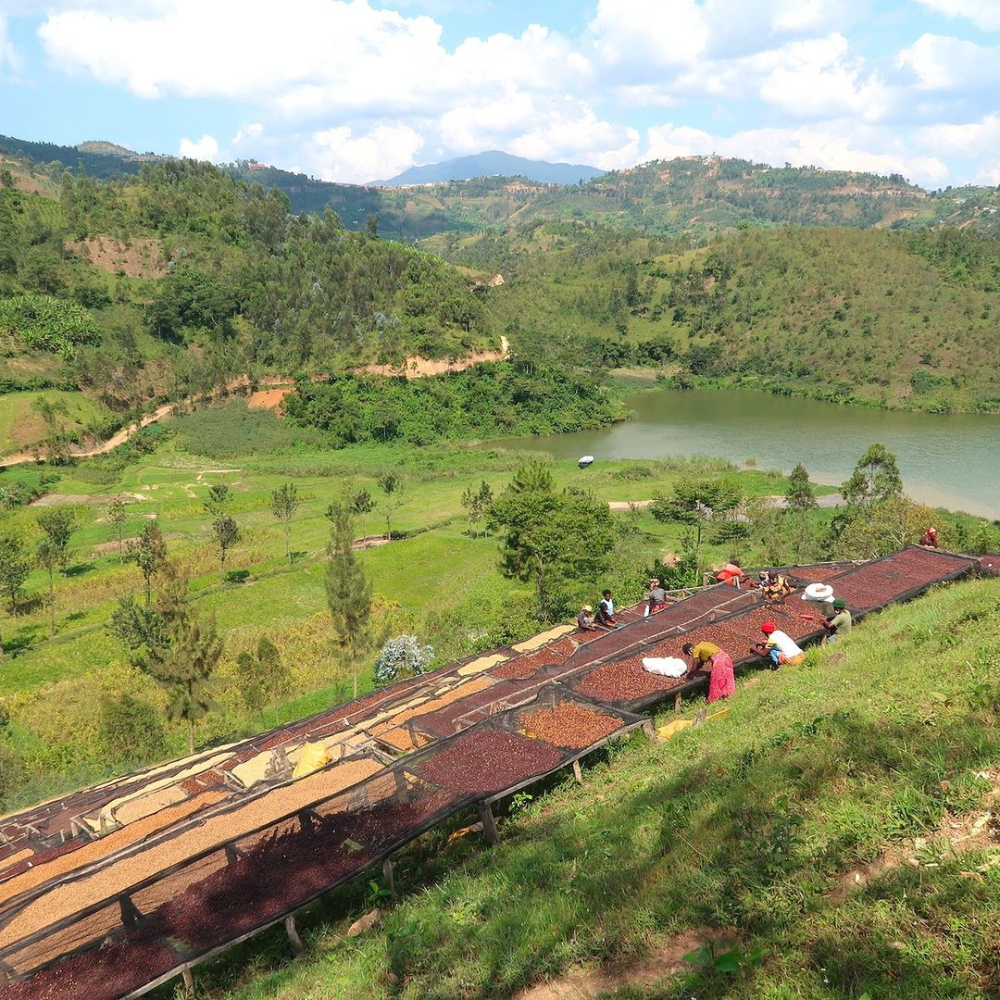
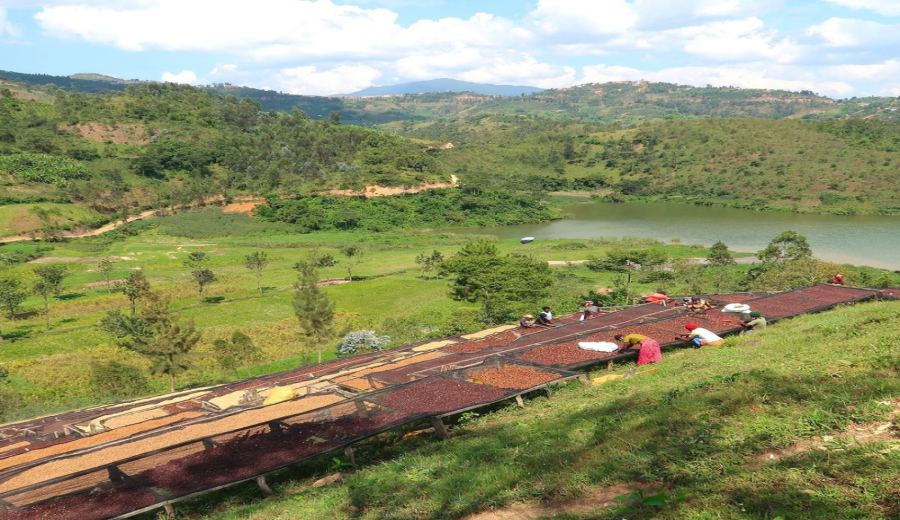
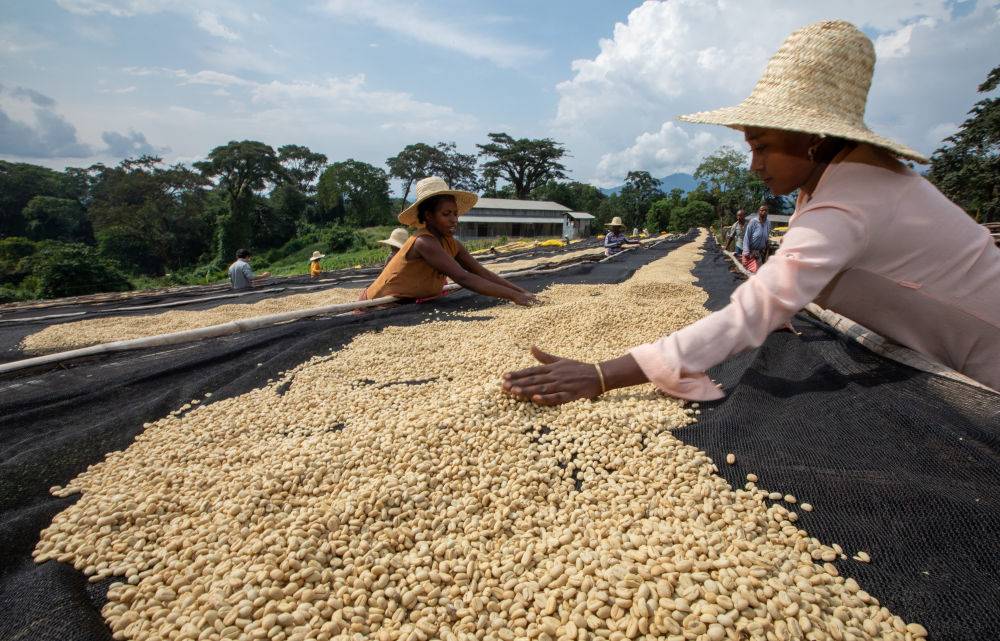
The steps of washed processing are relatively complex, but each one is highly meaningful. First, freshly harvested coffee cherries are placed in water, where the unripe or overripe beans (i.e., lower-density defective beans) float to the surface and are screened out using buoyancy principles. Next, a pulper is used to remove the skin and pulp, leaving the parchment-covered beans with mucilage still attached. These beans are then placed in fermentation tanks and left to ferment for 18 to 36 hours, depending on local temperature and humidity conditions, to break down the mucilage layer. Afterward, they undergo an additional washing and scrubbing process in channels for about 30 to 60 minutes, which helps further remove lower-density defective beans. Finally, the selected parchment beans are placed on African raised beds to dry naturally in the sun for about 14 days, until the moisture content reaches the ideal standard of around 11% to 12%, at which point they can be packaged and stored.
It’s worth mentioning that in Ethiopia, many coffee varieties have not yet undergone complete international genetic identification. These local native varieties are collectively referred to as “Heirloom,” meaning “heritage variety” or “ancient variety.” Although the exact variety name of each coffee tree cannot be precisely identified, these native varieties are key to shaping the unique flavors of Yirgacheffe and Sidamo. The coffee beans produced by the Guji Dingding Cooperative shown in the photo are made from such native varieties.

If you’re a beginner to pour-over coffee, the Yirgacheffe series is a great place to start. These coffees typically feature pronounced fruit acidity and floral aromas, along with a refreshing taste—not only suitable for everyday drinking but also helpful for developing sensitivity to coffee flavors. Currently, there are many washed and natural single-origin beans from Yirgacheffe easily available on the market, among which three representative ones include: washed-process Yirgacheffe, natural-process Red Cherry, and the specialty washed beans produced by the Guji Dingding Cooperative.
In terms of roasting strategy, since Yirgacheffe emphasizes acidity and aroma, medium-light roasting is generally chosen to preserve its vibrant fruit acids and floral layers. For example, light roasting can more fully showcase white floral notes, lemon tones, and a green-tea-like finish. These beans are grown at high altitudes, resulting in harder bean density, so attention should be paid to using higher water temperatures and finer grind sizes during brewing to fully release their delicate flavors.
Practical recommendations are as follows: use a Hario V60 filter cone, with water temperature controlled at 91~93℃, coffee dosage at15 grams, and a brew ratio of1:15(grind size recommended as medium-fine, based on China Standard No. 20 sieve, with a passing rate of approximately80%). This set of parameters balances extraction efficiency and flavor expression, especially suitable for highlighting Yirgacheffe’s lively acidity and refined aromas.
For brewing technique, the “three-stage extraction” method is recommended. First, place the coffee grounds in the filter cone, pour in an equal amount of hot water (about twice the weight of the coffee grounds) for blooming, for about30 seconds, which helps the coffee grounds expand and release aroma. Then, pour water in small streams in even circular motions from the inside out, accumulating to125 gramsfor the first pour, allowing the coffee bed to settle briefly. When the water level drops to the middle of the filter cone, pour again with a steady, fine stream up to225 grams, then remove the filter cone. The total brew time should be controlled at aroundapproximately 2 minutesto complete a cup of Yirgacheffe pour-over coffee with balanced flavor and distinct layers.
In summary, the washed processing of Yirgacheffe and Sidamo is not just a technological advancement but also a deep exploration of the potential of coffee flavors. From removing impurities to revealing details, each processing step directly influences the final cup profile. Whether you’re looking for a daily drinker or aiming to refine your pour-over skills, Yirgacheffe is an excellent choice. From understanding processing methods, selecting the right roast level, to mastering the correct brewing technique, every step is worth savoring and practicing in detail.
The above content is compiled by CoffeeHunters, a coffee news website.


