







Introduction:Faced with the wide variety of coffee grinders on the market, many beginners often find it difficult to make a choice. This article systematically analyzes how to select a grinder that suits you from three key aspects: power type, price range, and burr structure. Whether you're a beginner pour over enthusiast or an advanced user looking to optimize extraction, you’ll find clear purchasing guidance and practical advice here to help you make an informed decision based on your budget and brewing method.
The wide variety of coffee grinders on the market often leaves beginners unsure where to start. This article will outline a clear purchasing strategy from three key dimensions: power source, price range, and burr design. Whether you’re just starting out with pour over coffee or looking to upgrade your equipment as an advanced user, you can find the most suitable grinder type based on your individual needs.
Coffee grinders are generally divided into two main categories based on brewing methods: one is suitable for atmospheric extraction scenarios such as pour over and cold brew, while the other is specifically designed for espresso. Further divided by burr structure, they can be categorized into flat burr, conical burr, and gear burr types. Additionally, they can also be classified by drive type into manual and electric versions. However, no matter which classification method is used, the first principle when choosing a grinder should always be to make a reasonable selection based on your personal budget and usage needs.
Let’s start with the power source of the grinder. Currently, grinders on the market are mainly divided into manual and electric types, and the biggest difference between the two lies in how the power is provided.
Hand-crank grinders rely entirely on manual force. Users rotate a handle installed at the top of the body, which drives the internal burrs to turn, thereby grinding coffee beans into powder. Since there is no built-in motor, these grinders are usually compact and easy to carry. For beginners who are just getting into coffee and want to gradually explore flavors, or for students and coffee enthusiasts on a limited budget who often travel but don’t want to give up the pour over experience, hand-crank grinders are not only affordable but also quite practical.
Electric grinders, on the other hand, rely on a motor to drive the burrs, so they must be connected to a power source to function. Their advantage lies in fast grinding speed and relatively effortless operation, making them suitable for users who value efficiency. However, due to the built-in motor, most electric grinders are larger in size and require a fixed power source, making them less mobile than hand-crank models. If you have a more generous budget, a relatively fixed brewing environment, and don’t want to put too much effort into the grinding process, an electric grinder is a worthwhile option to consider.
Next, let’s talk about the price range of coffee grinders. As mentioned earlier, the price range for coffee grinders is very broad, ranging from just a few dozen yuan to tens of thousands of yuan. Excluding simple bean choppers that cost only a few dozen yuan and commercial equipment that can go for tens of thousands, the budget for most home users typically falls between a few hundred and a thousand yuan. Based on your personal budget, you can make a more suitable choice.
If your budget is more flexible, electric grinders are undoubtedly the better direction. Whether in terms of grinding precision or service life, electric grinders have clear advantages over hand-crank models. However, it’s worth noting that this advantage usually becomes more apparent when the price exceeds one thousand yuan. Below the one-thousand-yuan mark, hand-crank grinders actually perform better because they don’t need to account for motor costs and can allocate more resources to core grinding components, thus offering better value for money.
If you decide to go with a hand-crank grinder, you can refer to the following four common price ranges when making your selection: 200–499 yuan is the entry-level range, suitable for beginners, offering an affordable price and basic grinding performance that meets everyday needs; 500–799 yuan is the mid-range category, with better burr and bearing materials, resulting in improved grinding quality and durability; 800–999 yuan is considered high-end for hand-crank grinders, but the actual experience difference compared to the previous tier is not significant. As for products over one thousand yuan, the overall quality and user experience usually see a noticeable leap. If your budget allows, you can choose a product with an appealing appearance or from a well-known brand.
If your budget reaches several thousand yuan, you might actually consider going straight for an electric grinder. Generally speaking, you can get a model with quite good performance for under four thousand yuan. For example, models like the Royal Kono Mini, Fellow ODE, and Tiamo Carver are all cost-effective choices. But when purchasing, pay special attention: most electric grinders are divided into espresso and single-origin (pour over) categories, and because the grind size requirements for the two are vastly different, the vast majority of models on the market cannot serve both purposes. Be sure to confirm the applicable type of the grinder before placing your order to avoid inconvenience caused by mistakenly purchasing the wrong type.
Finally, let’s discuss the burr types of coffee grinders. Even after the first two dimensions have helped you narrow down a suitable model, if you want to further optimize extraction, you can delve deeper into the shape and particle size distribution of the ground coffee — and this is determined by the grinder’s burr design.
Coffee grinder burrs are mainly divided into three types: flat burr, conical burr, and gear burr. Different burr structures directly affect the shape of the coffee particles and the uniformity of their distribution.
Flat burrs are the most common type, and their grinding principle is primarily based on “shearing.” After coffee beans enter the burrs, they are cut into flake-like or chunky particles by sharp blades. These particles have a larger contact surface area with water, leading to faster release of flavor compounds during extraction, and often result in a richer and more layered taste profile.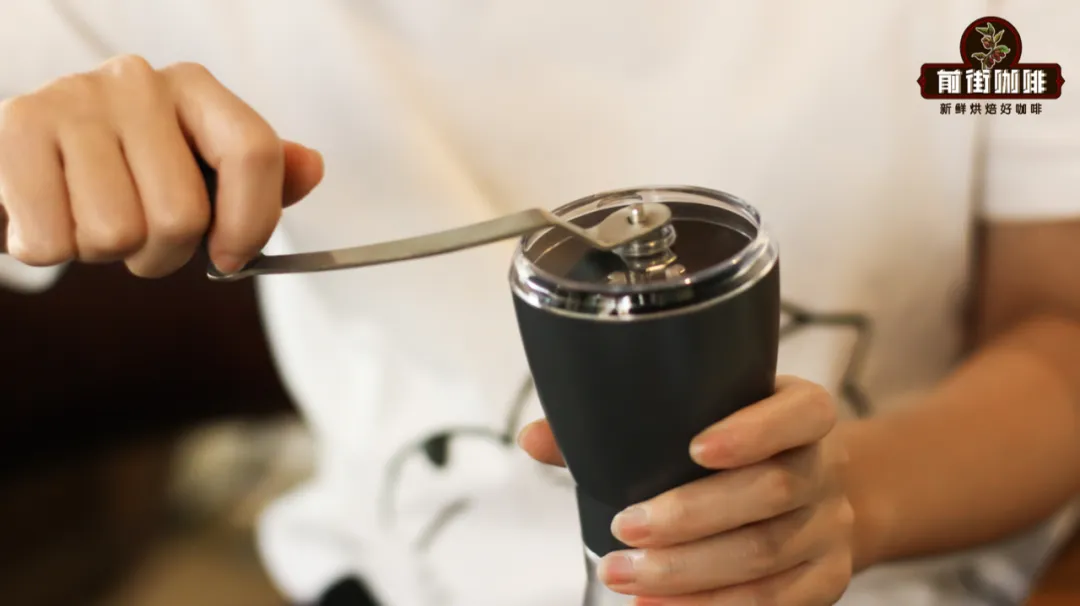
Conical burrs are also widely used, and their grinding method is mainly based on “crushing,” producing mostly irregular chunky particles with a lower proportion of fine powder. Because the particles are larger and denser in texture, water penetrates more slowly, and the dissolution process is gentler, helping to avoid issues of over-extraction.
Gear burrs can be seen as an upgraded version of flat burrs. Although they are also made up of two burr discs, their blade design is gear-shaped. This change effectively reduces the compression effect during the grinding process, resulting in more uniform particles and fewer fines. The grinding method of gear burrs is mainly based on “grinding,” producing particles that are mostly polygonal and nearly spherical in shape. The distribution of coarse and fine particles is more balanced, which helps improve the consistency and richness of coffee extraction.
With the above three purchasing dimensions in mind, readers should be able to find the coffee grinder that best suits them based on their own budget and practical needs. Whether you’re pursuing the convenience of a hand-crank model or the efficiency and precision of an electric one, as long as your goal is clear, you can find a desirable and practical grinding tool in the diverse market.
The above content is compiled by CoffeeHunters, a coffee news website.


