








Introduction:Dive deep into the flavor profiles and processing differences across the world’s three major coffee-growing regions—Africa, Latin America, and Asia—and explore how terroir, altitude, and processing methods shape each region’s unique coffee character. Additionally, focus on key Asian producing regions such as Yunnan, Indonesia, and Papua New Guinea, examining varietal evolution, processing techniques, and representative flavor traits to help coffee enthusiasts build more precise regional recognition skills and bean selection criteria.
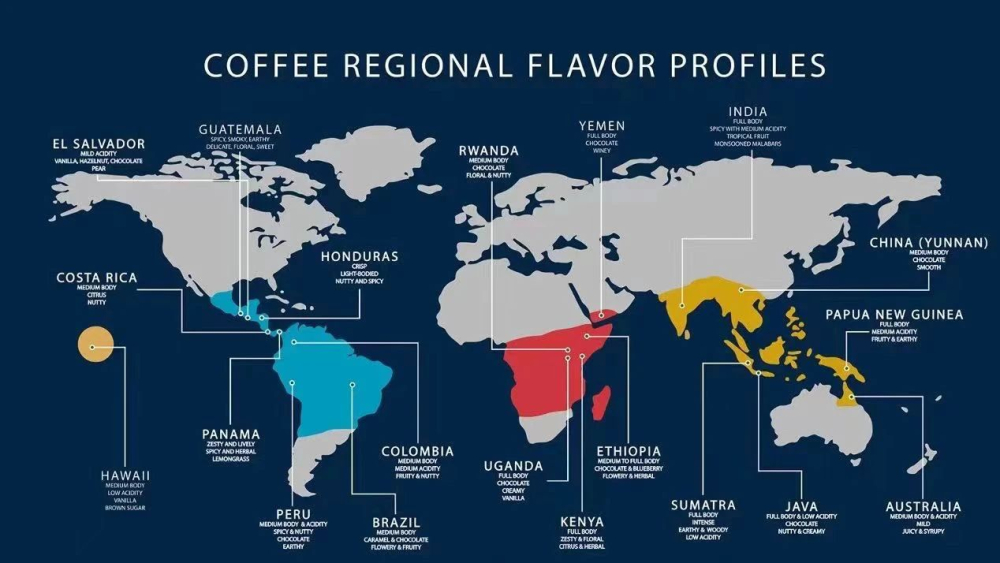
When purchasing coffee beans, relying solely on the region indicated on the packaging often makes it difficult to grasp their true flavor profile. Understanding the basic flavor characteristics of the world’s three major coffee-producing regions—Africa, Latin America, and Asia—is a crucial first step in quickly identifying coffees that align with your personal taste preferences. Among the many coffee supply channels, shops that focus on single-origin beans typically carry over fifty varieties from these three regions. Based on professional cupping experience, African coffees generally exhibit bright acidity and fruity notes, American coffees tend to carry warm flavors such as nuts and chocolate, while Asian coffees are known for their full body and rounded sweetness, making them particularly appealing to those who prefer dark roasts and bold profiles.
Overview and Regional Differences of Asian Coffee Producing Regions
Asian coffee-producing regions mainly include countries such as Indonesia, China, Vietnam, India, and Papua New Guinea. The overall coffee style in this region leans toward full body and intense flavors, but due to variations in terrain, climate, and altitude, there are still notable differences in flavor profiles among producing countries. Among them, Yunnan coffee in China has gradually emerged in recent years, shifting from being relatively overlooked to becoming one of the preferred choices for many roasters and green bean traders, showcasing undeniable potential and market value.
Yunnan, China: Geographic Advantages and Varietal Background
Located south of the Tropic of Cancer, Yunnan features a subtropical mountainous climate with unique highland geology and fertile, loose red soil, along with a mild and stable climate—conditions particularly well-suited for the growth of small-bean coffee, i.e., Arabica. When it was first introduced to China, small-bean coffee was used as a common name for ease of promotion, though it mostly refers to the Catimor variety, which has a long cultivation history in Yunnan. In addition, traditional varieties such as Typica and Bourbon were also planted in Yunnan in earlier times, but they were gradually phased out by the market due to limitations in yield and disease resistance. To this day, Baoshan remains recognized as a premium producing area for Yunnan small-bean coffee, with an average annual temperature of about 21.5°C and very rare frost, making it extremely suitable for coffee cultivation.
Evolution and Characteristics of Yunnan Coffee Processing Methods
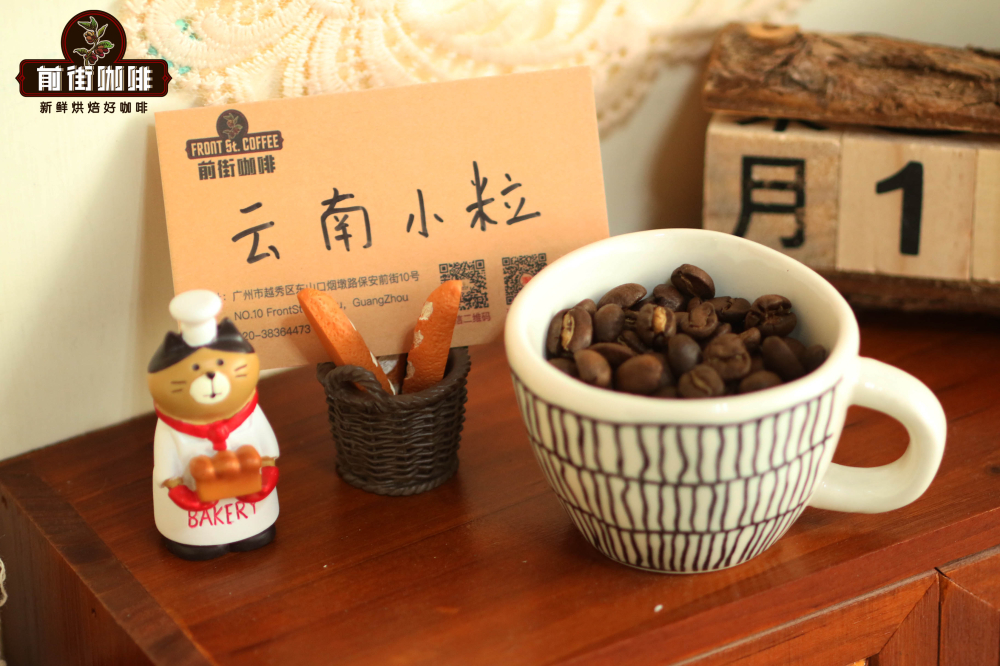
Currently, the processing methods for Yunnan coffee beans are diversifying, with experiments in washed, natural, and anaerobic processes, but washed processing remains the mainstream. The washed method includes the following steps: selecting coffee cherries, removing the pulp, fermenting, washing and cleaning, drying, and finally hulling. By precisely controlling fermentation and washing processes, it is possible to effectively remove pulp residues, resulting in a cleaner acidity and a more pristine flavor profile. Common washed Yunnan beans such as “Yunnan Small-Bean Coffee” and “Huaguoshan Typica” have, through repeated cupping and roasting adjustments, exhibited notes of nuts, chocolate, and cream, highlighted by a prominent brown sugar sweetness, delivering an overall balanced and representative regional style.
Indonesia: Wet-Hulling and the Herbal Notes of Mandheling
Indonesia is the world’s leading producer of Robusta coffee, with its coffee industry dating back to 1696 when the Dutch introduced coffee to Java. However, the leaf rust epidemic of 1877 nearly destroyed the local Arabica varieties, leading to a shift toward the more disease-resistant Robusta. Today, Arabica coffee in Indonesia is primarily concentrated in northern Sumatra, while southern Sumatra mainly produces Robusta. The most iconic Arabica offering from Indonesia is Mandheling, known for its intense herbal, spicy, and earthy characteristics, and beloved by coffee drinkers around the world who prefer bold flavors.
Wet-Hulling: Indonesia’s Unique and Efficient Processing Method
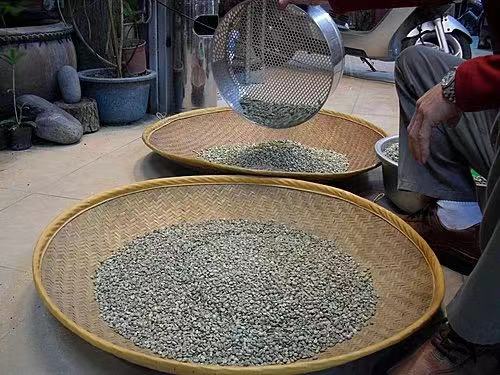
Due to the consistently humid and rainy climate, Indonesian coffee farmers often use the wet-hulling method (Giling Basah) to accelerate the drying process. This technique involves removing the skin and pulp, followed by a short fermentation period before sun drying. Once the moisture content drops to 12–13%, the beans are hulled. Because the beans are not fully dry during this process, the inner parchment is removed prematurely, often resulting in the distinctive “elephant ear” cracks commonly seen in Mandheling beans—a feature, not a defect. Additionally, some Mandheling beans undergo aging, further enhancing flavor complexity. For example, aged Mandheling is stored for over three years before being released, resulting in a richer and more robust taste.
Papua New Guinea: Highland Coffee and the “Little Blue Mountain” Reputation
Papua New Guinea (PNG) coffee, grown in high-altitude mountainous regions, is often referred to as the “Little Blue Mountain.” Most of the coffee is cultivated by smallholder farmers, accounting for a significant portion of the country’s agricultural output and providing income for one-third of the population. Arabica coffee from the PNG AA Sigri Estate is frequently described as having spicy notes and bright, sweet acidity. Its cultivation history shares deep roots with Jamaican Blue Mountain Typica, leading some enthusiasts to view it as a continuation of the Blue Mountain lineage. PNG mostly uses washed processing, yielding a clean and bright flavor profile that differs from the deep and heavy character of Indonesian coffee, resembling more closely the layered profiles of South American coffees.
Summary of Flavor Profiles Across Asia’s Three Major Producing Regions
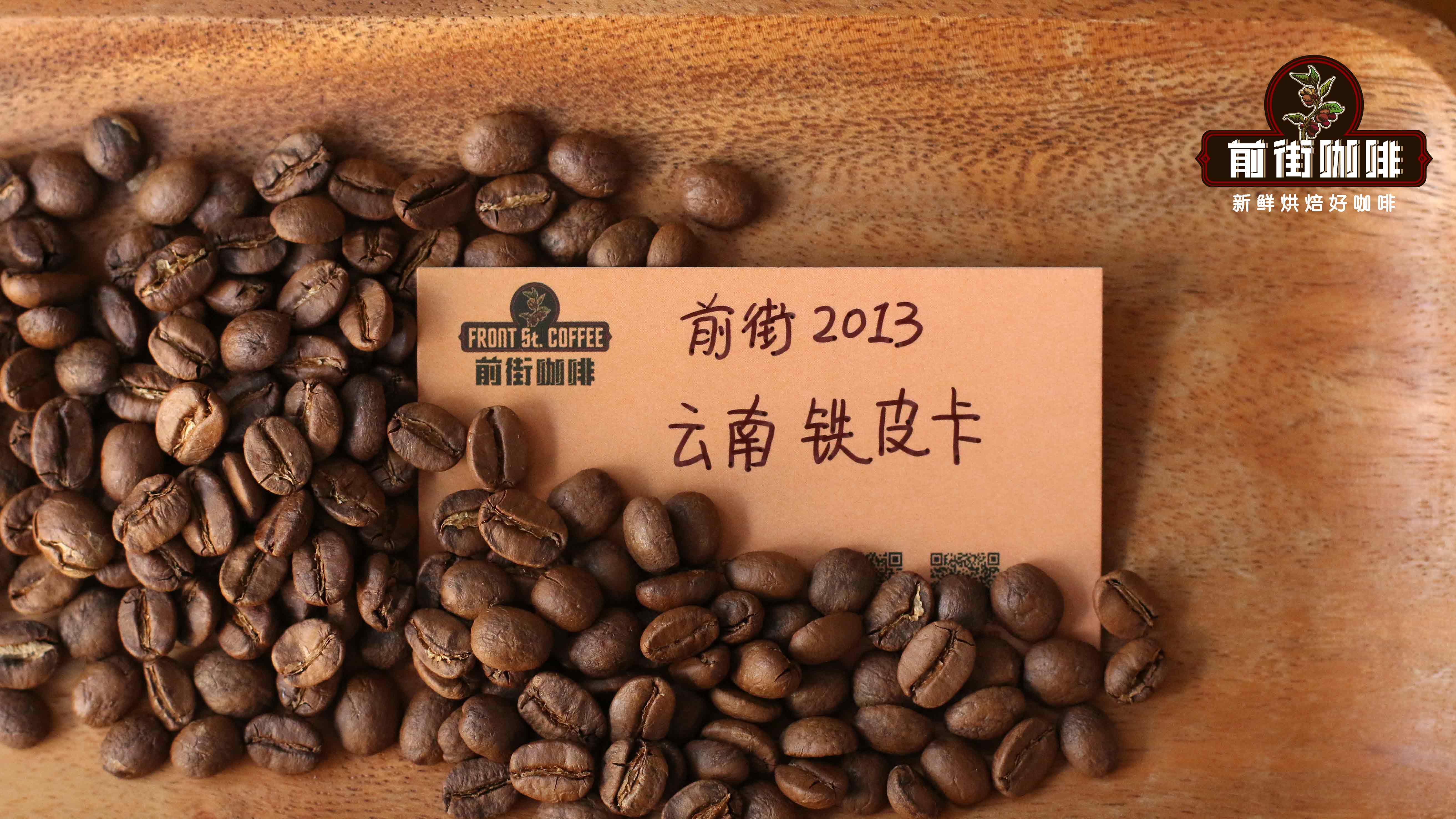
Overall, Asia’s coffee-producing regions showcase a rich diversity of flavor potential—from Yunnan’s full-bodied sweetness, to Indonesia’s herbal and spicy notes, to Papua New Guinea’s bright fruit acidity. Each region, shaped by the interplay of geography, varietals, and processing methods, produces distinctly unique coffee personalities. Gaining a deeper understanding of these differences not only helps coffee enthusiasts make more informed purchasing decisions, but also enhances sensitivity and appreciation for the spectrum of coffee flavor profiles.
The above content is compiled by CoffeeHunters, a coffee news website.


