







Introduction:Blue Mountain coffee is world-renowned for its exceptional quality, but its grading system and selection criteria are less well known. This article delves into the strict classification standards of Jamaican Blue Mountain coffee from Grade 1 to Grade 3, helping you identify the key characteristics of genuine Blue Mountain No. 1 beans. It also details how the washed processing method, growing altitude, and varietal advantages shape its unique flavor profile. Practical pour over techniques and optimal extraction parameters are provided to help you fully showcase the rich, balanced chocolate and nutty notes of Blue Mountain coffee.
Blue Mountain coffee is hailed as one of the world’s top specialty coffees, and its rigorous grading system and distinctive flavor have always been focal points for coffee enthusiasts. The Jamaican government, through an official certification mechanism, classifies Blue Mountain coffee into multiple grades based on quality, with Blue Mountain No. 1 representing the highest quality level. This article will comprehensively introduce the basis for Blue Mountain coffee’s grade classification, how to identify authentic Blue Mountain coffee, and through practical pour over experience, analyze the varietal characteristics, processing methods, and captivating flavors of Blue Mountain No. 1. It aims to help coffee lovers master tasting tips and precise extraction parameters.
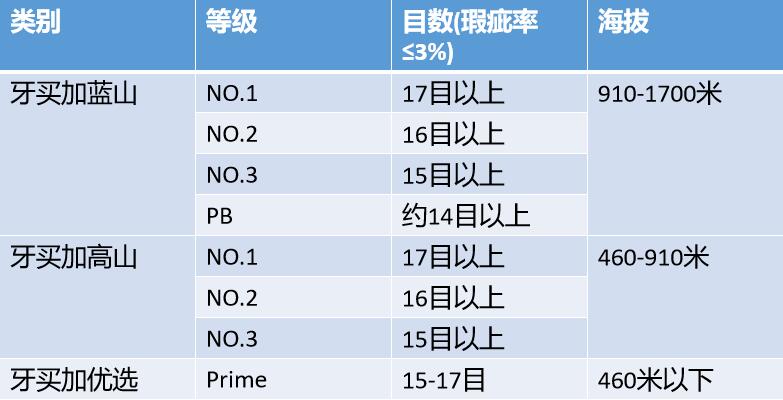
The reason Blue Mountain coffee stands out lies in its extremely stringent grading system. To clearly distinguish it from regular Jamaican coffee, the local government, through the Jamaica Coffee Industry Board (JCIB), provides certification. Only Arabica Typica variety coffee beans grown at altitudes between 910 and 1700 meters in the Blue Mountains and certified by the official body can be labeled as Jamaican Blue Mountain coffee. The eligible planting area spans only about 6,000 hectares, concentrated on the five main peaks of the Blue Mountains: John Crow, St. John's Peak, Mossman's Peak, High Peak, and Blue Mountain Peak. This core production area accounts for only one-third of the entire Blue Mountain region, and only about 15% of Jamaica’s annual coffee output earns the Blue Mountain label. In addition, as altitude increases, harvesting difficulty and labor costs also rise accordingly.
The Typica variety, which is primarily cultivated for Blue Mountain coffee, boasts delicate and elegant aromas with pronounced acidity and sweetness. However, this variety is less resistant to disease and has lower yields, leading many regions to gradually switch to higher-yield, disease-resistant varieties. Nevertheless, Jamaica has long insisted on planting Typica in the Blue Mountain region. Coupled with the nurturing environment of the Caribbean, where air and soil pollution are minimal, the Typica variety has adapted to the local terroir, developing stronger disease resistance and giving rise to the unique flavor profile characteristic of Blue Mountain.
To ensure the consistency of Blue Mountain coffee quality, local farmers typically arrange experienced women familiar with the terrain to pick only fully ripe coffee cherries during the harvest season. Most Blue Mountain coffee is processed using the washed method, which involves multiple strict steps to remove defective beans, resulting in a cleaner and brighter final cup flavor. In the washed processing procedure, freshly harvested coffee cherries first undergo floatation to remove unripe ones, then fermentation to remove the mucilage layer, followed by controlled sun drying until the moisture content reaches the standard, after which they proceed to packaging and quality inspection. This refined processing technique allows Blue Mountain coffee to exhibit clean, balanced, and layered flavor characteristics.
After drying, green beans are graded based on multiple evaluation criteria, including bean size, appearance color, moisture content, and cupping performance after roasting. Jamaican Blue Mountain coffee is divided into four main grades: Blue Mountain No. 1, Blue Mountain No. 2, Blue Mountain No. 3, and Blue Mountain Peaberry. Among these, Blue Mountain No. 1 is the highest grade and the most common and highly regarded authentic Blue Mountain coffee on the market. To qualify as a No. 1 bean, stricter manual sorting is required to eliminate all beans that do not meet the standards, which is also a major reason for its high price.
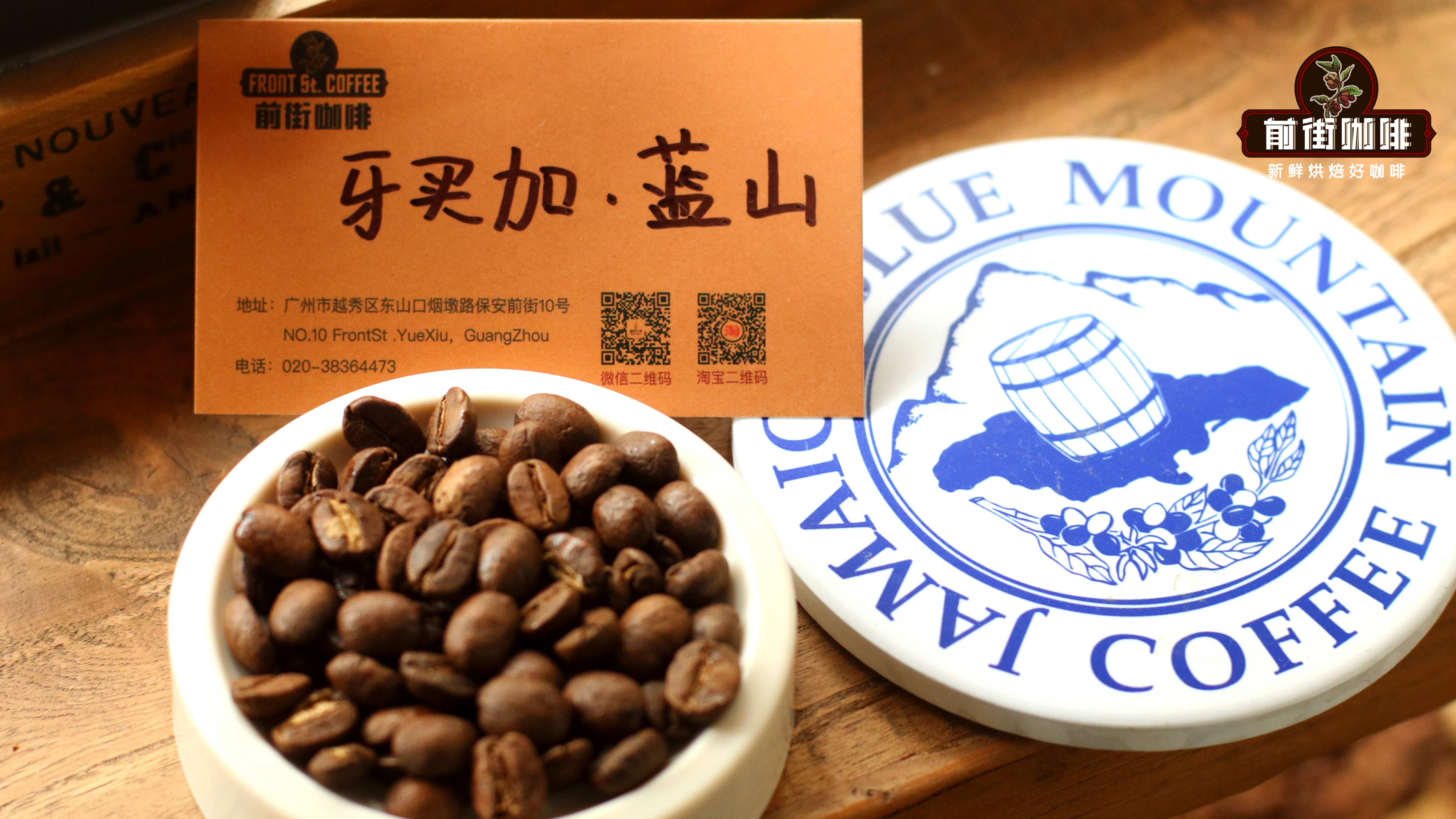
Due to the fame of Blue Mountain coffee, the market is flooded with various “imitation Blue Mountain” products, such as “Blue Mountain-flavored coffee,” “Blue Mountain blends,” or “Blue Mountain select coffee.” To determine whether it is genuine Jamaican Blue Mountain coffee, consider the following key points: First, authentic Blue Mountain coffee is produced only in specific high-altitude areas, with high production costs, so its price cannot be too low. The general retail price is usually over 100 yuan, and for a 100g pack, a reasonable price range is about 150 to 200 yuan. Second, in terms of aroma, Blue Mountain No. 1 coffee typically exudes a rich and lingering chocolate and roasted hazelnut fragrance, which is distinctly different from the profile of dark-roasted blends. In terms of taste, it achieves an excellent balance between acidity, sweetness, bitterness, and body, with no single flavor being overly dominant, delivering a mellow and naturally sweet overall profile. If in doubt, you may ask the seller to provide official Blue Mountain certification documents and the wooden barrels used to transport the green beans. It’s worth noting that Jamaica is one of the few producing regions that still use wooden barrels for green bean transportation, which is also one of its unique quality control methods.
Once you’ve purchased a high-quality pack of Blue Mountain No. 1 coffee beans, the next step is how to fully unlock its flavor potential through the correct pour over method. It is recommended to use coffee beans roasted within 5 days to achieve the most vibrant aroma, avoiding flavor loss or even woody off-notes caused by prolonged storage. The classic flavor characteristics of Blue Mountain No. 1 coffee are rich chocolate and roasted nut aromas, accompanied by gentle acidity and a full body. To recreate these traits, a medium-to-dark roast level is suggested, enhancing aroma expression while retaining a moderate acidity profile.
Suggested practical pour over parameters are as follows: Use a KONO filter cone, paired with a medium-fine grind size passing through a standard #20 sieve at approximately 75%. Water temperature should be controlled at 88°C, and the classic three-pour method is recommended. The suggested coffee dosage is 15 grams, with a brew ratio set at 1:15. The specific steps are: In the first pour, add 30 grams of hot water to evenly wet the coffee grounds and bloom for about 30 seconds; then, in the second pour, add 95 grams of water, pouring in a circular motion from the inside out; when the water level drops to about two-thirds of the coffee bed in the filter cone, proceed to the third pour, adding 100 grams of water with a fine stream. The total dripping time is about 2 minutes, after which the filter cone is removed and the coffee liquid is gently swirled before drinking.
During the brewing process, you’ll be greeted by the intense aroma of roasted nuts and caramel. The first sip reveals layers of sweet black chocolate and various nuts, with a balanced and full-bodied flavor. The aftertaste is refreshing and long-lasting, and as the temperature changes, you can further appreciate the multi-layered aroma transitions, delivering an ultimate sensory experience.
The above content is compiled by CoffeeHunters, a coffee news website.


