








Introduction:Want to make an iced latte at home that rivals the flavor of a café’s, but always feel it’s just a bit off? This article takes an in-depth look at the complete process — from selecting coffee beans and milk, setting the coffee-to-milk ratio, to practical tips during preparation. Based on a proven 1:6 ratio, it guides you through the key steps of extraction and combination to craft a balanced and layered iced latte.
The Italian-style latte is a common starting goal for many coffee enthusiasts. Although it may seem like simply combining espresso with milk, achieving a professional-level taste is no easy feat. Drawing on years of hands-on experience, this article thoroughly breaks down the three core aspects of making an iced latte: how to choose the right coffee beans and milk, how to set the most suitable coffee-to-milk ratio, and what commonly overlooked details to watch out for during the process. Through tested parameters and adjustment experience, it helps you consistently produce a well-balanced, layered iced latte at home.

Many people think making a latte is as simple as “extracting espresso + pouring in milk,” but in reality, the choice of coffee beans greatly affects the final flavor profile. Generally, mainstream Italian-style blends often have strong notes of nuts and chocolate, with a heavier coffee character. However, some blends can highlight the sweetness and creamy texture of milk, resulting in a smoother overall taste. It is recommended to use a dark roast blend sourced from Brazil, Indonesia, and Vietnam. These beans excel at delivering a rich flavor and easily extract dense, fine crema, making them suitable for both Americanos and milk-based lattes.
As for milk, although there are many types of whole fresh milk available on the market, their flavor profiles vary. Some have particularly intense milkiness and a thick mouthfeel, while others are relatively light, even close to the texture of water. The ideal milk isn’t necessarily the most fragrant or rich, but one that complements the coffee’s flavors. Overly strong milkiness can mask the nuances of the coffee, while overly light milk may make the entire drink taste thin and bland.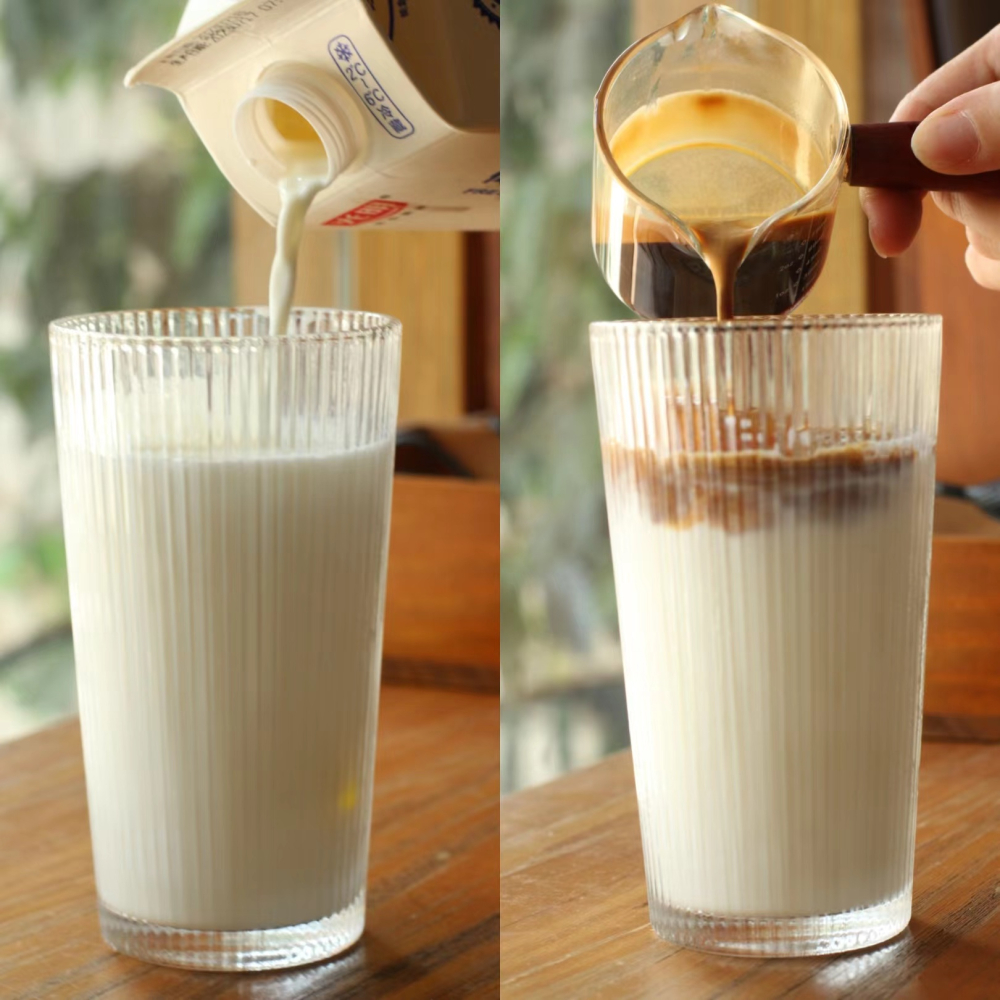
Once the right materials are chosen, the next step is getting the coffee-to-milk ratio right. Taking a commonly tested combination as an example, the golden 1:6 ratio uses 40 grams of espresso liquid, paired with 240 grams of iced milk and 75 grams of ice cubes, poured into a transparent glass cup with a capacity of about 300 milliliters. This ratio has been refined through multiple adjustments and tasting feedback, and while not an absolute standard, it provides a great reference benchmark. In practice, you can fine-tune according to personal taste — for instance, too much milk can overpower the coffee flavor, too little may taste overly bitter, and too much ice can dilute the overall flavor as it melts.
The most critical part of the process lies in the quality of the espresso extraction. Common issues such as channeling, extraction time being too long or too short, will directly affect the final taste. Additionally, since iced lattes emphasize layering and freshness, it’s recommended to minimize the time between extraction and pouring into the cup. This helps preserve the richest layer of crema from the espresso, creating a beautiful layered effect. If left waiting too long, not only will the crema dissipate, but melting ice can also dilute the entire drink, affecting the overall balance of flavors.
In summary, to replicate a café-quality iced latte at home, besides choosing the right beans and milk, it’s essential to master a reasonable coffee-to-milk ratio and a meticulous operational process. Every step from extraction to combination holds key elements that influence the flavor. By grasping these essentials, you can easily elevate your home-brewed coffee quality and enjoy a professional-grade iced latte experience.
The above content is compiled by CoffeeHunters, a coffee news website.


