







Introduction:Jamaican Blue Mountain coffee is hailed as the pinnacle of the coffee world, with its unique aroma and layered complexity leaving an unforgettable impression. This article delves into the growing environment of Blue Mountain coffee, the characteristics of the Typica variety, the washed processing method, and the rigorous grading system by the CIB. It also guides you on how to achieve a flavor close to that of Blue Mountain No. 1 at home through precise brewing parameters.
Jamaican Blue Mountain coffee is a legend in the specialty coffee world, renowned for its rich aroma and full-bodied taste. This top-tier coffee from the Blue Mountains of Jamaica owes its unparalleled flavor profile to its exceptional geographical conditions and traditional craftsmanship. This article will comprehensively unpack the allure of Blue Mountain coffee, covering everything from its origin background, variety traits, processing methods, and grade classifications to practical pour over parameters.
Jamaica Blue Mountain: A Gifted Coffee Sanctuary
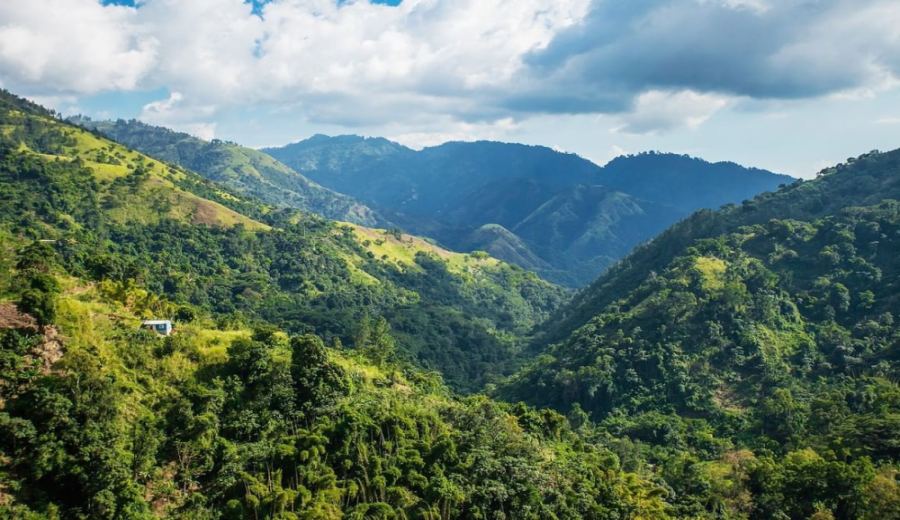
The production area of Blue Mountain coffee is located in Jamaica, an island nation in the Caribbean, and the name originates from the famous Blue Mountain range there. This mountain range runs through the eastern part of Jamaica, with its main peak reaching an elevation of 2,256 meters, making it the highest point in the entire Caribbean region. The Blue Mountain area lies within the coffee-growing "golden belt" around 25 degrees north latitude, enjoying extremely ideal climatic conditions.
The region has a tropical rainforest climate with abundant rainfall throughout the year, high air humidity, and persistent mountain fog, which helps slow down the ripening process of coffee cherries and allows more flavor compounds to accumulate. The steep terrain of the Blue Mountains means coffee is mostly planted on well-drained slopes, coupled with fertile volcanic soil, providing an ideal growing environment for coffee trees.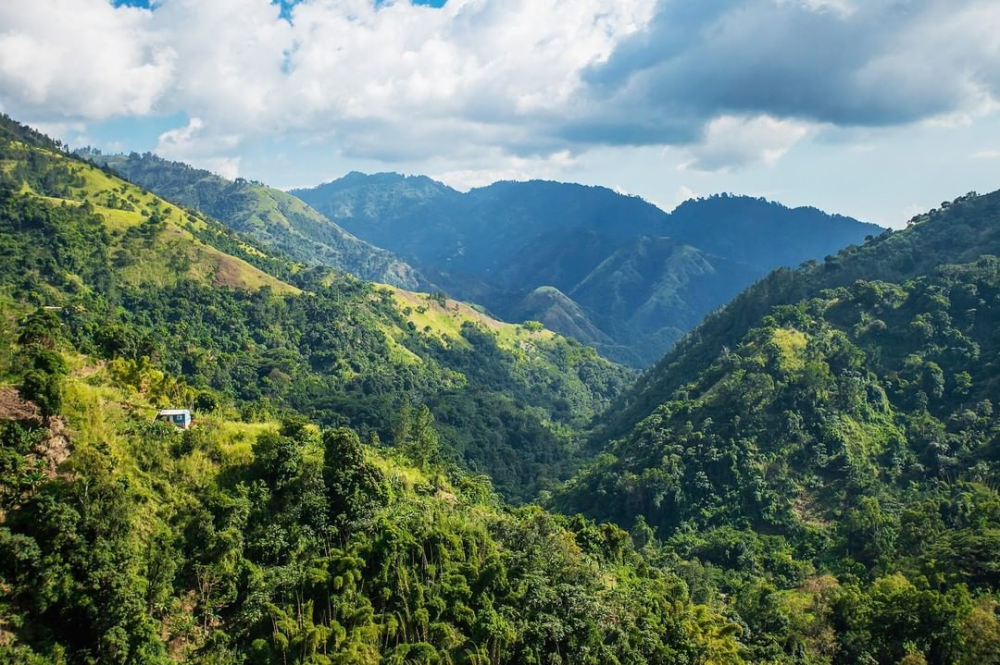
The harvesting season for Blue Mountain coffee typically runs from June to November each year, with female workers who are familiar with the terrain handpicking ripe coffee cherries. This process is extremely meticulous, requiring accurate judgment of fruit ripeness, as overripe or underripe cherries can both negatively affect the final quality of the coffee.
Typica Variety: The Soul of Blue Mountain Flavor
The variety used in Jamaican Blue Mountain coffee is Typica, an ancient Arabica heirloom known for its pure and elegant flavor. Typica trees are tall, with top leaves exhibiting a reddish-copper color, hence earning the nickname "red-top coffee."
Although Typica offers an exceptionally refined flavor profile, it has weak growth vigor, poor disease resistance, and low yield per plant, resulting in limited current cultivation areas. Since being introduced to Jamaica in the 18th century, Typica has taken root in the Blue Mountain region for over two hundred years, gradually adapting to the local island climate and developing improved resistance to diseases such as coffee berry disease. However, it still cannot be easily transplanted to other regions, as doing so would make it difficult to reproduce the distinctive freshness and sweetness of Blue Mountain flavor.
Traditional Washed Processing: The Key to Clear and Pure Flavor
What makes Blue Mountain coffee a representative of specialty coffee, aside from its variety and origin, is its traditional washed processing method. Although some estates have experimented with small amounts of natural (sun-dried) processing, most experts still recommend starting with washed Blue Mountain to experience its clearest and most classic flavor.
The washed processing procedure for Blue Mountain coffee is highly meticulous: first, the harvested coffee cherries are manually sorted to remove unripe or overripe fruits, then the outer skin is removed, allowing the beans to ferment for 12 to 18 hours. After fermentation, the beans are thoroughly rinsed with clean water to remove the mucilage layer attached to them, and finally, the semi-dry green beans are evenly spread out and naturally dried. Additionally, defective beans are further removed throughout the process to ensure the high quality of the green beans.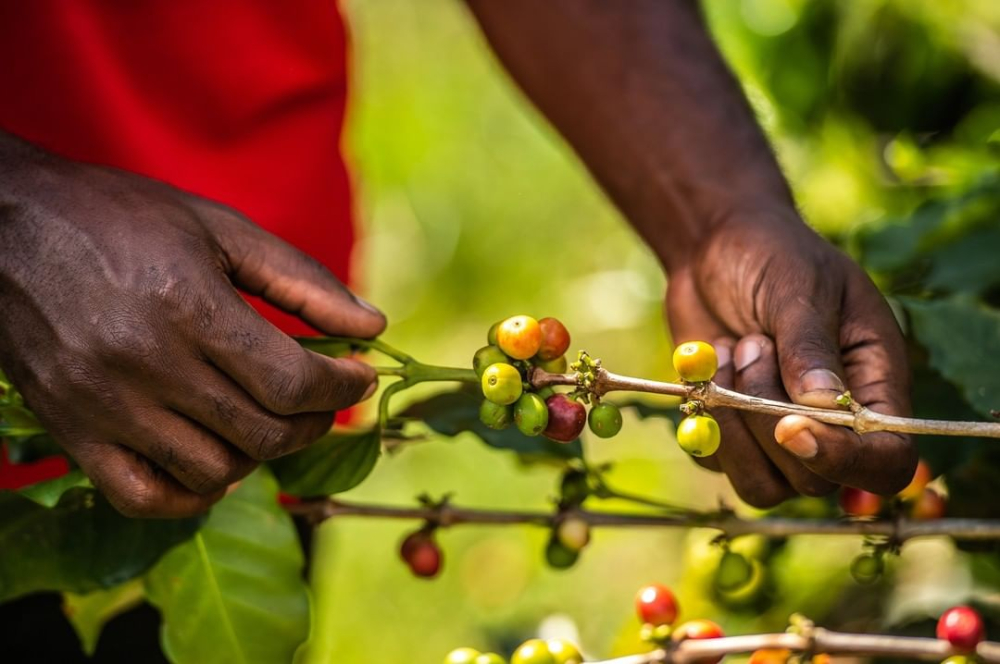
The washed processing method gives Blue Mountain coffee a brighter, cleaner acidity and a clearly distinguishable layered complexity, which are key techniques in presenting its elegant flavor.
CIB Grading System: Strict Classification Ensures Quality
Since its establishment in 1953, the Jamaica Coffee Industry Board (CIB) has set a strict set of export grading standards for coffee, with clear specifications for the color, size, defect rate, and flavor of green beans.
According to CIB regulations, only coffee grown at elevations between 910 meters and 1,700 meters qualifies to be called "Jamaican Blue Mountain coffee." Coffee grown below this altitude range can only be classified as "Jamaican High Mountain coffee" or "Jamaican Prime coffee."
Within the category of Blue Mountain coffee, it is further subdivided into four grades based on bean size and defect rate. Among these, a certain brand’s Blue Mountain No. 1 belongs to the highest grade, with green beans of 17/18 mesh size, a defect rate below 2%, moisture content of about 13%, and plump, uniform beans, typically sourced from renowned regions such as the Clifton Estate. These green beans are packed in moisture-proof wooden barrels before export and undergo rigorous flavor inspection by the CIB.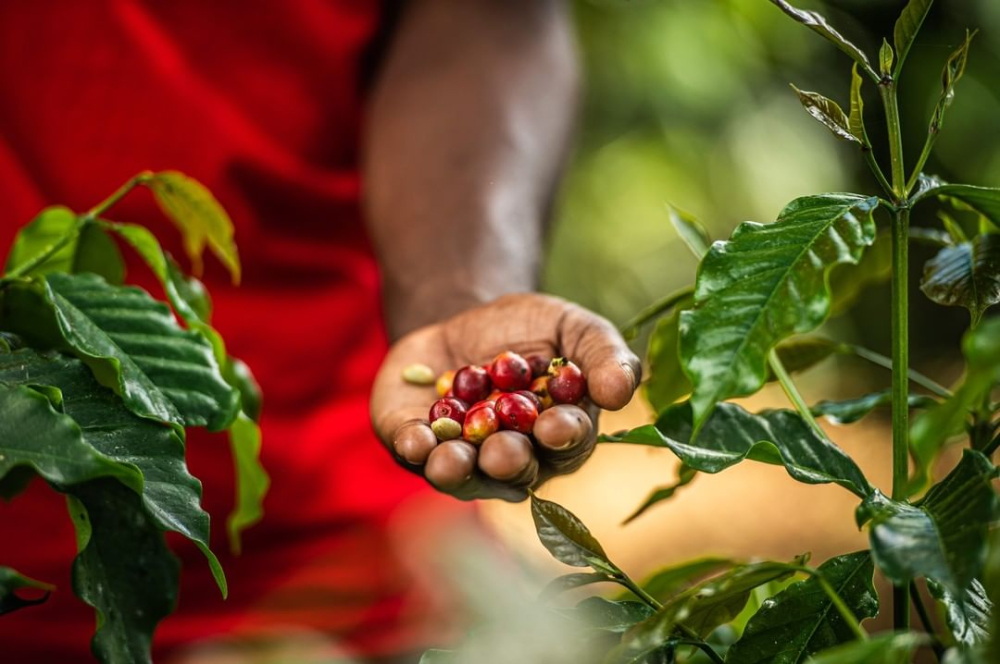
Brewing Parameters and Flavor Profile of Blue Mountain No. 1
Blue Mountain coffee is typically roasted to a medium-dark level to bring out a balance of sweetness and aroma. A certain brand’s Blue Mountain No. 1 is usually freshly roasted, and it is recommended to use it within 5 days post-roast to achieve the best flavor expression.
For home brewing, it is recommended to use a KONO filter cone, with a water temperature of 88°C and a coffee-to-water ratio of 1:15 (for example, 15 grams of coffee to 225 milliliters of water). The grind size is advised to be around 75% through a 20-mesh sieve, i.e., medium-coarse, which helps avoid over-extraction while maintaining a full-bodied taste.
In practice, you can follow a three-stage extraction method: start with a 30-second bloom using 30 grams of water, then add water in stages up to 125 grams and 225 grams, controlling the flow rate to stabilize extraction. This technique fully highlights the dark chocolate richness, caramel sweetness, and gentle acidity of Blue Mountain coffee, delivering a balanced and layered flavor—a truly representative Blue Mountain experience.
The above content is compiled by CoffeeHunters, a coffee news website.


