







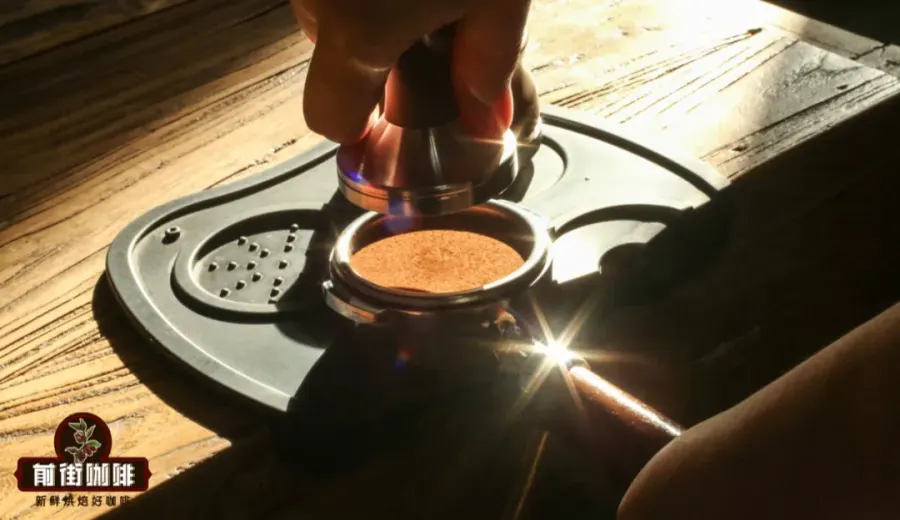
Introduction:The extraction quality of espresso is often determined by how evenly the coffee puck is compacted. Many baristas and home enthusiasts focus on the tamping pressure, but the real key to extraction lies in how dense the puck is and whether channeling can be effectively avoided. This article compares extraction performance under different tamping pressures through experiments, delves into the true purpose of tamping, and provides practical dosing and tamping techniques to help you consistently improve the flavor of your espresso.
When making a high-quality espresso, distributing and tamping the coffee are extremely crucial steps. Many beginner baristas and enthusiasts often wonder, "How much tamping pressure should I use?" Some believe that the heavier the tamp, the more stable the extraction; others question whether tamping is even necessary. In fact, through experiments with varying pressures, we can gain a clearer understanding of the role tamping plays in espresso extraction.
This experiment was conducted using the same 20 grams of coffee grounds, with a target yield of 40 milliliters. Three tamping methods were tested: light tamping (about 2 kg), heavy tamping (about 18 kg), and no tamping at all. The effects on extraction time and flavor were observed. Each pressure condition was repeated six times, with the average values used as reference.
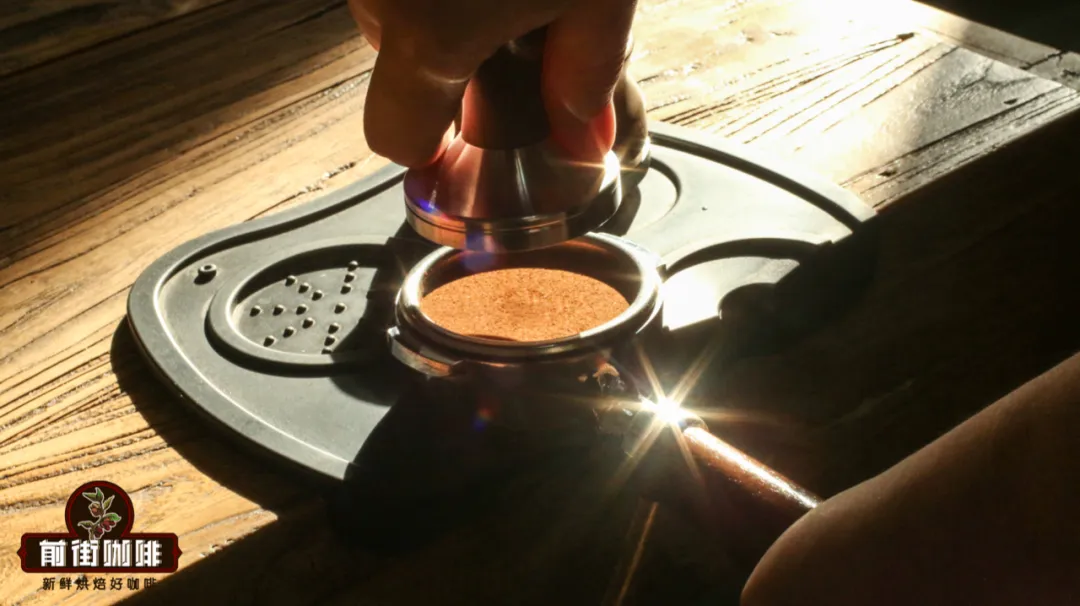
The results showed that the puck tamped lightly (about 2 kg) had an average extraction time of 33 seconds, while the heavily tamped (about 18 kg) puck averaged 34 seconds—almost no significant difference. Even more surprising was that when no tamping was applied and extraction was done directly, the average extraction time was also 33 seconds. Although the flavor was slightly uneven, the extraction time did not noticeably increase or decrease.
These results may differ from most people’s intuitive understanding that “tamping changes puck density and resistance.” Many assume that the heavier the tamp, the denser and more resistant the puck becomes, thereby extending extraction time. However, this overlooks the immense pressure exerted by the espresso machine during extraction.
Under normal extraction, an espresso machine typically applies about 9 bars of pressure. To make this pressure more tangible, here’s a simple conversion: in a standard 58mm-diameter portafilter basket, 1 bar of pressure is equivalent to roughly 27 kilograms of force acting on the puck. Therefore, 9 bars equates to approximately 243 kilograms—almost the weight of four adults pressing down on the puck. This shows that even if you tamp with all your might, it’s still negligible compared to the machine’s extraction pressure.
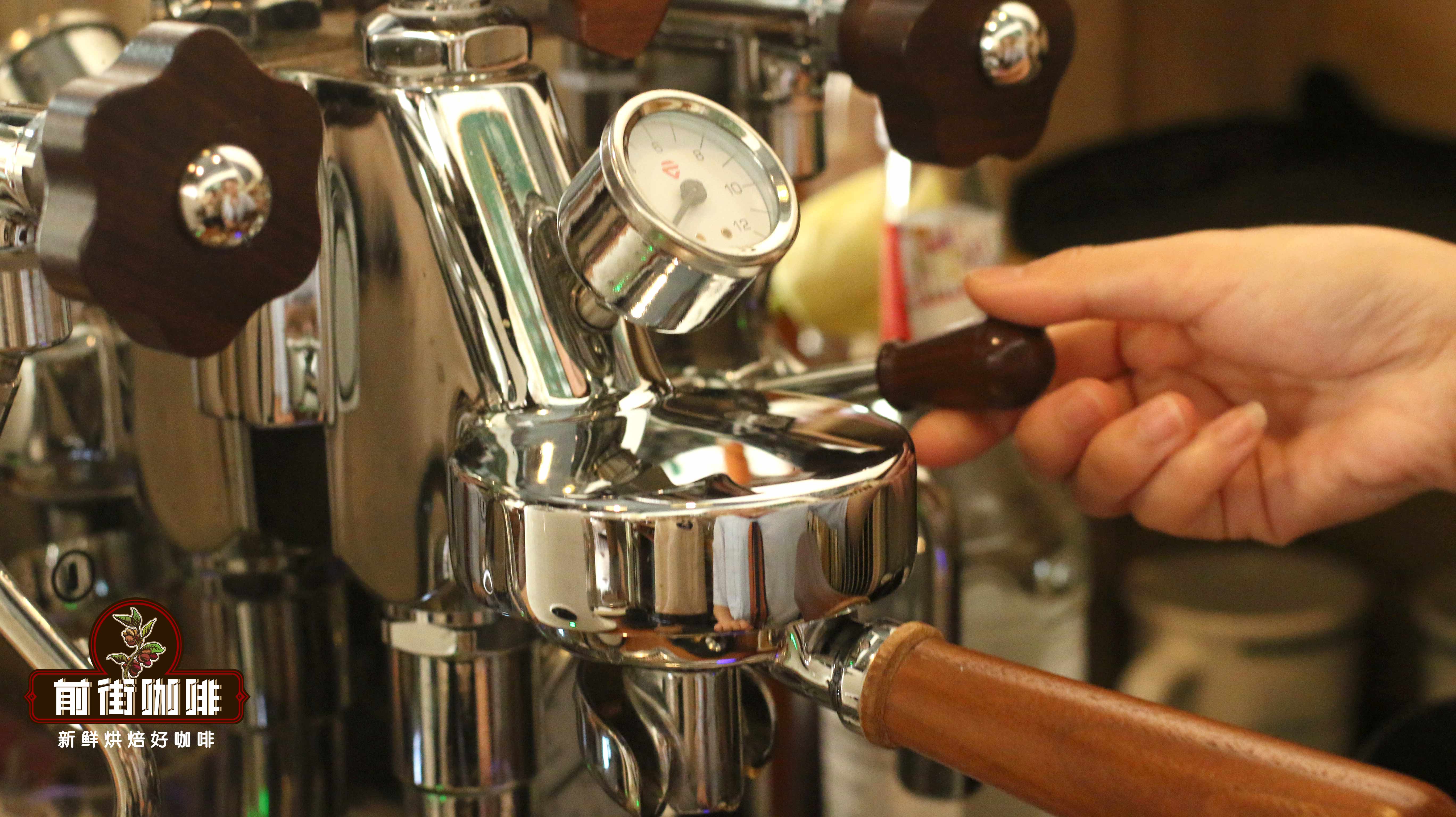
Since tamping pressure has such a minimal impact on the final extraction pressure, why do we still need to tamp? The answer lies in “channeling.” Without proper tamping, there will be many gaps between coffee particles. When hot water passes through the puck, it instinctively seeks the path of least resistance—those loose or hollow areas—resulting in uneven extraction. Some coffee particles are under-extracted, while others are over-extracted, leading to imbalanced flavors or even undesirable off-notes.
Therefore, the primary purpose of tamping is to apply even pressure to create a compact, uniformly resistant puck surface, reducing the water’s tendency to find preferential paths. This enhances overall extraction uniformity. That’s also why even a light tamp—such as simply pressing the tamper down until it reaches the bottom—can achieve results close to a heavy tamp. The key isn’t how much force you use, but whether the coffee bed is level, compact, and free of gaps that could cause channeling.
In practical terms, it’s recommended to gently yet evenly press the coffee bed with the tamper after dosing, until the base of the tamper is fully flush with the portafilter. There’s no need to aim for extreme force—the emphasis is on “stability” and “evenness.” If the coffee is not evenly distributed, no matter how hard you tamp, there will still be localized gaps, and channeling will be unavoidable.
In summary, the true value of tamping does not lie in creating higher resistance, but in using appropriate pressure to make the coffee bed denser and more uniform. This helps stabilize the water flow during extraction and improves the overall balance and mouthfeel of the espresso. Understanding this principle will help you more precisely control the quality of each shot of espresso in your daily brewing.
The above content is compiled by CoffeeHunters, a coffee news website.


