







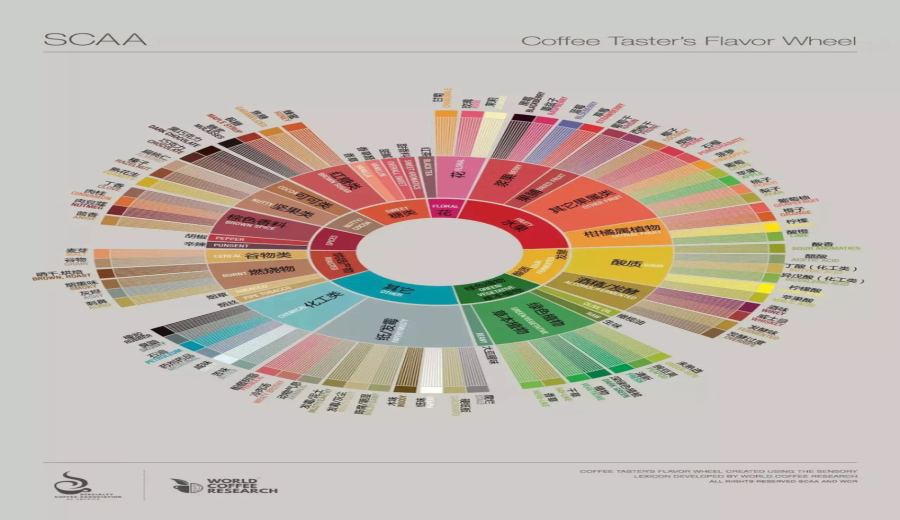
Introduction:Delve into the design logic behind the SCAA Coffee Taster’s Flavor Wheel — from the normal flavor spectrum on the right (encompassing fermentation aromas, sugar browning, and dry distillation reactions) to the negative flavor spectrum on the left (covering defect flavors and aged aromas). This article systematically breaks down the sources and formation mechanisms of each segment’s aromas. It also explains common cupping defect deduction rules, including the specifics of deducting 4 points for severe defects and 2 points for minor ones, helping you more accurately grasp the professional knowledge and practical skills of coffee evaluation.
The specialty coffee flavor wheel is an essential tool for many baristas and enthusiasts in sensory evaluation, aiding in the systematic identification of aromas and flavor characteristics in coffee. This chart not only serves as a reference for professional cupping but also acts as a key visual resource for understanding the various changes that occur during green bean processing and roasting. This article will deeply analyze the overall structure of the SCAA Coffee Flavor Wheel, helping readers understand the science and practical logic behind each layer of flavors from a professional perspective.
First, we focus on the right side of the flavor wheel, known as the normal flavor spectrum. This section can be further divided into two parts: the right half primarily highlights the sources of coffee aromas, while the left half presents the four basic tastes directly perceptible by human taste buds — acidity, sweetness, bitterness, and saltiness. It’s worth noting that some industry professionals have speculated that the flavor wheel’s vertical arrangement from top to bottom might represent different roast levels, but in reality, dry distillation reactions begin as early as the first stage of roasting, so such an intuitive association isn’t entirely accurate.
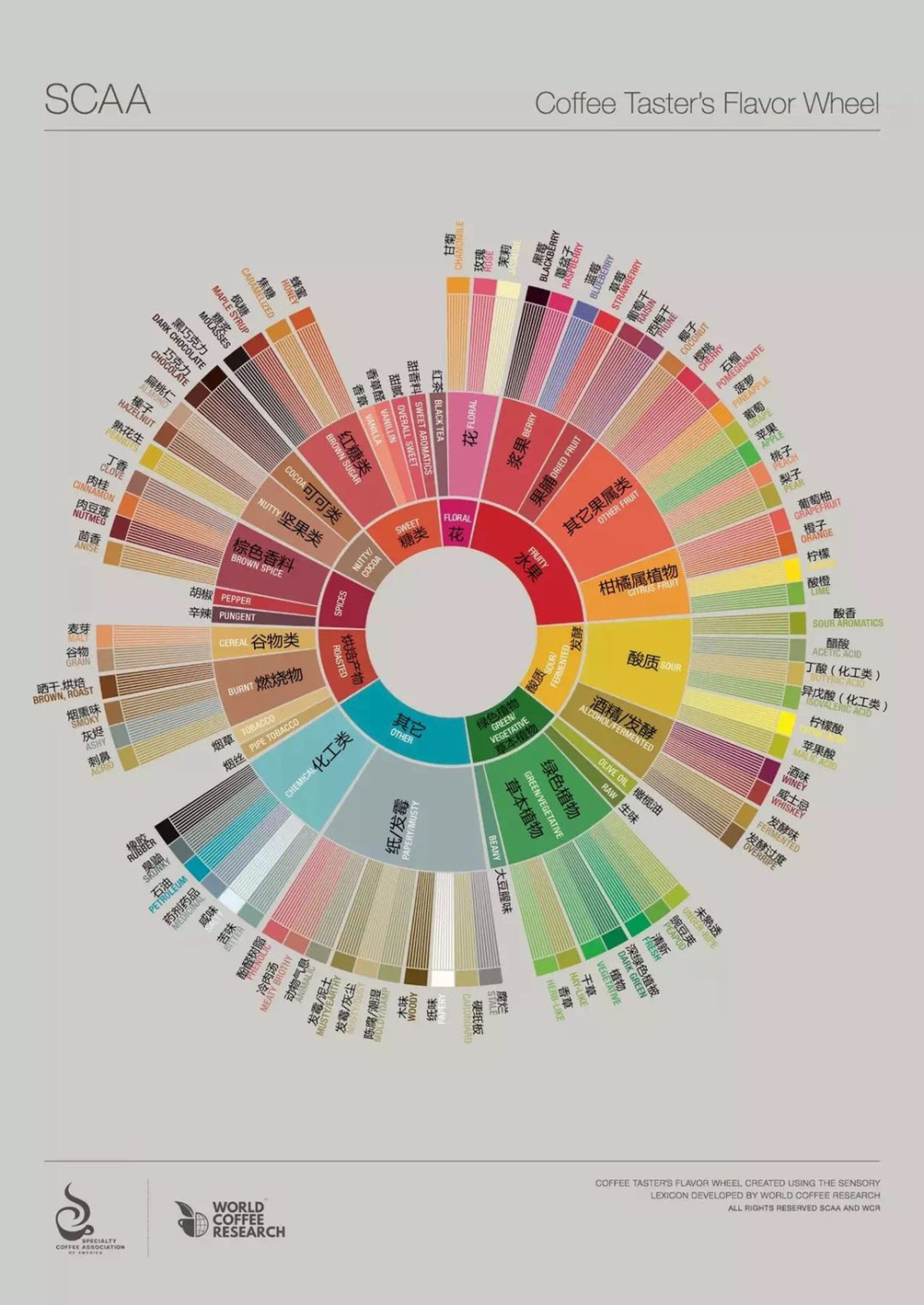
In the right half of the normal aroma spectrum, three main aroma generation reactions can be clearly observed: First is “enzymatic fermentation,” which occurs during green bean processing methods such as washed, natural, or honey processing, where enzyme activity produces aromas like fresh floral notes, citrus, or berry-like fruitiness. Next is “sugar browning,” resulting from the combined effects of caramelization and Maillard reactions during roasting, yielding rich flavors of nuts, caramel, and chocolate. Lastly, there’s “dry distillation,” which typically arises during high-temperature roasting stages, producing more intense notes such as gooseberry, smokiness, or even woody undertones. Understanding the formation mechanisms of these three types of aromas helps in more accurately describing and distinguishing the complex flavor layers of coffee during cupping.
Now, looking at the left half of the right-side flavor spectrum, this section focuses on the four basic taste dimensions: acidity, sweetness, bitterness, and saltiness. These are the tastes directly perceived by the human tongue and are also key indicators for evaluating the overall balance of coffee during cupping. Although “umami” has not yet been incorporated into the flavor wheel, there is ongoing discussion about potentially including it in the future to more fully represent coffee’s multidimensional sensory experience.
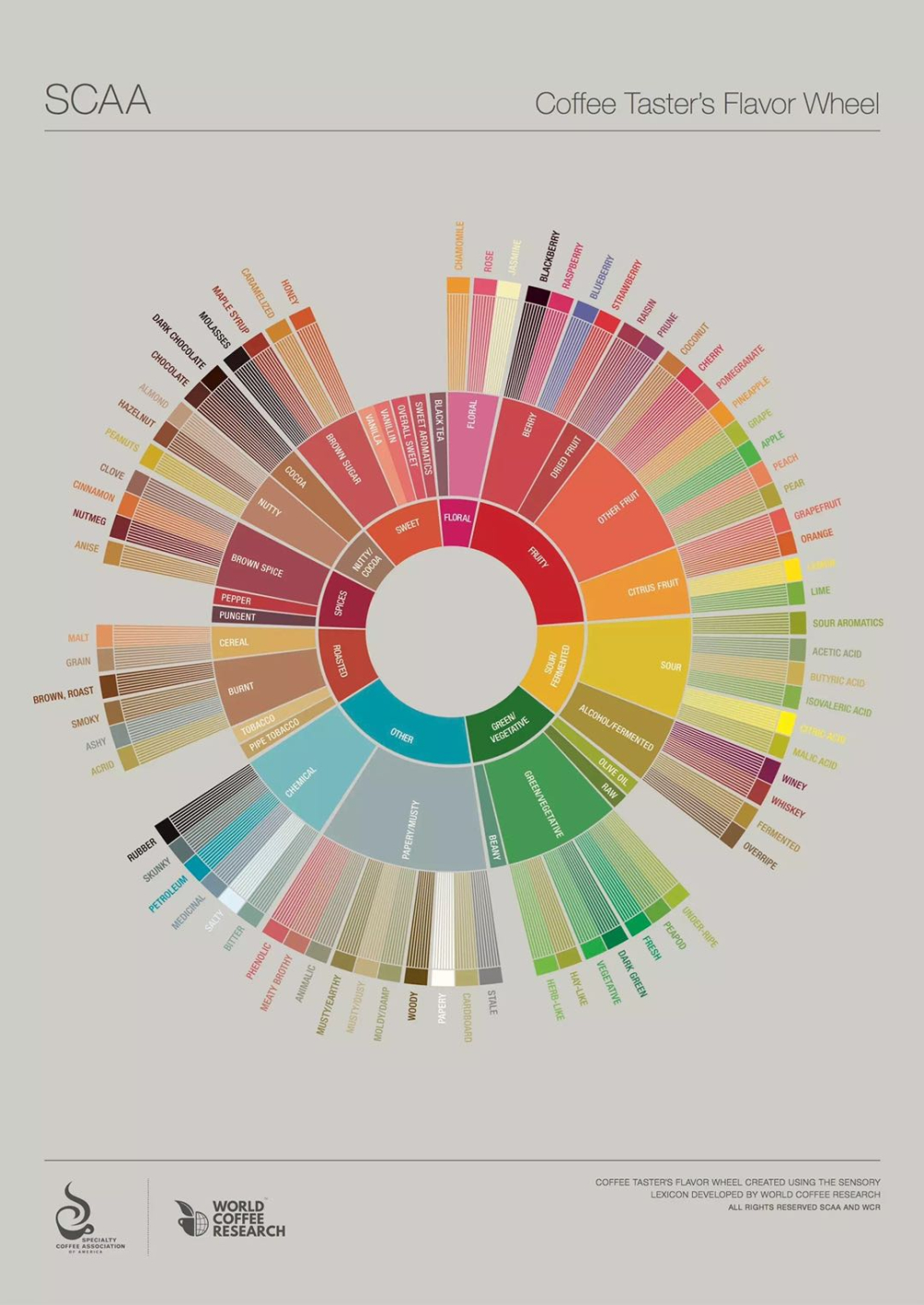
Next, we turn our attention to the left side of the flavor wheel, i.e., the negative flavor spectrum. This part mainly showcases the defective flavors that may appear in coffee, often originating from improper green bean processing, poor storage conditions, or mishandling during roasting. First, observe the right half of the left-side flavor spectrum, which describes defects related to post-harvest processing and storage stages. For instance, if green beans are not processed promptly after harvest or if humidity and temperature control during drying are suboptimal, abnormal fermentation may occur, leading to flavors like “Rioy” or pronounced fermented notes. Additionally, if drying temperatures are too high or the heating is too rapid, it may cause the oils in the coffee beans to break down prematurely, resulting in unpleasant leather-like odors. As for the storage stage, as time passes, organic compounds in the beans gradually diminish. While freshly harvested coffee may have grassy notes, prolonged storage with significant loss of organic matter will cause the flavor to trend toward straw-like or woody, tasting dull and lacking complexity.
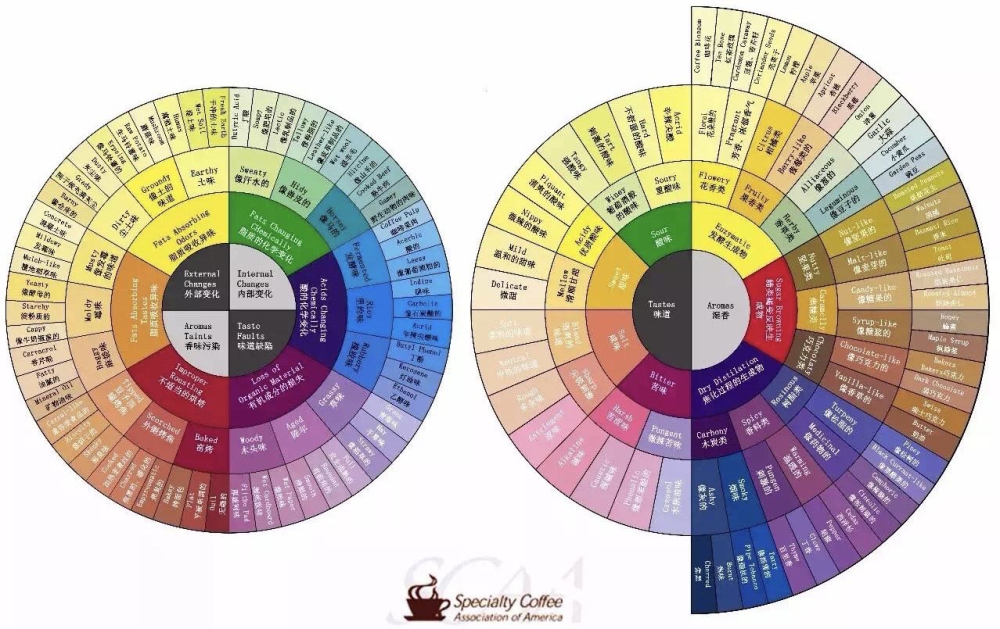
Finally, examine the left half of the left-side flavor spectrum, which focuses on defects arising from green bean processing environments, storage conditions, and roasting techniques. If green beans come into contact with the ground or unclean surfaces during drying, they may absorb off-odors, resulting in earthy or impurity-like flavors. Excessively humid environments can easily foster mold, leading to musty notes. During roasting, overly rapid temperature increases can scorch the outer layer of the beans, producing smoky and carbonized aromas, whereas excessively slow heating may fail to fully develop the flavors, leaving the coffee tasting bland and monotonous. Moreover, there are two commonly overlooked yet critical issues: chemical changes in fats and the deterioration of acidity, both of which are often classified as severe defects. Once detected during cupping, they result in an immediate deduction of 4 points. On the other hand, issues like fat absorbing off-odors or undesirable tastes are considered minor defects, leading to a 2-point deduction. Improper roasting and the loss of organic compounds, while not directly resulting in defect point deductions, can significantly impact the overall flavor expression of the coffee, leading to a lower score.
Mastering the SCAA Coffee Flavor Wheel not only helps you evaluate coffee more professionally but also enables you to make more accurate judgments when selecting coffee beans or adjusting brewing parameters. From fermentation aromas to roasting defects, every detail influences the final flavor profile. A deeper understanding of these changes will enrich and elevate your coffee experience to a more professional level.
The above content is compiled by CoffeeHunters, a coffee news website.


