








Introduction:On a hot summer day, you might be craving a refreshing yet flavorful iced coffee but find yourself torn between cold drip, cold brew, and Japanese-style iced pour over. This article delves into the history, equipment operation, and extraction principles of ice drip coffee, compares the quick preparation logic and parameter adjustment techniques of Japanese-style iced pour over, and explores the flavor characteristics of medium to light roasted beans under low-temperature extraction — helping you find the perfect iced coffee solution for your summer.
A cool cup of coffee in the sweltering summer not only helps beat the heat but also offers a unique taste experience. Among the many iced coffee options, ice drip coffee and Japanese-style iced pour over stand out: the former excels with its extremely slow cold water drip filtration, yielding a nuanced and layered flavor; the latter involves quickly extracting with hot water and then cooling it down with ice, making it more convenient to prepare. This article will give you a comprehensive understanding of the extraction principles, practical parameter settings, and flavor differences of these two methods, along with hands-on details to help you get started with ease.
The Origins and Features of Ice Drip Coffee
Ice drip coffee (also known as Ice Drip Coffee), referred to in some regions as Dutch Coffee, is said to have originated during the Dutch colonial period in Indonesia. At that time, to cope with the tropical heat and the abundance of Robusta coffee beans, people developed a method of slow cold water drip filtration that made bitter and intense coffee more refreshing and easy to drink. Unlike traditional hot water extraction, cold water reduces the release of oils and heavy substances, instead highlighting the acidity and sweetness in the coffee. Additionally, due to the long extraction time of several hours, the caffeine content is often higher, making it suitable for moments when you need a pick-me-up.
Interestingly, this extraction method originating in Europe has seen broader development and preservation in Asia. In Japan, ice drip coffee is also known as "Kyoto coffee" or "Japanese slow drip," with a history spanning hundreds of years; in Korea, almost every café offers this drink, and many well-known ice drip equipment brands such as Tiamo and Hario originate from Japan and Korea. This long-duration, low-temperature, drip-based process results in a more delicate and layered coffee flavor.

The Production Process and Key Parameters of Ice Drip Coffee
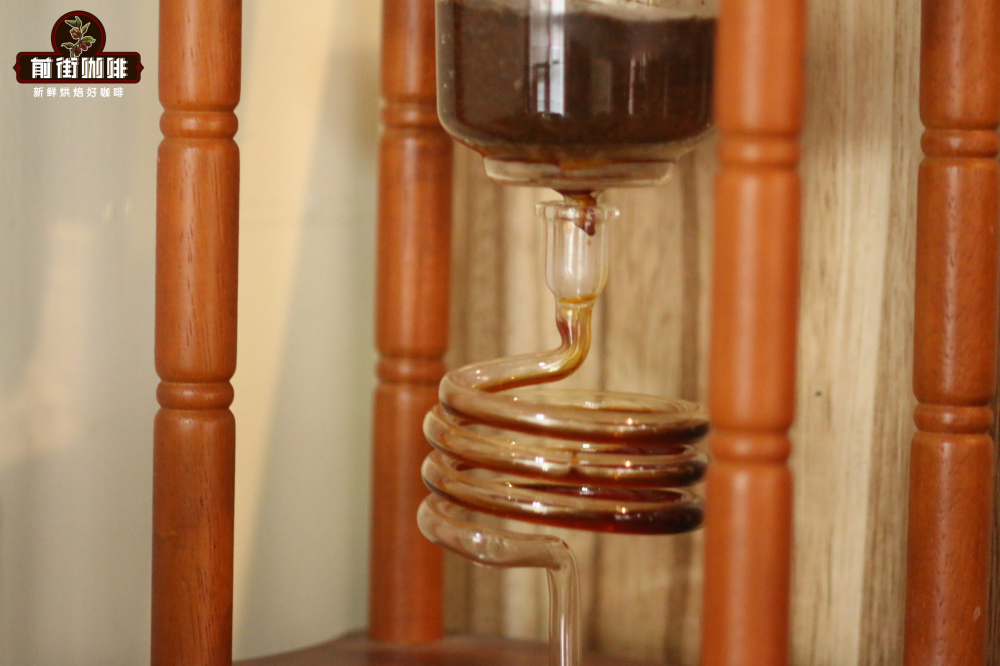
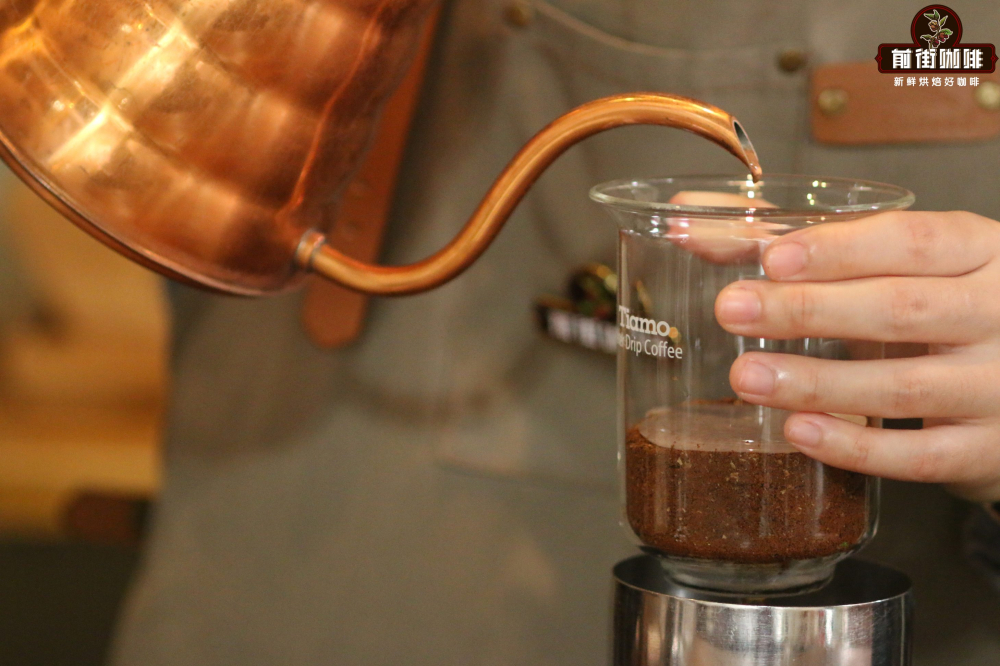
Taking a common home preparation method as an example, a professional ice drip maker, such as one from the Tiamo brand, is typically used. About 60 grams of medium-fine ground coffee (similar to a 20-mesh sieve with about 75% passing rate) is paired with 600 grams of ice water mixture, with a coffee-to-water ratio of approximately 1:10. During the process, a round filter paper is placed at the bottom of the coffee chamber and slightly moistened with water to make it adhere to the walls, after which the coffee grounds are evenly poured in and gently tapped flat. Another filter paper is placed on top to help distribute the water droplets evenly and prevent the coffee bed from sinking due to prolonged dripping.
Next, a small amount of ice water is gently poured over the coffee layer for pre-wetting (similar to the bloom step in pour over) to enhance subsequent extraction efficiency. For the formal drip, it is recommended to mix the ice water at a 1:1 ratio and control the dripping speed to 6 drops per 10 seconds, with the overall extraction time usually being 6 to 8 hours. To avoid clogging the very fine outlet with impurities, be sure to use pure ice water and regularly check the dripping progress. After completion, pour the coffee liquid into a sealed, oil-free and water-free container, let it sit in the refrigerator for several hours to allow the flavors to meld, and then enjoy.

Japanese-Style Iced Pour Over: A Quick Iced Coffee Option
Compared to the time-consuming ice drip, Japanese-style iced pour over offers a quicker and more accessible way to make iced coffee. Its basic principle is to quickly extract coffee with hot water and then cool it down by adding ice, preserving the rich flavors of hot brewing while delivering the ideal cool taste. However, since ice is added, the actual coffee liquid is diluted upon drinking, so it's necessary to appropriately adjust the grind size and extraction time to ensure the flavors remain intact.
A common misconception is that simply reducing the amount of hot water can shorten the time, but this often leads to insufficient extraction of later-stage flavor compounds, resulting in an overall under-extracted cup — even if the concentration seems adequate, the flavor may appear thin. To balance this, it’s recommended to slightly adjust the grind finer than your usual hot pour over setting to extend the contact time between water and coffee grounds. For example, when using an EK43s grinder, if your regular hot pour over setting is 10, for iced pour over you can adjust to 9 to 9.5; if using a hand grinder like the C40, and your hot pour over is at 24 clicks, you can change it to 22 clicks for iced pour over.
Practical Example: Iced Pour Over Parameters for Medium-Light Roast Beans
Taking Tanzanian Kilimanjaro medium-light roast beans as an example, you can use the following parameters for iced pour over: 15 grams of coffee, 10 times the amount of hot water (150 grams), plus 5 times the amount of ice (75 grams). Water temperature is controlled at 93°C, grind size is EK43s setting 9 (approximately 85% passing rate through a 20-mesh sieve), using a Hario V60 filter. The recommended brewing method is a three-pour technique: start with a 30-gram bloom for 30 seconds, followed by pouring 60 grams and then another 60 grams, with the total extraction time controlled between 1 minute 50 seconds and 2 minutes.
Additionally, to ensure the coffee liquid cools more evenly, you can place ice cubes in the server first (adding ice before or after brewing has little impact on flavor), and then gently shake the server to accelerate melting and mixing. The resulting coffee usually features a bright flavor profile with sweet-tart notes of green grapes, berries, and nuts, accompanied by subtle floral notes — perfect for summer enjoyment.
Pros and Cons of Low-Temperature Extraction and Bean Selection Advice
Low-temperature extraction methods, including cold brew and ice drip, have the major advantage of effectively avoiding the impurities, bitterness, and overly intense flavors that high temperatures can bring out — resulting in an overall smoother, fresher, and slightly sweet taste. However, due to the long extraction time and prolonged contact between water and coffee grounds, the caffeine content tends to be higher, so those sensitive to caffeine should consume in moderation.
In terms of bean selection, low-temperature extraction does not easily bring out bold or rich flavors, so it's recommended to prioritize medium to light roasted beans with pronounced acidity and layered flavors, or those processed with special methods such as honey, natural sun-dried, or anaerobic fermentation. These types of beans typically offer bright fruit acids, floral and fruity aromas, and diverse flavor profiles that complement the characteristics of low-temperature extraction — producing refreshing yet distinctive iced coffee.
Commonly suitable medium-light roasted beans for making iced coffee include: Ethiopian Yirgacheffe Guji Dingding (citrus, honey, green tea notes), Sidamo Huakui (berries, rose, black tea aroma), Panama Geisha Flower Butterfly (floral, citrus, honey), and Costa Rica Strawberry Candy (strawberry hard candy, raisins, fermented aroma). These beans not only feature outstanding flavors but also reveal unique layers and freshness when chilled — making them excellent choices for summer iced coffee.
In conclusion, whether you prefer the time-intensive refinement of ice drip coffee or the convenience of Japanese-style iced pour over, understanding the underlying extraction principles and parameter settings can help you better appreciate the charm of these two summer iced coffee methods. Choose the right beans and brewing style based on your personal taste and needs, and let this summer be filled with the aroma of coffee and the enjoyment of cool refreshment.
The above content is compiled by CoffeeHunters, a coffee news website.


