







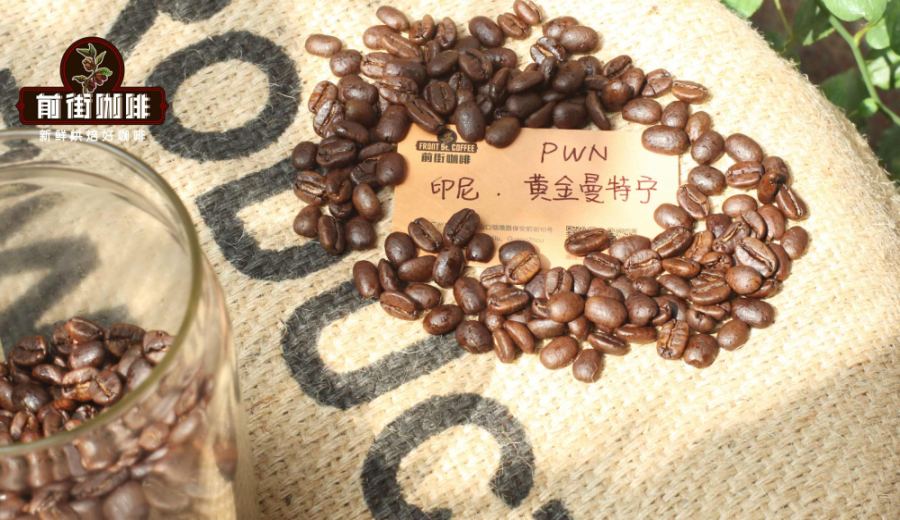
Introduction:Sumatra Golden Mandheling is renowned for its rich sweetness and clean, bright cup profile, with the PWN grade standard and unique wet-hulling processing method being key factors. This article delves into this high-grade coffee from the Gayo Lake Tawar region, analyzing everything from the characteristics of the Ateng variety and G1 selection criteria to how each step of the wet-hulling process influences flavor and bean shape—offering practical insights for selection and brewing.
Golden Mandheling is one of the most representative specialty coffees from Indonesia’s Sumatra region, and the version produced by PWN is particularly known for its stringent selection standards. These coffee beans, sourced from the Lake Tawar area of the Gayo Mountains, are of premium quality, with a screen size of 18 or above, graded as G1, and have undergone three rounds of manual hand-picking to ensure consistency in every bean.
This Golden Mandheling is made from beans sourced around Lake Tawar near the Gayo Mountains in northwestern Sumatra, representing a high-grade batch within the Mandheling category. When purchasing green beans, the relevant companies only select beans that pass through an 18-mesh sieve or larger, and require no more than 3 defective beans in a 300g sample—this aligns with Indonesia’s G1 top-grade classification in the green bean grading system. They then follow established protocols to conduct three rounds of manual sorting to remove defective beans, ensuring uniformity in color, shape, and bean size across the entire batch.
This rigorous selection process results in a Golden Mandheling that offers a cleaner cup, greater clarity, and more pronounced body and sweetness—making it an excellent choice for coffee enthusiasts who enjoy bold flavors but also seek a clean taste profile.
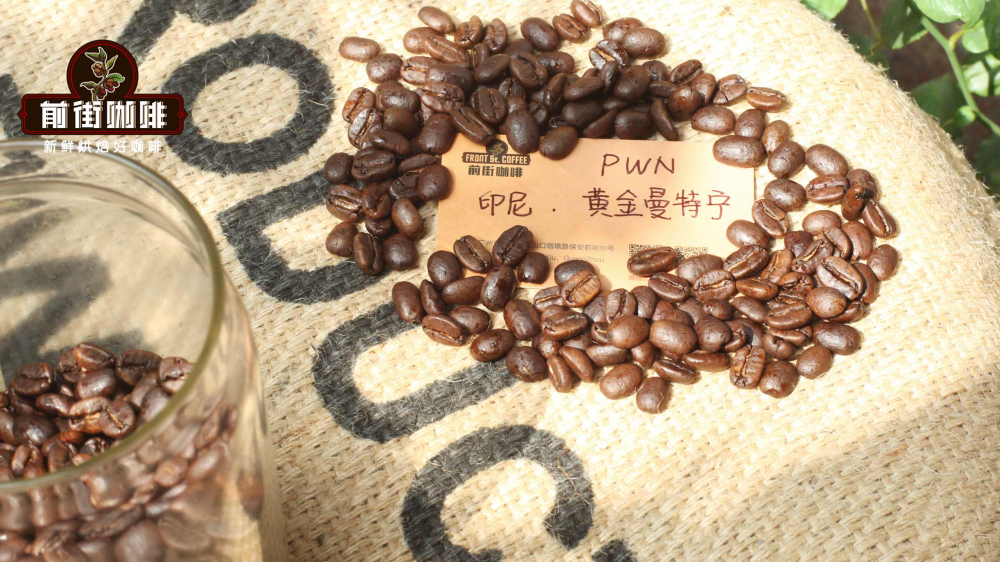
In terms of coffee variety, this PWN Golden Mandheling uses the Ateng variety. The name originates from Aceh Tenggah in central Aceh. The Ateng series is actually a general term for the Catimor variety grown on Sumatra and other Indonesian islands, a hybrid of Arabica and Robusta, and is widely cultivated across Sumatra. This variety is high-yielding, with strong resistance to coffee leaf rust and coffee berry disease, and delivers solid cup performance, often showcasing rich spice and herbal notes.
When discussing Mandheling coffee, one cannot overlook Indonesia’s unique wet-hulling processing method. Due to the frequent rainfall during the monsoon season, coffee green beans cannot undergo prolonged sun drying like in regions such as Africa, leading locals to develop this processing approach.
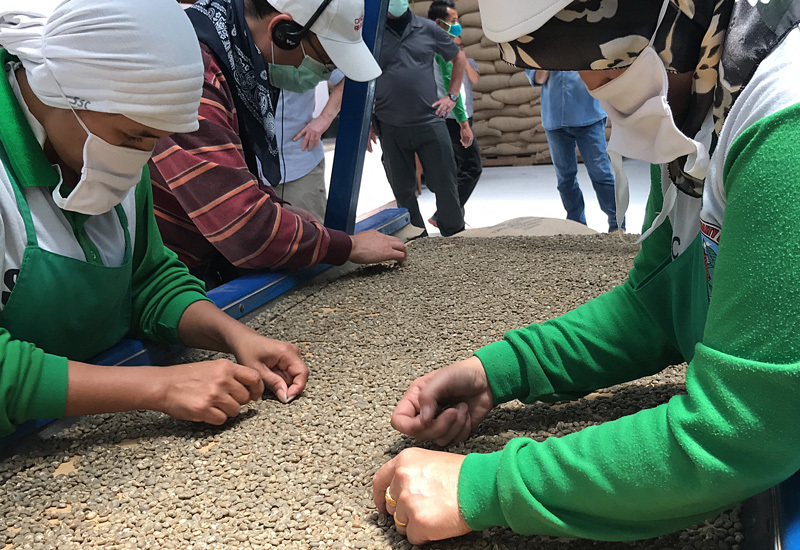
The specific steps of the wet-hulling process are as follows: first, the outer skin of the coffee fruit is removed by machine, then impurities are washed away with water. Next, the beans are fermented in a sealed environment for about 3 hours, after which they are spread out to dry for one to two days. At this stage, the moisture content of the green beans is around 30% to 50%, and the beans are in a semi-soft, semi-hard state. The mucilage and parchment layers are then scraped off, followed by continued sun drying, which typically takes another 2 to 4 days until the moisture content drops to 12% to 13%. Compared to sun-drying and washed methods, wet-hulling has a much shorter drying cycle.
Because the wet-hulling process removes the parchment layer, the green beans appear green, and the beans remain relatively soft during processing, making them prone to deformation from pressure—hence the characteristic “elephant hoof” indentations seen on the beans. This unique processing method gives Mandheling its clean, bright cup profile and rich sweetness, along with complex flavors such as nuts, spices, herbs, caramel, and dark chocolate.
In summary, this Sumatra Golden Mandheling, thanks to the strict PWN-grade selection standards and the unique wet-hulling process, demonstrates exceptional quality and flavor expression. Whether brewed as a pour over or extracted as an espresso, it delivers a richly layered and full-bodied cup—making it a classic choice not to be missed by coffee lovers.
The above content is compiled by CoffeeHunters, a coffee news website.


