







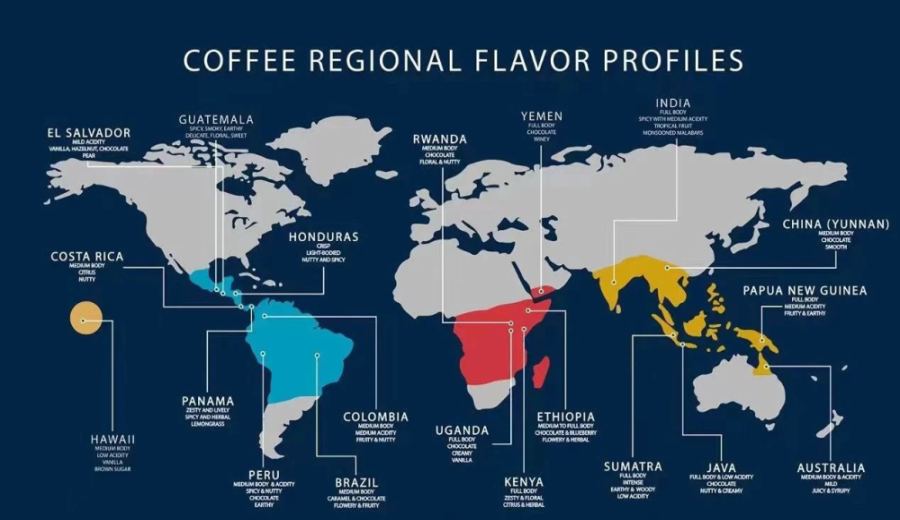
Introduction:Learn about the geographical scope and climate conditions of the world's coffee "Golden Belt" to understand the most ideal growing environment for coffee trees. This article delves into the climate characteristics within the range of 25°S to 25°N, analyzes how different producing regions shape unique coffee flavors, and provides an in-depth look at Yunnan, China — an emerging coffee region — including its natural advantages and challenges. It helps readers comprehensively grasp the key factors that influence coffee quality.
Coffee trees have extremely strict requirements for their growing environment — not just any land is suitable for cultivation. In fact, only within the area known as the "coffee Golden Belt," spanning from 25°S to 25°N, do the conditions exist: moderate temperatures, ample rainfall, and stable climate, all of which allow coffee trees to thrive healthily. This zone includes 79 coffee-growing countries and regions worldwide, among which is China’s Yunnan Province.
Approximately 70% of a coffee’s flavor profile stems from the genetic traits of the variety itself, while the remaining 30% is significantly influenced by the growing environment — including latitude, altitude, soil composition, sunshine duration, air temperature, and humidity, among other comprehensive factors. As the saying goes, “Each place shapes its own coffee.” Even the same variety can present vastly different flavor profiles depending on the producing region.
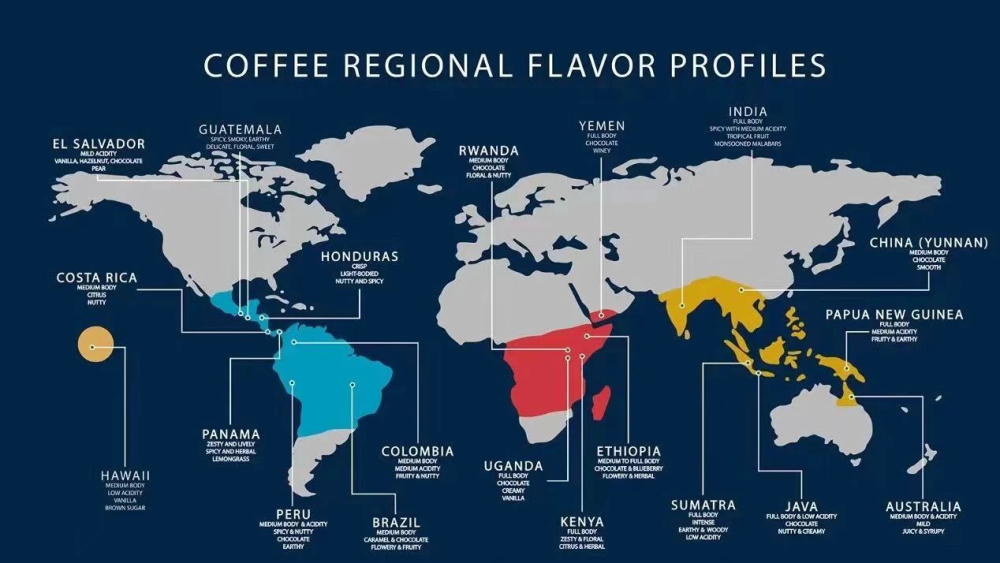
The world’s major coffee-producing regions are mostly concentrated in tropical and subtropical zones near the equator. These areas exhibit typical "coffee belt" climate features: annual average temperatures ranging between 18°C and 25°C, moderate day-night temperature variations that aid in sugar accumulation in coffee cherries and the development of flavor compounds. At the same time, annual rainfall generally needs to reach above 1,200 mm, distributed evenly to avoid drought or heavy rain adversely affecting flowering and fruit ripening.
Notably, altitude has a significant impact on a coffee’s acidity, aroma, and body. Generally speaking, the higher the altitude, the lower the temperature, and the slower the maturation of coffee cherries, which helps develop a more complex flavor spectrum. Many renowned high-quality coffees, such as Ethiopia’s Yirgacheffe and Colombia’s Huila region, are located at elevations between 1,200 and 2,000 meters.

Focusing on China, Yunnan is the only region on the Chinese mainland with the conditions for large-scale commercial coffee cultivation. Its geographic location falls precisely between 21°N and 25°N, featuring a typical tropical and subtropical monsoon climate. The area has an average annual temperature of about 15°C to 22°C, distinct wet and dry seasons, and annual rainfall generally exceeding 1,000 mm. Coupled with the diverse altitude options provided by its mountainous terrain, Yunnan is able to grow coffee with distinct regional characteristics.
In practice, Yunnan’s main coffee-producing areas include Pu’er, Lincang, and Baoshan. Locally grown Arabica varieties (such as Catimor and Typica) have gradually gained a certain level of recognition in the international market. However, the Yunnan producing region also faces some challenges, such as high summer temperatures and occasional risks of frost in certain areas. These issues need to be addressed through selecting resilient varieties, optimizing shade management, and improving irrigation systems.
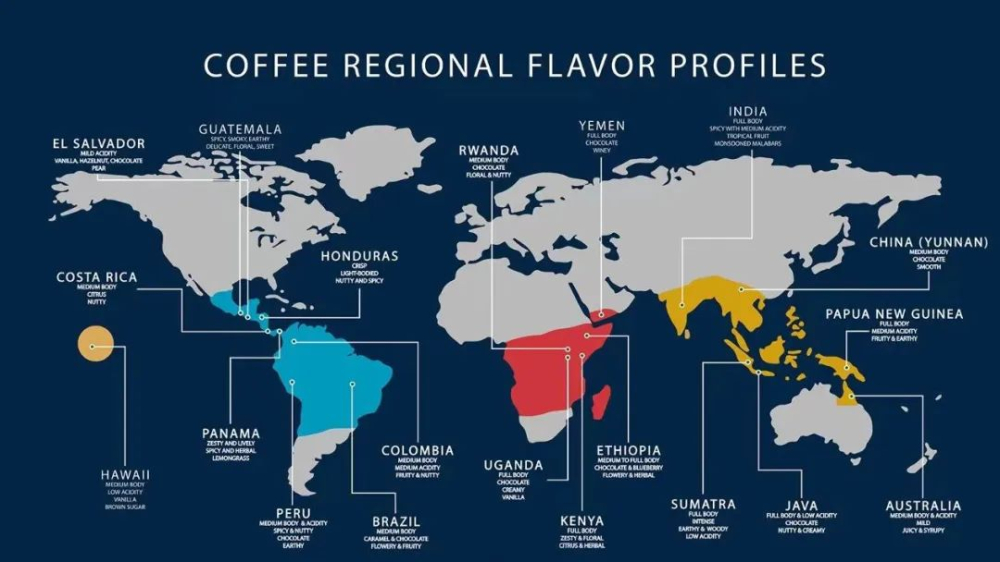
Looking further at other major global coffee-producing regions, countries such as Brazil, Vietnam, Colombia, and Ethiopia not only meet the geographical criteria of the Golden Belt, but have also accumulated rich cultivation techniques and variety selection expertise over long-term planting histories. The coffee beans from these countries play a pivotal role in the global supply chain, while also shaping consumers’ perceptions of the flavor profiles associated with different producing regions.
In summary, understanding the coffee Golden Belt not only helps identify regions with cultivation potential, but also enables a deeper insight into the mechanisms behind coffee flavor formation. Whether you are a beginner coffee enthusiast or a professional with an interest in regional flavor profiles, knowing these foundational conditions will help you make more precise choices and better appreciate specialty coffees from around the world.

The above content is compiled by CoffeeHunters, a coffee news website.


