







Introduction:Delve into the world’s most popular Arabica coffee beans — from their varietal origins and major growing regions to the flavor profiles unique to each area. This guide helps you choose the right beans based on your personal taste preferences. It provides a detailed overview of key producing regions such as Brazil, Colombia, Panama, and Ethiopia, covering their growing environments, processing methods, and representative bean varieties. It’s a practical resource for both beginner and experienced coffee enthusiasts.
Coffee belongs to the Rubiaceae family, with over a hundred known species, but only three cultivated varieties are commonly used for drinking: Arabica, Robusta, and Liberica. Among these, Arabica is prized for its delicate aroma and layered flavors, accounting for about 70% of global coffee production, making it the top choice for specialty and single-origin coffees. These beans are typically grown at elevations above 1,500 meters, where they require stricter climate and environmental conditions — conditions that also contribute to their richer flavor spectrum.
Botanically, coffee belongs to the Rubiaceae family, with approximately eighty confirmed species, of which only Arabica, Robusta, and Liberica are major cultivated varieties. Arabica is often used for high-quality single-origin or specialty coffee, while Robusta is commonly found in instant or dark-roast coffee. Though Arabica is often regarded as premium and Robusta as inferior, the choice ultimately depends on individual taste. For example, consumers in the United States and Japan tend to prefer the lighter flavors produced by Arabica, while Europeans often blend both types to create strong espresso.
Arabica beans originated in Ethiopia and are now grown in many regions around the world, especially at high altitudes. They are more susceptible to pests and diseases, so they require cool climates and well-managed growing conditions. This variety is known for its balanced sweet and acidic aromas, making it ideal for single-origin coffee. Well-known coffees such as Hawaiian Kona, Jamaican Blue Mountain, and Yemeni Mocha all belong to the Arabica species. Their green beans usually have a dark, narrow, and elongated appearance, with intense aromas and a balance of sweetness and acidity, making them a mainstay in the specialty coffee market.
The strength of Arabica lies in its rich and layered flavors, especially in the emerging trend of specialty coffee, where it plays a pivotal role. For instance, the Typica variety is highly regarded for its high-quality acidity and has received excellent cupping scores, making it one of the oldest Arabica varieties. Meanwhile, the Geisha variety is widely praised for its fresh floral notes and gentle acidity, becoming a star in the specialty market in recent years.
However, Arabica also has its limitations, including its sensitivity to pests and diseases. As a result, breeding experts continue to develop varieties with stronger disease resistance. In addition, Arabica has numerous mutations and hybrid sub-varieties, such as Typica, Bourbon, and Geisha, each of which performs uniquely across different regions of the world. Many coffee shops offer over 50 types of Arabica beans from various producing areas, allowing consumers to explore diverse flavors according to their preferences.
As the world’s largest coffee producer, Brazil leads in both cultivation area and output. In recent years, domestic coffee consumption has also grown rapidly, making it the second-largest consumer market after the United States. Since coffee cultivation began in 1727, Brazil’s major producing regions have been concentrated in the southeastern states of Minas Gerais, São Paulo, and Paraná. Due to frequent frost damage in the south, planting areas have gradually shifted northward. Today, large estates in Minas Gerais commonly use irrigation and mechanized technologies, and grow a variety of cultivars such as Bourbon and the disease-resistant Catiguá variety.
Brazilian coffee is generally low in acidity, with a smooth mouthfeel, subtle grassy notes, and a mild bitterness paired with sweetness, leaving a clean and refreshing aftertaste. The Bourbon coffee from Fazenda Rainha is one of its representatives, characterized by nutty and chocolatey flavors, prominent sweetness, and overall balance. Brazil grows varieties such as Bourbon, Mundo Novo, Catuai, and Catiguá, with natural (sun-dried) processing being the primary method, though some honey processing is also used. Its grading is based on bean size and defect count, with the highest grade being No.2, requiring a defect score below 11.
Colombia is the world’s third-largest coffee producer, with coffee mainly grown in small farms located at the foothills of the Andes Mountains, at elevations of about 1,000 to 2,000 meters. Managed by the National Federation of Coffee Growers, the country emphasizes the promotion of specialty coffee and employs shaded cultivation and hand-picking practices. Colombia has two harvest seasons per year, and its washed coffee often features citrus, nut, and dark cocoa notes, with refined acidity, representing a typical expression of the Americas.
Colombia primarily grows Caturra, Castillo, and Colombia Typica, with washing as the main processing method. Grading is based on bean size: S17 and above are classified as Supremo, while S14 to S16 are Excelso.
Panama is a well-known and important producing region among specialty coffee enthusiasts, home to famous estates such as Finca Esmeralda, Finca Deborah, and Ninety Plus. Local cultivars include Geisha, Caturra, and Catuai, with Geisha being the most renowned — particularly the offerings from Finca Esmeralda. Panama’s coffee harvest runs from September to March of the following year, mainly using washed processing, though sun-drying and mechanical drying methods are also employed. Its grading is based on altitude, divided into Strictly Hard Bean (SHB) and Hard Bean (HB), with high-altitude coffees typically exhibiting bright acidity and complex aromas.
Guatemala is a volcanic country, and the Antigua region is surrounded by three volcanoes, resulting in extremely fertile volcanic ash soil. The country’s various producing regions each have unique characteristics, with Antigua’s coffee being famed for its high acidity and rich layers. The recommended Finca La Flor coffee, supervised by Lamastus Family Estates, undergoes strict processing at local washing stations. Its dry aroma carries floral and tea-like notes, while the cup reveals lime, berries, and a honeyed finish, all with outstanding clarity and distinct layers.
Guatemala grows varieties such as Bourbon, Caturra, and Catuai, primarily using washed processing. Grading is based on altitude and flavor profile: above 1,300 meters is SHB, 1,200 to 1,300 meters is HB, and 900 to 1,050 meters is EPW.
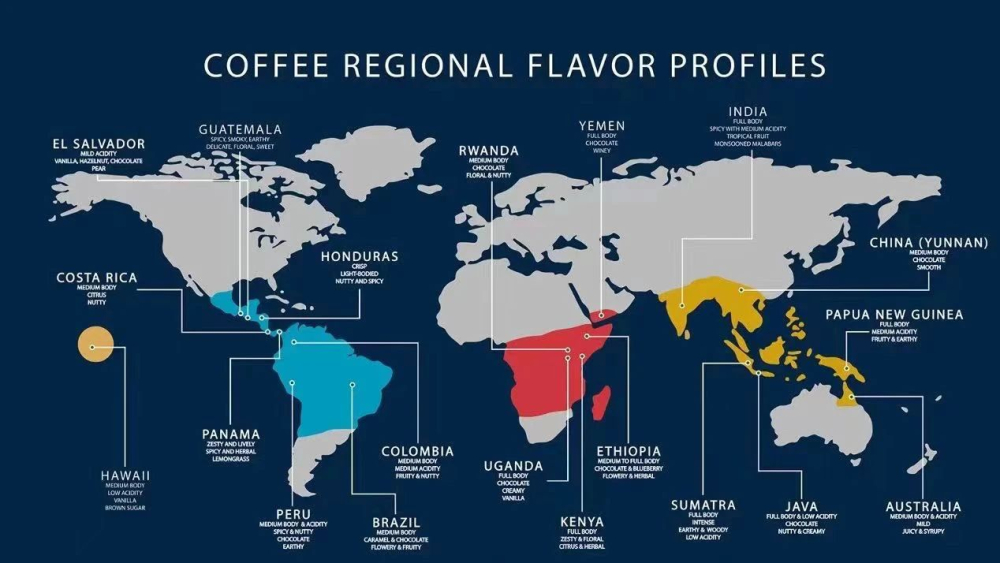
Costa Rica has over two hundred years of coffee cultivation history and is one of the few countries that prohibits the planting of Robusta, placing extreme emphasis on coffee quality. Its coffee is renowned for the honey processing method, which retains some mucilage to combine the cleanliness of washed coffee with the sweetness of sun-dried coffee. Its flavors are nutty at the base, with bright acidity and notable sweetness. The main varieties grown are Caturra and Catuai, with the harvest season running from November to March of the following year. Grading is based on altitude and categorized as SHB, GHB, and HB.
Jamaica’s Blue Mountain coffee is known for its balanced flavor, hailing from the Blue Mountains surrounded by blue seas. Most of its coffee is processed as washed Typica, featuring citrus acidity, nutty and dark cocoa notes in the mid-palate, and a rich, mellow aftertaste. Although sun-dried and Geisha varieties have emerged in recent years, washed Typica remains the classic representation of Blue Mountain. Blue Mountain coffee is graded by bean size and defect count, divided into Grades No.1 to No.3.
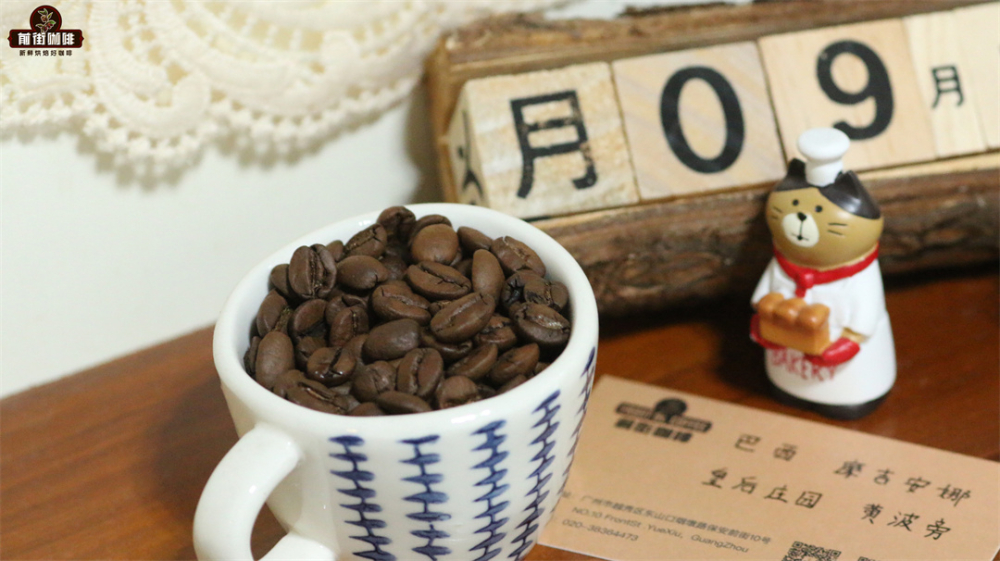
Ethiopia is the birthplace of coffee, boasting an exceptionally rich variety of coffee species, often collectively referred to as “heirloom.” The country primarily uses sun-dried processing, but the Yirgacheffe region gained fame for introducing washed processing, yielding coffee with citrus, lemon acidity, and soft floral notes, along with a tea-like clean aftertaste. Recommended lots such as Red Cherry, Huika, and Kochere all showcase the classic traits of Yirgacheffe. Ethiopian coffee is graded by defect count, with Grade 1 to Grade 5 as the export standard.
Kenyan coffee is known for its strong berry notes and high acidity, making it suitable for iced coffee. Its main varieties are SL28 and SL34, cultivated by the Nairobi Coffee Research Station, with mature washed processing techniques. The harvest seasons are from September to December and from May to July. Grading is based on bean size: S18 and above are AA, S15 to S17 are AB, and peaberries are PB.
Indonesia consists of numerous islands, with Java and Sumatra as its main producing regions. Indonesia once switched to disease-resistant Robusta cultivars like Catimor due to leaf rust outbreaks, but the Arabica variety from Sumatra (commonly known as Mandheling) remains highly favored in the specialty market. Indonesia employs a unique semi-washed process, yielding flavors with herbal and spicy notes. The recommended Golden Mandheling is carefully hand-sorted multiple times, offering a smooth and clean cup. Indonesian coffee is graded based on bean size and defect count, categorized by large and small beans, along with five defect grades.
The above content is compiled by CoffeeHunters, a coffee news website.


