







Introduction:Although Americano is the most common basic coffee in cafés, its preparation involves quite a bit of know-how. From its historical origins, the differences between Americano and Long Black, to the golden ratios for hot and iced versions, and even how the presence or absence of crema affects flavor—this article breaks down each aspect in an easy-to-understand way, and provides practical parameters and operational tips to help you better understand this classic drink.
Americano can be said to be the most beginner-friendly yet most revealing of a barista’s skill on a café menu. On the surface, it consists only of espresso and water, but behind it lies historical background, different brewing methodologies, and details of extraction techniques. This article will start with definitions and history, compare the differences between the Americano and Long Black methods, discuss the controversy of using long extraction to make lighter coffee, and offer specific ratio suggestions for both hot and iced Americanos. Additionally, it will detail the often-overlooked coffee crema, exploring how scraping or retaining it affects flavor, supplemented with real-test examples.
The so-called "Americano" (English: Americano, Italian: Caffè Americano), according to traditional definition, refers to black coffee made via drip filtration. This type of extraction usually takes four to five minutes, resulting in a flavor that is cleaner and more balanced, not as intense as espresso. However, the Americano commonly seen in cafés today is mostly made by adding a shot or multiple shots of espresso as the base, then diluting it with a large amount of hot water. This method has a low operational threshold, is suitable for quick service, and tends to produce a cleaner flavor that also highlights the original characteristics of the coffee beans more easily.
Currently, the mainstream ways to prepare Americano can be divided into two types: one is to add hot water to espresso, called Americano; the other is to pour espresso into a cup that already contains water, called Long Black. The difference in preparation order subtly affects the final flavor expression and crema distribution, which is worth experiencing carefully.
The birth of Americano is closely related to World War II. At that time, American soldiers stationed in Southern Europe were not accustomed to the strong local espresso, so they diluted it with warm water. Because this drinking method was mainly adopted by American soldiers, it came to be called "Americano." Looking back, most American households at the time preferred using drip coffee makers to brew light-tasting black coffee, a tradition that continues to this day—the drip pots commonly used in American homes are also called "Americano pots." Furthermore, the global expansion of brands like Starbucks further promoted the culture of Americano made by adding water to espresso.
As for making lighter coffee directly through long extraction using an espresso machine, market opinions are divided. Traditionalists believe this can easily lead to over-extraction, especially in the later stages of extraction, where excessive caffeine and off-flavors may be released. However, some cafés, such as certain ones in Australia, stick to this method, pointing out that methods like French press or siphon also involve longer extraction times but are equally accepted. The key lies not in the method itself, but in whether the final flavor is balanced and meets consumer expectations. It’s worth noting that longer-extracted lighter coffee may have higher caffeine content, which is also a factor to consider when choosing.
In actual preparation, Americano is arguably the simplest of all espresso-based drinks, requiring only espresso and water, plus ice if it's iced. But the simpler the recipe, the more it tests fundamental skills. For baristas, Americano is often one of the indicators used to evaluate their espresso extraction ability, because without milk to mask flaws, any defects in flavor will be more directly apparent.
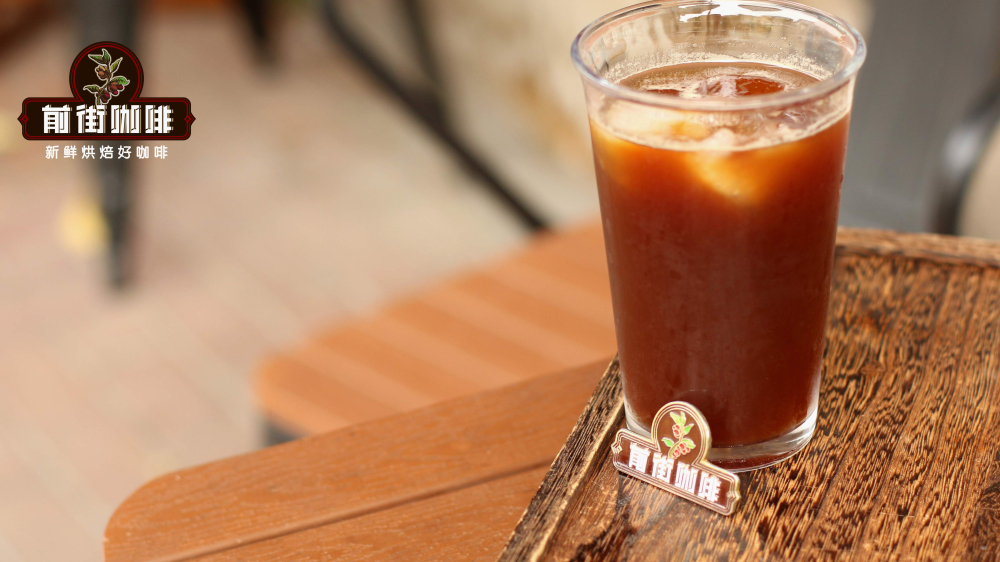
The key to Americano lies in the quality and ratio of the espresso. Generally speaking, the recommended coffee-to-water ratio for hot Americano falls between 1:6 and 1:8, and practical testing has adopted a 1:6 ratio—that is, 40 grams of espresso liquid paired with 240 grams of hot water. It is recommended to preheat the cup with hot water first, then pour in the hot water, and finally add the espresso, which helps maintain stable flavor. If making iced Americano, pre-chill the cup and add ice first, then add water and espresso in sequence. The iced Americano ratio is 1:7, that is, 40 grams of coffee liquid paired with 280 grams of ice-water mixture (approximately 180 grams of ice and 100 grams of water), to balance the dilution effect after the ice melts.
In addition, many people face a choice when making hot Americano: whether to retain the crema floating on the surface. This layer of crema comes from the high-pressure extraction process of espresso—under high pressure, carbon dioxide dissolves into the liquid, and when released, it becomes enveloped by coffee oils, forming a delicate foam layer. A comparative test was conducted, preparing Americano from the same blend of beans, with and without crema. The results showed that the version with the crema scraped off had a smoother, cleaner taste, while the version with retained crema had a richer, fuller flavor. Both exhibited notes of dark chocolate and subtle oak, with soft acidity. Though the difference was minor, if you prefer a cleaner taste, it is recommended to scrape off the crema; if you value layered complexity and smoothness, keeping the crema is also a good choice.
The above content is compiled by CoffeeHunters, a coffee news website.


