







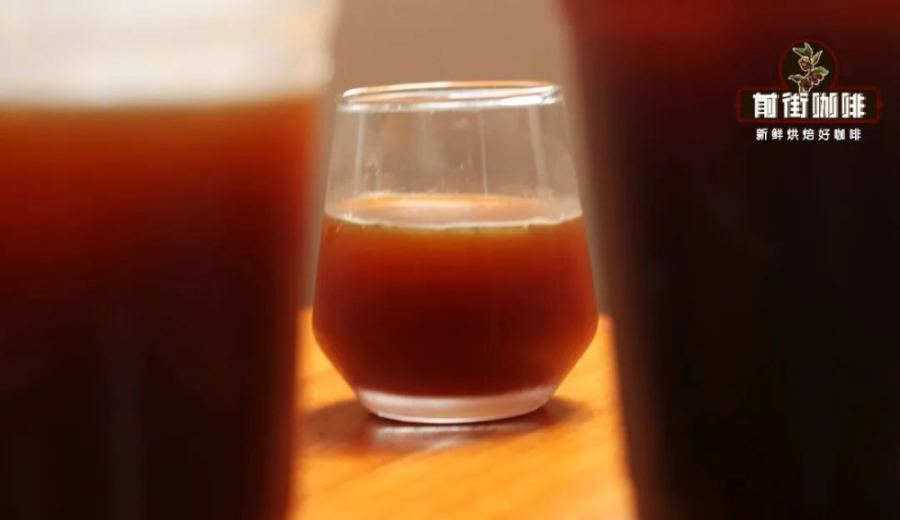
Introduction:Have you ever noticed that your homemade iced Americano looks cloudy or murky? This phenomenon is actually closely related to multiple factors — from the roast level of the coffee beans, grind size, freshness, to the brewing method — all of which can affect the final appearance. Through experimental comparisons and scientific principles, this article delves into the causes of cloudiness in iced Americanos and explores how those tiny particles may subtly contribute to flavor.
Many black coffee enthusiasts may have observed that their homemade iced Americanos are sometimes not as clear and bright as those served in cafés, but instead appear slightly hazy or even show tiny suspended particles in the liquid. Does this cloudiness indicate poor coffee quality? The answer is not so straightforward.
To understand why iced Americanos become cloudy, we must first look at the extraction principles of espresso. In practical tests, two types of beans were used: a medium-roasted “Huakui SOE” and a medium-dark roasted “Classic Blend,” both brewed with similar ratios. Then ice and water were added to make iced Americanos, and their visual differences and taste profiles were observed.
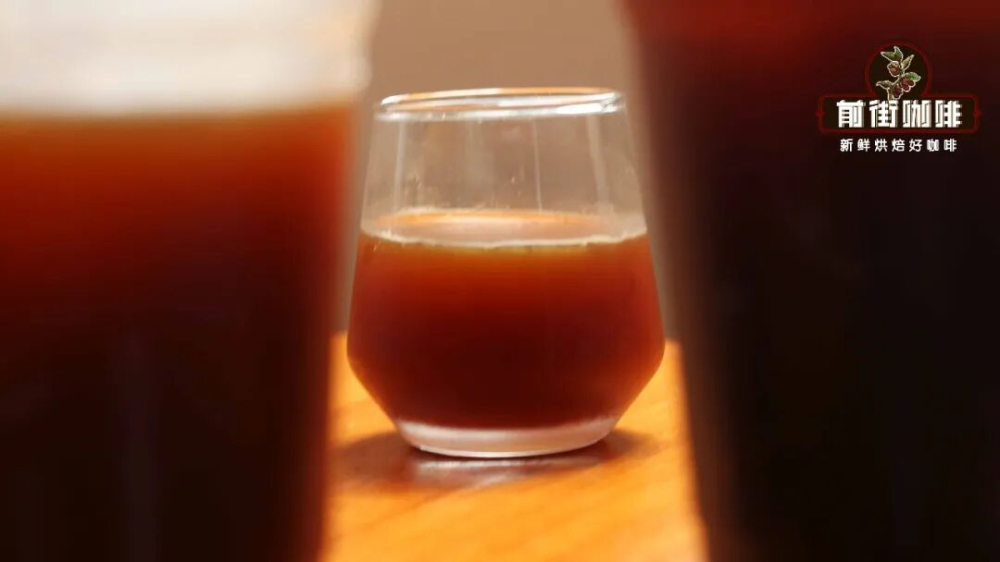
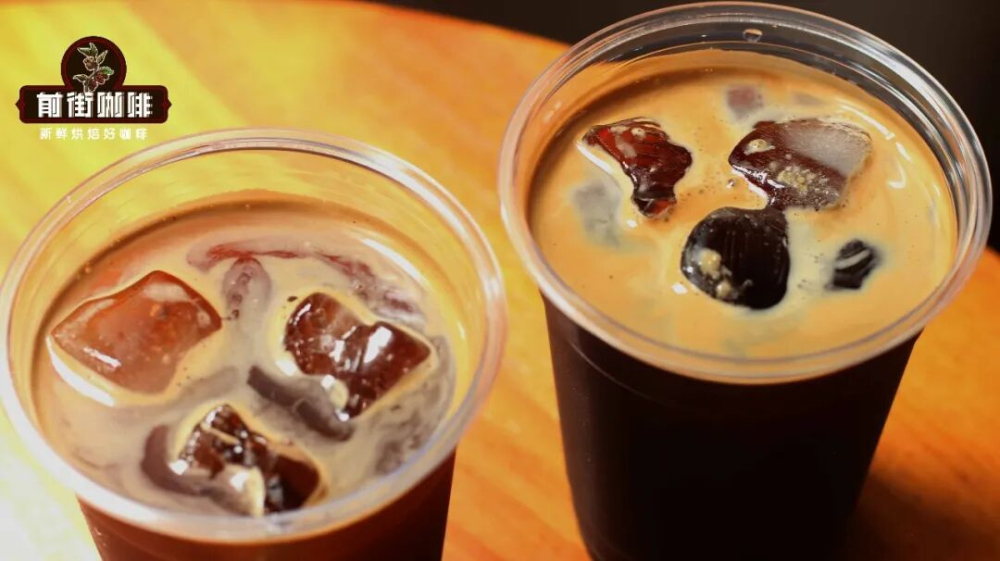
In the experiment, the “Huakui SOE” used 20 grams of coffee grounds, extracted for about 33 seconds, yielding 38 grams of espresso, then combined with 90 grams of ice and 150 milliliters of room-temperature water. The “Classic Blend” used 20 grams of coffee extracted for 28 seconds, producing 40 grams of coffee liquid, also mixed with 90 grams of ice and 150 milliliters of regular-temperature water. Visually, although both cups had a layer of coffee crema on top, the “Huakui SOE” had a lighter color, thinner foam layer, and noticeably lower overall transparency, with visible fine suspended particles. The “Classic Blend,” though darker in color, still appeared glossy and blackish, looking relatively clearer.
Further filtering both iced Americanos through paper filters revealed that both left behind a layer of coffee powder residue on the filter, with the “Huakui SOE” showing significantly more residue. This confirms that the so-called “cloudiness” is mainly caused by extremely fine coffee particles carried over in the espresso.
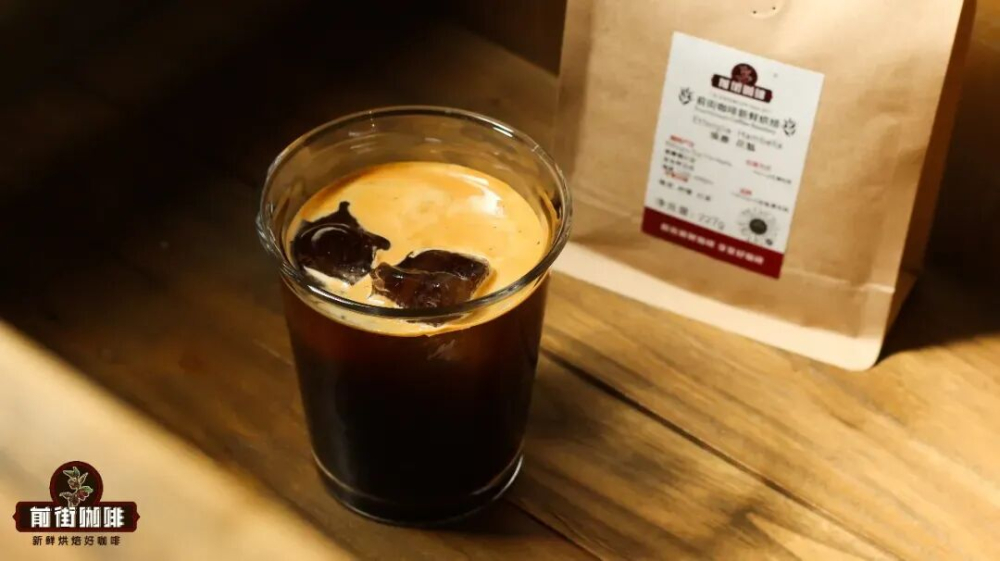
Espresso extraction relies on a high-pressure environment (about 9 atmospheres), using the fine pores of a metal filter basket for rapid extraction. These tiny pores allow water-soluble substances in the coffee to be released, but they also let some less soluble proteins, lipid particles, and even smaller fine coffee particles pass through the filter and end up in the final liquid. Therefore, even espresso made by professional machines rarely achieves a completely clear state.
The experiment also observed that the medium-roasted “Huakui SOE” tends to produce more cloudiness than the medium-dark roasted “Classic Blend.” This is directly related to roast level and grind settings. Generally, the lighter the roast, the finer the grind needed to achieve sufficient extraction efficiency. And the finer the grind, the more fine particles are produced. These tiny particles are more likely to pass through the metal filter basket and enter the coffee liquid, resulting in a hazier overall appearance.
In addition, the color of light-roast coffee liquid usually leans toward reddish-brown. Compared to the deep, dark brown of dark roasts, this lighter background makes tiny particles more noticeable, creating a subjective impression of being “particularly cloudy.”

Besides roast level and grind size, the freshness of the coffee beans is another factor affecting the appearance of iced Americanos. Freshly roasted beans contain a large amount of carbon dioxide, which during extraction may form tiny bubbles that suspend in the coffee liquid, further interfering with visual clarity. Therefore, overly fresh coffee beans may also result in an iced Americano that doesn’t look as clear as expected.
Another factor that cannot be ignored is temperature change. Different compounds in coffee have varying solubilities at different water temperatures. Some substances dissolve more easily in hot water but less so in cold water. This means coffee prepared with ice or cold water is more prone to cloudiness due to incomplete dissolution. Compared to hot coffee, iced Americanos, with their lower water temperatures, naturally have a higher chance of appearing cloudy.
Although the cloudiness of iced Americanos may often be associated with quality flaws, from a flavor perspective, these tiny suspended particles actually have positive effects. They can enhance the texture and body of the coffee, and help prolong the duration of aroma in the mouth. The much-sought-after “tiger striping” effect that many coffee lovers admire is also closely related to the retention of these fine particles.
For example, when using the same “Huakui SOE” to make an espresso Americano and a pour over coffee, the former often exhibits a richer sweetness and nutty finish, with a more pronounced body — this is the added value brought by those fine particles.
The above content is compiled by CoffeeHunters, a coffee news website.


