







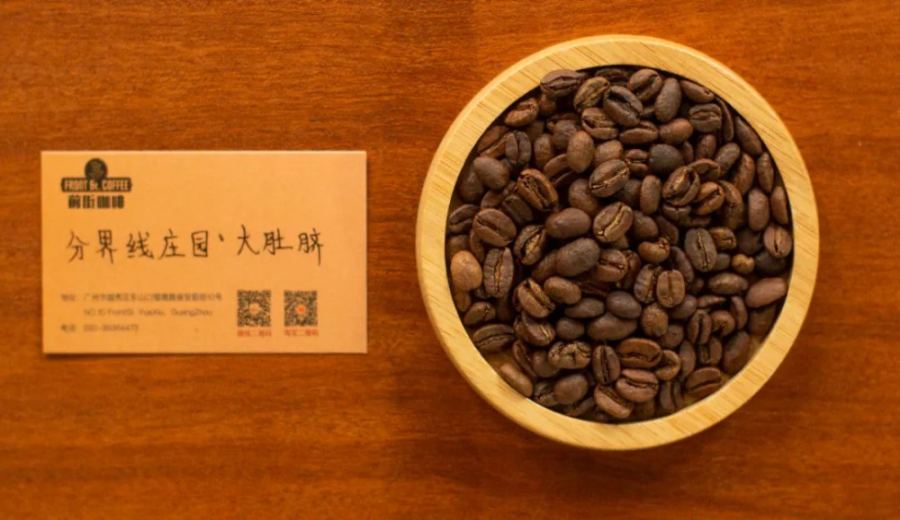
Introduction:Ombligon is a specialty coffee variety that has gained international recognition in recent years, originating from Finca El Diviso in Colombia’s Huila region. This article will delve into the unique appearance, genetic background, development journey of this variety, and provide a detailed explanation of its classic double anaerobic natural processing method. Practical pour over brewing suggestions are also included, allowing you to experience its rich fruitiness and layered fermentation complexity at home.
In the world of specialty coffee, there are always certain varieties that stand out due to their distinctive flavors and origins, becoming focal points of industry attention. Among them, Ombligon is one of the star varieties that has garnered significant interest in recent years. This coffee hails from Finca El Diviso in Colombia’s Huila region, and is renowned for its navel-like fruit appearance and juicy, vibrant profile. It not only made an appearance in the 2023 World Barista Championship (WBC) finals, but was also favored by several competitors in the Chicago World Brewers Cup (WBrC).
Ombligon first captured international attention at the 2023 WBC finals, where Australian competitor Jack Simpson used it to showcase its intense fruit acidity and fermented wine-like aromas through three different beverage presentations. Subsequently, in the WBrC competition, two of the top six competitors also chose this variety as their competition beans, highlighting its potential and expressive capabilities on the competition stage.
Regarding the origin of the Ombligon variety, there is currently no completely unified theory. Some coffee farmers suggest that it may be derived from Ethiopian landraces, though there is no definitive documentation to confirm this. However, according to genetic analysis by the World Coffee Research organization, Ombligon does show some relation to Ethiopian landraces, and it is speculated that the variety may have naturally mutated under Colombia’s high-altitude environment. Additionally, its plant morphology and growth characteristics are quite similar to the commonly found Caturra variety in the region, including advantages such as broad leaves, high yield, and resistance to leaf rust.
The name “Ombligon” comes from the unique shape of its coffee cherries. When ripe, the cherries resemble papayas, with the bottom bulging outward and a distinct indentation in the center, resembling a human navel—hence the name “Ombligon,” which in Spanish means “big navel” or “potbelly.” This rare appearance makes it highly recognizable among numerous coffee varieties.
Finca El Diviso is the primary growing location for Ombligon, situated in the town of Pitalito, Huila Province, Colombia. The area boasts fertile volcanic soil and diverse microclimates, making it highly suitable for cultivating specialty coffee varieties. The farm’s owner, Jose Uribe Lasso, has been involved in coffee cultivation since 1996, initially developing his operations in the Nariño region before relocating to Huila in the early 2000s. He purchased Finca El Diviso and began his journey into specialty coffee.
Currently, Finca El Diviso is jointly managed by Jose’s three sons: the eldest, Jhoan, oversees planting and cultivation management; Nestor is responsible for overall operations; and the youngest, Adrian, leads market sales. In addition to Ombligon, the farm also grows several rare varieties such as Geisha, Pink Bourbon, Papayo, Tabi, Chiroso, and Bourbon Aji, making it one of the few pioneering farms in Colombia focused on specialty varieties and innovative processing methods.
The most common processing method for Ombligon coffee is double anaerobic natural, a technique that fully highlights its fruity aroma and fermentation complexity. During processing, ripe coffee cherries are first floated and soaked in hot water at around 50–60°C for approximately 25 minutes to remove unripe cherries and impurities, followed by hand sorting to ensure only the highest quality cherries proceed to the next stage.
Afterward, the coffee cherries undergo a 24-hour sealed fermentation to enhance sweetness and flavor concentration, and the initial fermentation liquid is collected. Then, depending on the specific conditions of each batch, a particular ratio of sugar water is prepared, yeast for winemaking is added, and the fermentation liquid is mixed again. This mixture is then returned to the fermentation tank along with the coffee cherries for a 72-hour anaerobic fermentation period. During this time, the fermentation liquid is circulated every four hours, and the pH is strictly monitored to maintain a level above 3.8, ensuring stable fermentation.
After fermentation is complete, the coffee cherries are left to rest in a specially designed drying box on the farm for 12 hours for initial dehydration. This stage relies entirely on the fruit’s own heat and air circulation, without using any external heat sources. They are then transferred to raised drying beds for approximately 15 days of natural sun drying until the moisture content reaches the ideal standard.
If you’d like to brew Ombligon coffee at home, here is a set of practical pour over reference parameters: it is recommended to use a V60 dripper, with water temperature controlled between 91–93°C, a coffee dose of about 15 grams, a coffee-to-water ratio of 1:15, and a grind size roughly equivalent to that of fine granulated sugar (aiming for about 80% passing through a #20 sieve). During brewing, you can use the classic three-pour method: the first pour adds 30 grams of water for a 30-second bloom; the second pour adds 95 grams of water, reaching a total of about 125 grams over approximately 1 minute; the final pour adds 100 grams of water, totaling 225 grams, completed in about 1 minute and 35 seconds. The overall extraction time is around 2 minutes, yielding a balanced and layered cup of coffee.
In terms of flavor, Ombligon often exhibits intense blackcurrant and Kyoho grape acidity, paired with a refreshing sweet orange aroma. The cup is lively like pineapple juice on the palate, with a lingering finish of berries and black tea. At medium to lower temperatures, its citrus notes become even brighter, accompanied by a hint of enchanting fermented wine aroma. It is a specialty coffee with a multidimensional and dynamic flavor profile.
The above content is compiled by CoffeeHunters, a coffee news website.


