







Introduction:This washed Caturra coffee from Colombia’s Huila region, roasted to a medium-dark level, showcases layered flavors of chocolate, nuts, and caramel — making it a popular everyday choice for many coffee enthusiasts. This article takes you through its regional geography, variety traits, processing method, roast profile, and brewing details with the KONO dripper, including water temperature, grind size, and a three-stage pour-over technique. Learn how to fully extract its rich body and sweetness, and master the key elements of its flavor.
Colombian coffee is renowned for its smooth and balanced character, with layered and expressive aromas, maintaining a strong presence in the global market and consistently ranking among the top coffee-exporting countries. When it comes to specialty pour-over or espresso blends, Colombian origins are frequently featured, especially the high-altitude regions represented by Huila Province — their washed beans are widely praised. This article dives into the origin characteristics and flavor profile of this washed Caturra, and offers practical medium-dark roast pour-over recommendations, including suitable KONO drippers, water temperature, grind size, and three-stage extraction techniques, helping you perfectly reproduce its charming notes of chocolate, nuts, and caramel.
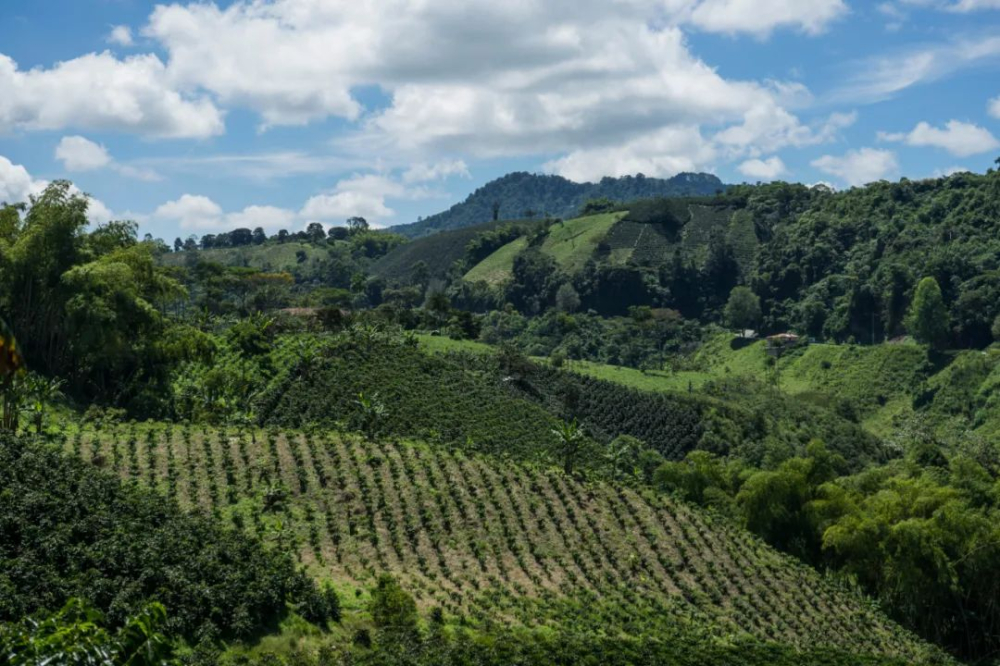
The reason Colombian coffee is so highly regarded is inseparable from its exceptional geographical environment. The country lies along the western edge of the Andes Mountains, which stretch from north to south, creating diverse microclimates and fertile, organic-rich soils. Coffee-growing areas are mainly located between 800 and 2,300 meters above sea level, particularly those above 1,200 meters where lower temperatures and reduced oxygen slow down fruit ripening. This helps the beans accumulate more sugars and flavor compounds, ultimately resulting in dense, tightly structured high-quality green beans.
The mountainous climate here is mild, with notable day-night temperature variations. Coffee trees are often planted under tall shade trees such as banana trees or other native hardwoods, helping maintain stable humidity and temperature while reducing direct sunlight exposure to the cherries. Local growers also set up shade structures during the seedling stage to ensure proper shading and protection in the early growth phase — all of which lay the foundation for rich and balanced coffee flavors.
The success of Colombian coffee is not only due to natural conditions but also owes much to its well-developed industry system. Since the 20th century, the government-supported FNC (Colombian Coffee Growers Federation) has played a key role, not only promoting the national coffee brand but also establishing rigorous grading and management standards. Currently, there are over 590 municipalities and 14 major coffee-growing regions nationwide, most operated by small farms with an average cultivation area of just 2 to 3 acres. These farmers typically send harvested beans to community processing stations for washed processing, or process them themselves using small equipment, then grade and export them based on quality.
Colombia’s specialty coffees are mostly concentrated in southern regions such as Huila, Cauca, Nariño, and Tolima, where altitudes generally exceed 1,500 meters. The coffees produced here are commonly known for their delicate acidity, berry notes, and pronounced caramel sweetness. The star of this article — the washed Caturra from Huila — is a classic representative. Roasted to a medium-dark level, it delivers a rich and balanced profile of chocolate, nuts, and caramel, making it ideal for daily drinking and pour-over beginners.
Regarding the grading of Colombian coffee, one common evaluation criterion is bean size. Before export, green beans are sorted by size using standard screens — for instance, screens above 17 remove smaller particles, keeping larger beans. Export grades include UGQ, EP, and Supremo, but all export-grade beans are uniformly classified as Excelso. This is the most common and high-quality export standard used by the FNC. To qualify as Excelso, at least 50% of a 500g sample must be beans larger than 14 mesh, no more than 5% can be between 12–14 mesh, and a significant proportion must be larger than 15 mesh. Additionally, beans must have no significant defects (total defect count not exceeding 24), moisture content below 12.5%, be free from pests, have uniform color and clean flavor, and come with traceable information including origin, grade, and farmer ID.
When it comes to actual brewing, how can you fully showcase the flavors of this medium-dark roasted Huila washed coffee? It is recommended to use freshly roasted beans, ideally within 5 days post-roast, to retain maximum aroma and vibrancy. Being a medium-dark roast, this coffee features intense and rich notes of chocolate and nuts. With a lower bean density and good water absorption, it is advised to use a medium-coarse grind — approximately 75% passing through a 20-mesh screen — and control the water temperature around 90°C to avoid over-extraction and unwanted off-flavors.
For equipment, the KONO dripper is an excellent choice. Its unique design features venting ribs only in the lower quarter of the cone. When water is poured beyond that point, the internal water level gradually rises and creates pressure, while the smaller outlet prolongs contact time between water and coffee grounds — effectively extracting a fuller body and sweeter taste.
Practical pour-over parameters are as follows: Use the KONO dripper, water temperature 90°C, grind size at 75% through a 20-mesh standard screen (medium-coarse), coffee-to-water ratio 1:15, 15 grams of coffee, using a three-stage pouring technique.
Recommended steps: First, place the coffee grounds into the dripper and pour hot water equal to twice the coffee weight (about 30 grams) for the bloom, lasting about 30 seconds — this helps activate the grounds and release aroma. Then, pour steadily with a small stream in a circular motion from the inside out until you reach 125 grams, then pause for the first break once the coffee bed drops to about half its height. Continue pouring with the same fine stream until you reach 225 grams to complete extraction, with the whole process taking around 2 minutes. Be sure to maintain a steady flow rate, avoiding sudden changes that may affect even extraction.
This Colombian Huila washed coffee delivers an immediate impression of distinct chocolate and nut aromas, paired with soft caramel sweetness. The overall mouthfeel is rich and layered, with a smooth and clean finish. As the temperature cools slightly, subtle fruity acidity and lingering notes become more apparent. It’s a great everyday brew for coffee lovers who enjoy medium-dark roast profiles.
The above content is compiled by CoffeeHunters, a coffee news website.


