







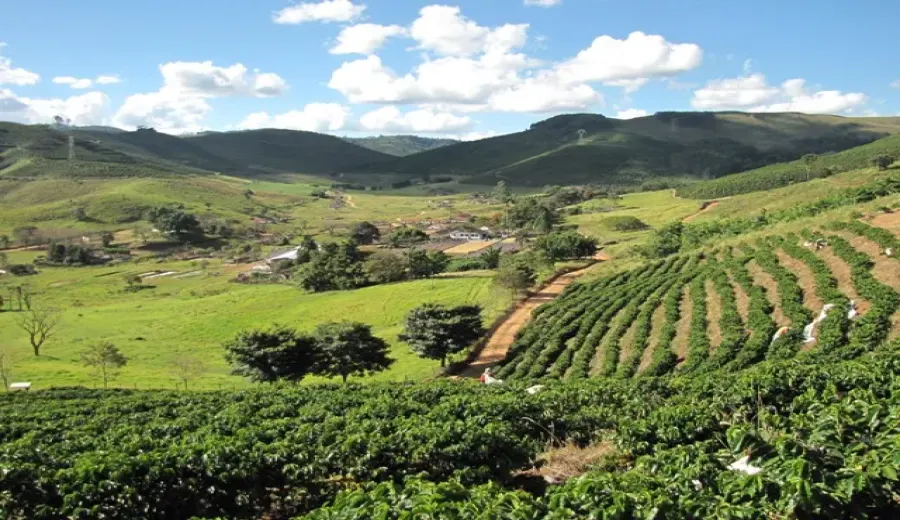
Introduction:Delving into the key coffee-growing regions of Brazil’s coffee kingdom, this feature spotlights Fazenda Rainha (Queen Farm) in the highlands of Alta Mogiana, São Paulo. Operated by a century-old family estate, this farm is dedicated to the meticulous cultivation and natural sun-drying processing of the Yellow Bourbon variety. Nestled between altitudes of 1400 to 1950 meters, it produces coffee with a unique sweetness and richly balanced profile. This article offers a comprehensive guide—from regional geography and varietal characteristics to practical pour over parameters—unveiling the aromatic profile and brewing tips of this exceptional natural Yellow Bourbon.
As a cornerstone of global coffee supply, Brazil not only leads the market with an annual production volume accounting for approximately 45% of the world total, but its beans also serve as a key benchmark influencing global coffee pricing. Brazilian coffee is renowned for its plump beans, mild aroma, and balanced flavor, making it highly sought after both as single-origin pour overs and as the foundational beans in espresso blends. Among Brazil’s many producing regions, Alta Mogiana in São Paulo stands out due to its high altitude and unique microclimate, with Fazenda Rainha’s natural Yellow Bourbon being especially celebrated.
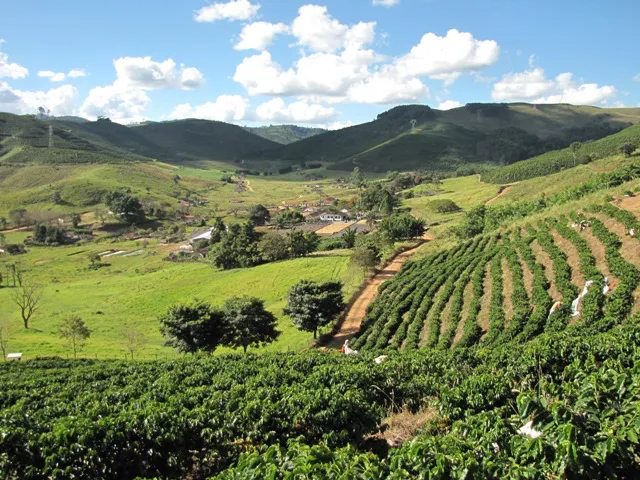
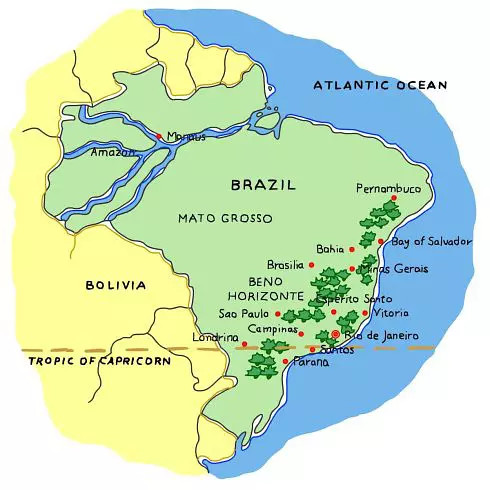
South America boasts naturally favorable conditions, with terrain encompassing the Andes Mountains and expansive plateaus, paired with tropical rainforest and savanna climates that provide an ideal environment for coffee cultivation. Brazil, with its vast territory, benefits from the high-altitude plateaus and gentle day-night temperature variations found in its central and southern regions, creating stable and high-quality coffee production conditions. Coffee cultivation in Brazil is primarily concentrated in the southwest, generally at elevations between 600 to 800 meters, while certain highland areas such as Alta Mogiana can exceed 1000 meters, offering an ideal growth environment for specialty coffee.
Across Brazil’s 26 states, 17 are engaged in coffee production, encompassing both Arabica and Robusta varieties. The leading producing states include Paraná, São Paulo, Minas Gerais, and Espírito Santo, collectively accounting for 80% of national output. Notably, Minas Gerais leads production with a 30% share, featuring well-known sub-regions such as Cerrado and Sul de Minas, where beans often exhibit pronounced nutty and chocolatey profiles.
Turning to São Paulo, the state features diverse terrain, with river-rich coastal areas and inland plateaus and basins, experiencing a tropical highland climate with significant day-night temperature differences—ideal for coffee cultivation. Within the state, the Alta Mogiana region is hailed as one of Brazil’s highest-altitude coffee-growing zones, with elevations ranging from about 900 to 1100 meters, and some areas even surpassing that. The area’s mineral-rich volcanic soils make it exceptionally suitable for nurturing specialty coffee.
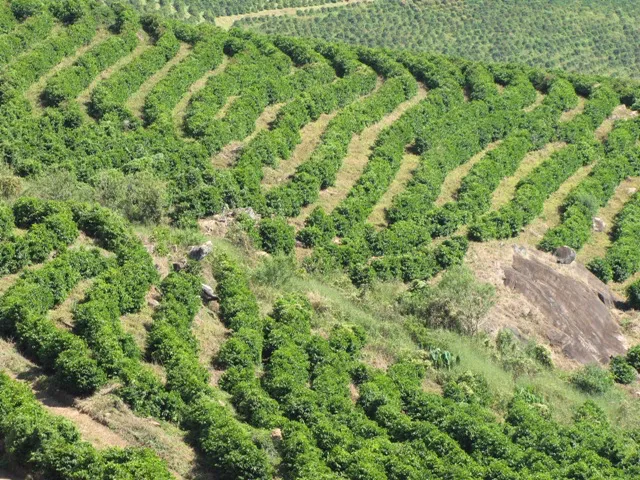
Among the many farms in Alta Mogiana, Fazenda Rainha (Queen Farm) has earned widespread acclaim for its long-standing cultivation history and commitment to quality. Operated by the iconic Carvalho Dias family, the estate specializes in the Bourbon variety and is also known for its eco-conscious practices—harnessing natural waterfalls to generate pollution-free hydroelectric power and actively conserving and expanding native forests. Due to the steep terrain and high elevation, harvesting is primarily done manually to ensure that every coffee cherry is rigorously selected.
The Yellow Bourbon cultivated at Fazenda Rainha is a relatively rare cultivar within the Bourbon family, noted for its high sugar content and distinctive aromatic profile. This carefully selected natural Yellow Bourbon coffee undergoes traditional sun-drying processing, slowly drying at high altitude so that the sugars from the fruit pulp fully permeate the bean, resulting in rich sweetness and complex flavors. In cupping, it often reveals pronounced notes of ripe fruit sweetness, accompanied by layers of sugarcane, black tea, chocolate, and nuts, with low bitterness and an exceptionally smooth mouthfeel.
Key information about this coffee includes: origin—Brazil’s Alta Mogiana region, altitude between 1400 and 1950 meters, variety—Yellow Bourbon, processing method—natural (sun-dried), with primary flavor notes of chocolate, nuts, cream, peanuts, and caramel in harmonious combination. Due to its high altitude and dense bean structure, roasters often opt for medium-dark roasts to highlight its rich base tones while preserving the delicate nuances characteristic of Yellow Bourbon.
Regarding brewing, because the medium-dark roast results in a looser bean structure and faster water absorption after grinding, improper parameter control can easily lead to over-extraction and excessive bitterness. It is recommended to use slightly lower water temperature and a coarser grind to reduce extraction yield, paired with a KONO filter to enhance body and roundness in the cup. Suggested pour over parameters are as follows: water temperature around 87–88°C, medium grind size (approximately 70% passing rate through a standard Chinese No. 20 sieve), 15 grams of coffee, a 1:15 coffee-to-water ratio, using the classic three-pour method.
In terms of steps: start with a bloom using twice the coffee weight in water (about 30 grams) to wet the coffee bed, then let it rest for 30 seconds; next, pour with a slow, steady stream in a circular motion from the center outward, adding water up to 125 grams for the first pour. Once the coffee bed descends to the middle of the filter, continue pouring with the same fine stream until reaching 225 grams to complete the brew, keeping total brew time around 2 minutes. Finally, gently swirl the coffee to ensure even extraction before enjoying. Brewed this way, Fazenda Rainha’s natural Yellow Bourbon will showcase enticing aromas of dark chocolate, cream, peanuts, and nuts, with a naturally sweet sugarcane-like taste on the palate. The overall flavor is well-balanced with a long, lingering finish—making it an excellent choice for experiencing Brazil’s high-altitude specialty coffee.
The above content is compiled by CoffeeHunters, a coffee news website.


