







Introduction:Delve deep into Ethiopia’s renowned Sidamo region, with a focus on the high-altitude star town of Bensa. From its geographical background and naming origins to top-tier micro-regions and processing methods, this article provides a comprehensive overview. It covers the distribution of COE-winning farms from 2020–2021, mainstream processing techniques (washed/sun-dried/red honey), flavor profiles, as well as actual cupping evaluations and recommended home brewing suggestions—offering you a full understanding of this coffee haven that consistently excels in international competitions.
When it comes to specialty coffee from Ethiopia, Sidamo is undoubtedly a classic and iconic region. This area has not only produced numerous world-class competition-winning coffees, but also won global coffee enthusiasts' favor with its rich floral notes and bright fruity acidity. Moreover, its uniquely favorable natural environment—high altitude terrain, moderate climate, fertile soil, and abundant rainfall—has created coffee beans with distinct and layered flavor profiles.
Sidamo is one of Ethiopia’s three official coffee-growing regions, with an extensive cultivation area and diverse yet consistently high-quality product styles. Coffees from here generally feature high acidity and a rich body, along with complex aromas of spices, berries, and flowers, making them highly popular among professional cuppers and consumers alike. Popular choices such as the classic Huila 8.0, Santa Vittoria, and sun-dried versions all hail from this region.
However, when searching for information about the Sidamo region, you may come across two different Chinese translations: “西达摩” and “锡达马.” In fact, the name “Sidamo” is an outdated term used by outsiders for the indigenous ethnic group “Sidama,” and it carries certain historical colonial connotations. The Sidama people have a unique language and culture, and even possess an Intangible Cultural Heritage recognized by UNESCO—the “Fiche Chambalala” New Year Festival, which attracts over five million participants annually.
During the 19th century, the region was occupied by foreign powers, and the invaders mispronounced the local name “Sidama” as “Sidamo.” Although this term later became the common name in the international market, it long caused displeasure among the Sidama people due to its disrespectful undertones. It wasn’t until the 1990s, when Ethiopia adopted a federal system and redefined administrative regions based on ethnicity and language, that the Sidama officially regained their original name. However, since “Sidamo coffee” had already gained fame in the international market and the Ethiopian government had once registered the trademark Sidamo®, many consumers still commonly use the term “西达摩” today.
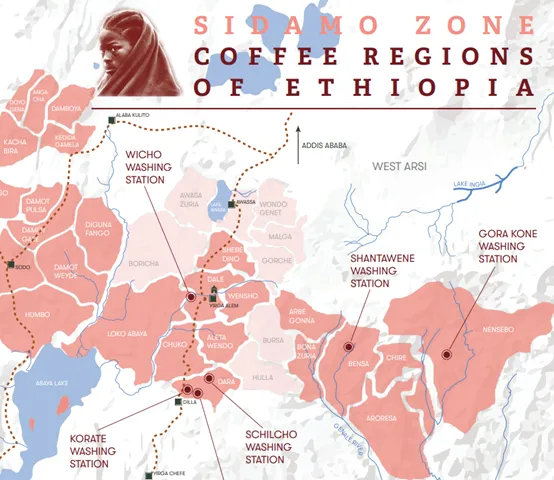
In the 2020 and 2021 COE (Cup of Excellence) international competitions, multiple micro-regions within the Sidamo region delivered outstanding performances, with the town of Bensa standing out the most. This town, along with nearby areas such as Arbegona, Bura, and Bona Zuria, are all located in the Sidamo Plateau region. Not only do they share similar geographical conditions, but they have also repeatedly achieved remarkable results in competitions. Particularly in the 2021 COE event, Bensa claimed all the top-ranking champion farms on the list, showcasing its extraordinary coffee potential.

Bensa is situated in the Sidamo region of southern Ethiopia, with an overall elevation ranging between 1,800 to 2,300 meters, placing it within the typical high-altitude coffee cultivation zone. In such high-altitude environments, coffee cherries grow more slowly, allowing the beans more time to accumulate flavor compounds. This ultimately results in a rich and layered taste, sometimes even with subtle hints of strawberry aroma.
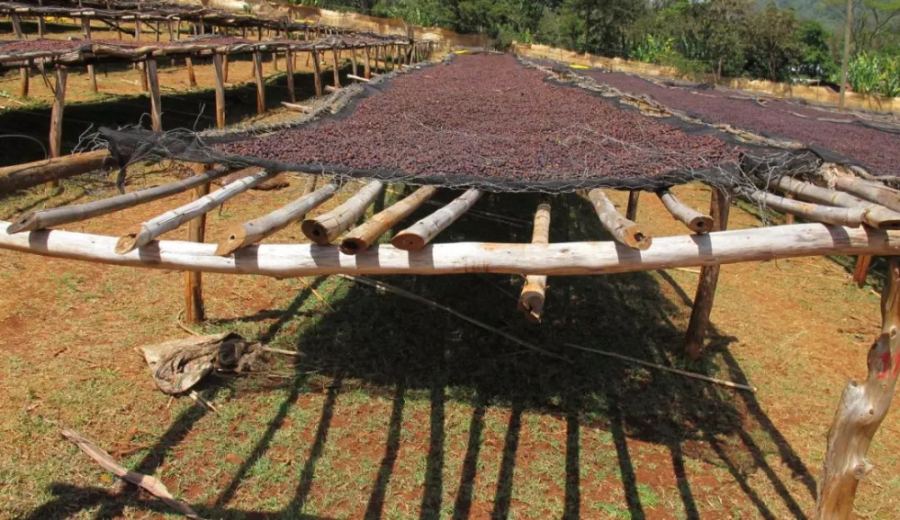
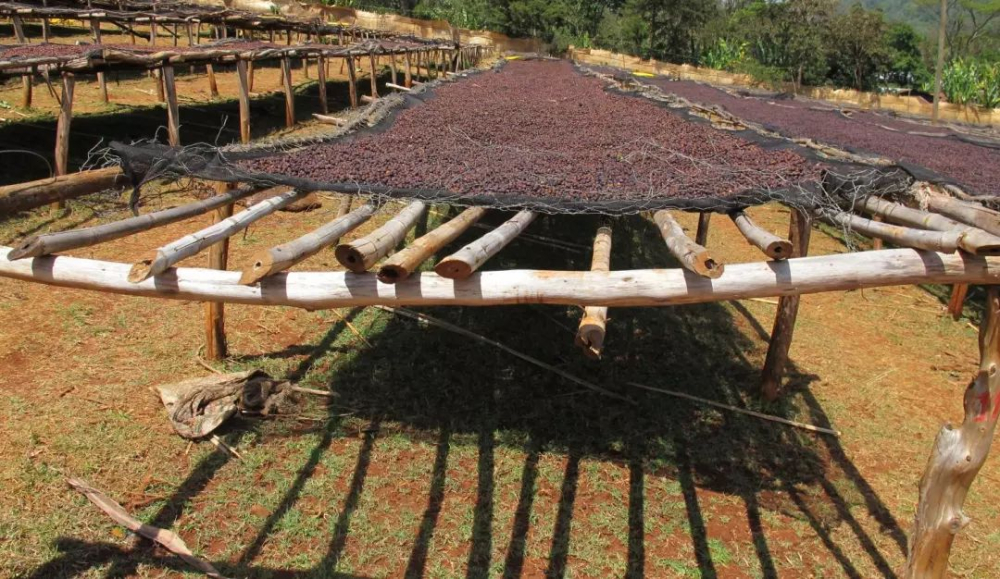
In terms of coffee processing methods, producers in Bensa utilize a variety of techniques including washed, sun-dried, and red honey to create uniquely flavored coffees. Take washed processing as an example: harvested coffee cherries are first rigorously sorted to remove unripe or defective ones, then depulped, fermented, and thoroughly rinsed with clean water before being laid out on drying beds to slowly dry. During this drying process, the cherries need to be turned every 2–3 hours during the first few days to ensure even drying. Depending on weather conditions, the total drying time is around 12–15 days until the moisture content drops to 11.5%.
Although the pronunciation of Bensa sounds somewhat similar to Guangdong, China’s “Ban Sha Liang Cha” (a type of herbal tea), it is in fact a genuine coffee-growing region—not a medicinal tea. Bensa coffee is known for its delicate yet full-bodied mouthfeel, with flavors that blend the sweetness of fruit and soft acidity, leaving a long-lasting finish. It’s a premium coffee well worth savoring slowly.
To allow coffee lovers to also experience the unique charm of Bensa, many specialty coffee beans inspired by this origin have been launched on the market. For instance, there is a sun-dried “Ethiopian Sun-Dried Alo Coffee” that represents high-quality beans from high-altitude regions—rich in layered flavors and definitely worth trying.
The processing of this sun-dried Alo coffee is quite meticulous. Farmers hand-pick only fully ripe coffee cherries and send them to the Hatessa processing station for initial sorting. Then, they are further classified by skin color to remove overripe or underripe fruits, ensuring that only cherries of consistent ripeness proceed to the subsequent sun-drying phase.
The sun-drying process is especially critical in the first three days. Since freshly picked cherries have high moisture content, failure to turn them in time can lead to mold or undesirable flavors due to uneven heating. Therefore, handlers must frequently turn the cherries on the drying beds and keep them spread out in a thin layer to ensure good ventilation. Typically, after 14–18 days of sun-drying, the coffee beans’ moisture content will reach the ideal level, at which point they can be packed and stored.
According to cupping results, this Ethiopian Sun-Dried Alo Coffee exhibits intense tropical fruit and floral notes. In the dry aroma stage, you can already detect prominent scents of magnolia, pineapple, yellow peach, and small Taiwanese mango, accompanied by a gentle fermented sweetness. When sipped, the tropical fruit’s sweet and tangy profile stands out—such as pineapple, passionfruit, and perfumed lemon—along with a hint of black tea finish. The overall flavor is refreshing and distinctly layered. As the temperature cools, aromas of stone fruits like yellow peach and dried apricot gradually emerge, with bright and dynamic acidity and a long-lasting aftertaste.
If you’d like to try brewing this sun-dried coffee at home, here are the recommended parameters: use a V60 dripper, control the water temperature at 92–93°C, use 15 grams of coffee grounds, with a 1:15 coffee-to-water ratio, and aim for a grind size around that of fine sugar (approximately 78% extraction rate through a standard #20 mesh sieve). Employ a three-stage pouring method: start by pouring double the amount of coffee grounds’ weight in water (about 30 grams) for a 30-second bloom; then pour in a slow circular motion from the inside out until you reach 125 grams for the first pour; once the coffee bed descends to the middle of the dripper, pour again with the same fine stream up to 225 grams. The total brew time should be around 2 minutes. This brewing method fully highlights the fruity aroma and layered complexity of the sun-dried Alo.
The above content is compiled by CoffeeHunters, a coffee news website.


