







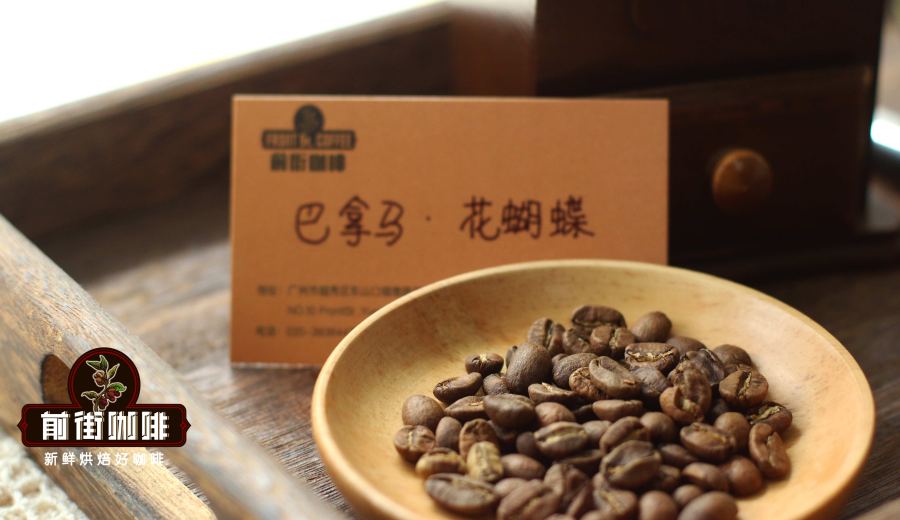
Introduction:Panamanian Geisha Butterfly coffee beans are often mistaken for a blend rather than a single-origin bean due to their mix of Geisha, Caturra, and Catuai varieties. This article delves into the varietal composition, the geographical advantages of the Boquete region, details the washed processing method and medium-light roast profile, and provides V60 pour over parameters along with actual cupping flavor notes to help you understand this well-balanced, floral-forward specialty coffee bean.
Many coffee enthusiasts, when first encountering Panamanian Geisha Butterfly coffee beans, often wonder: does this blend of Geisha, Caturra, and Catuai still count as a single-origin coffee? In fact, although this bean from Panama’s Boquete region consists of three varieties, they are all grown at the same altitude and within similar microclimates, and are processed using the washed method at the same mill, which is why it is still regarded as a high-quality coffee with distinct regional characteristics.
Named “Geisha Butterfly,” this coffee bean consists of 70% Geisha and 30% Caturra and Catuai. The Geisha variety was first discovered in the forests of Ethiopia in 1931, but it only rose to fame in 2004 after winning accolades at the Best of Panama (BOP) competition. Its most distinctive features are its delicate floral aroma, citrus notes, bright and lingering acidity, and a honey-like and black tea-like finish.
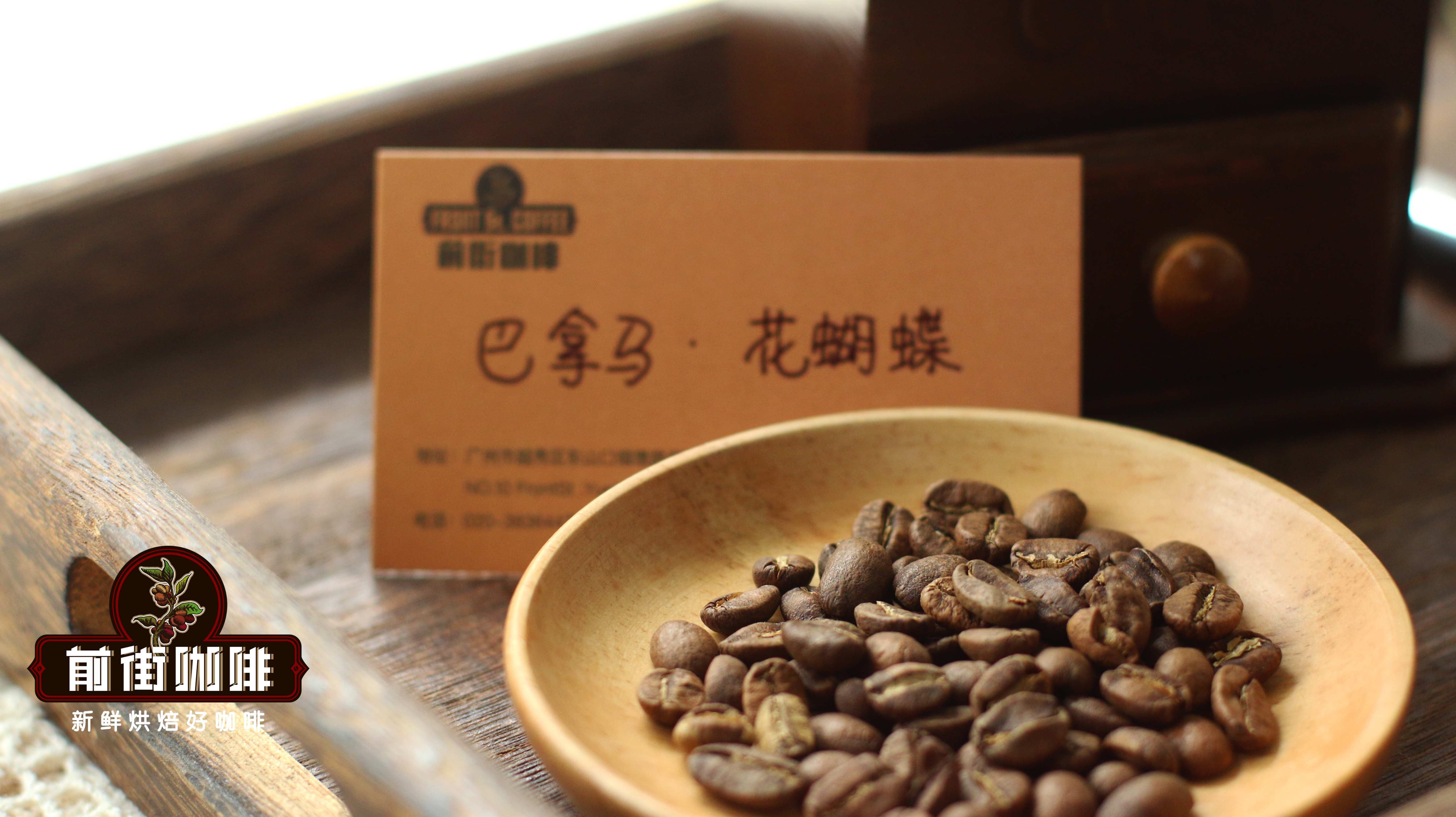
Caturra is a natural mutation of the Bourbon variety, first discovered between 1915 and 1918 in Minas Gerais, Brazil. This variety has a shorter plant stature and thrives at altitudes between 700 and 1700 meters; the higher the altitude, the richer the flavor tends to be, though yields decrease accordingly. Catuai, on the other hand, was developed by the Agricultural College of São Paulo State in Brazil through a cross between Mundo Novo and Yellow Caturra, designated as H-2077. It combines the advantages of high yield, disease resistance, and good cup quality, while retaining the acidity of Caturra and suitability for sun-drying.
These three varieties are all grown at the foothills of the Barú Volcano in Panama’s Boquete region, at an altitude of approximately 1600 meters, within a typical high-altitude coffee-growing zone. The area experiences warm days and cool nights, with significant diurnal temperature variations, and the volcanic soil is rich in minerals—providing an ideal foundation for complex coffee flavors. The batch of Geisha Butterfly beans purchased comes from this region and is processed using a refined washed method to enhance its bright acidity and floral characteristics.
Regarding the processing method, this coffee employs a traditional washed process: first, ripe coffee cherries are sorted, then the outer skin and some pulp are removed using a pulper; next, the beans, still coated with mucilage, are soaked in water for about 24 hours of fermentation to soften and break down the mucilage layer; after fermentation, the beans are rinsed with clean water to remove remaining mucilage; finally, the parchment-covered green beans are placed on drying patios or in dryers to stabilize the moisture content at around 12%, after which the parchment is removed to produce green beans. This processing method helps the Geisha Butterfly retain clear floral aromas and fruity acidity, while also ensuring good cleanliness and sweetness.
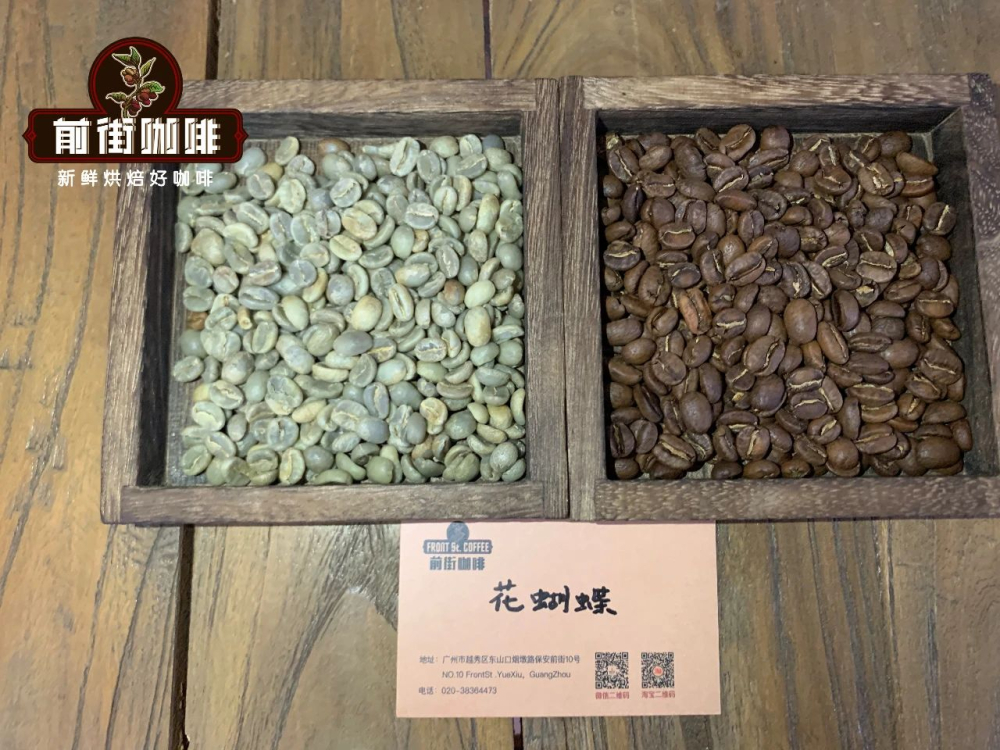
In terms of roasting, because the Geisha Butterfly varieties have relatively high density and a high proportion of Geisha, the roaster opts for a medium-light roast strategy. At the beginning of the roast, a high flame is used for rapid dehydration, and before first crack, the heat and rate of temperature rise are reduced to preserve more small-molecule aromatic compounds such as floral notes, white grape, honey, and caramel. This roast curve effectively highlights the refreshing character unique to Geisha, while balancing the full-bodied base contributed by Caturra and Catuai.
Specific roast settings are as follows: a batch size of 550g, with the drum preheated to 200°C before dropping the beans. After 30 seconds, the heat is adjusted to 160, and the air vent is set to 3. The turning point occurs around 1 minute and 31 seconds, and this heat setting is maintained until 4 minutes and 50 seconds when the beans turn yellow and the grassy notes fade, entering the main dehydration phase. At 165°C, the heat is reduced to 130 and the air vent is adjusted to 4. Around 7 minutes and 50 seconds, dehydration is complete, with wrinkles and dark spots appearing on the bean surface. At this point, the aroma shifts from roasted bread to coffee, signaling the approach of first crack. First crack begins at 8 minutes and 31 seconds, the air vent is fully opened to 5, and the heat is reduced to 70. The development time after first crack is about 1 minute and 28 seconds, and the beans are dropped at 193°C.
For cupping, it is generally conducted within 8 to 24 hours post-roast. A 200ml ceramic cupping bowl is used, with water temperature controlled at 94°C, grind size at 70%–75% passing through a 20-number sieve, a brew ratio of 1:18.18 (11.1g coffee to 200ml water), and an immersion time of about 4 minutes. Cupping results show that the dry fragrance carries citrus, berries, and pronounced floral notes; the wet aroma is dominated by citrus and jasmine; flavor notes include peach, grape, caramel, and honey, with an overall profile that is fresh and balanced.
For pour over extraction, it is recommended to use a V60 #01 filter cone, with water temperature set to 91°C, a brew ratio of 1:15, and a medium-coarse grind (about 80% passing through a Chinese standard 20-number sieve). The suggested pour over steps are as follows: the first pour involves adding 30g of water for a 30-second bloom; the second pour adds 95g of water (total 125g) over about 1 minute and 5 seconds; the third pour adds 100g of water (total 225g) over about 1 minute and 40 seconds; total brew time is controlled at around 2 minutes and 10 seconds, after which the filter is removed to complete the brew.

The resulting cup profile from pour over includes pronounced floral notes, black tea-like tones, berry sweetness and acidity, and a citrusy finish. The overall mouthfeel is smooth, with low bitterness, well-balanced acidity, and a lingering aftertaste featuring mild nutty aromas of medium duration—making it highly suitable for coffee lovers who enjoy a balanced fruit and floral profile.
The above content is compiled by CoffeeHunters, a coffee news website.


