







Introduction:Want to learn more about the details of the Diamond Mountain series of sun-dried coffees from Panama’s Hacienda La Esmeralda? This article delves into this high-altitude coffee made from Caturra and Catuai varieties, offering a comprehensive look at the growing region, microclimate conditions, processing method features, and brewing parameters — providing both the origin background and practical brewing guide to help you better understand this highly praised pour over bean.
In the world of specialty coffee, Panama’s Hacienda La Esmeralda is globally renowned for its Geisha, but its Diamond Mountain and Palmyra series also boast exceptional quality, especially the sun-dried lots produced from Caturra and Catuai varieties, which showcase rich fruity aromas and full-bodied complexity. This article focuses on this Diamond Mountain sun-dried coffee introduced by a certain coffee brand, covering everything from the origin of the producing region and variety characteristics, to the growing environment and processing methods, along with expert roasting and pour over recommendations to help you fully grasp the charm of this coffee.
Hacienda La Esmeralda was established in 1964 when American banker Rudolph Peterson purchased the estate in Boquete, Panama, which was originally primarily used for livestock farming. It was later inherited by his son, Price, who was a medical doctor but passionate about agriculture. In 1987, he introduced the Caturra and Catuai coffee varieties to the estate, and in 1994, built a washed processing facility. Although the Geisha variety later became the estate’s flagship, Caturra and Catuai remain important mainstays, with the Diamond Mountain series being centered around these two varieties, grown in specific microclimatic zones and meticulously processed via the sun-dried method.
This Diamond Mountain sun-dried coffee comes from the Boquete region of Panama, grown at elevations between 1400 and 1700 meters — a typical high-altitude environment that helps the coffee cherries ripen slowly, accumulating richer sugars and flavor compounds. The varieties used are Caturra and Catuai, both popular Arabica varieties with unique adaptability and flavor potential.
Caturra is a mutation of the Bourbon variety, first discovered in Brazil in 1937. It offers relatively high yields and good disease resistance, thriving at altitudes between 700 and 1700 meters — with higher altitudes generally yielding better flavors though lower production. The plant has a compact stature, making it easy to harvest and capable of growing well without shade trees. In contrast, Catuai is a hybrid developed in 1949 from Yellow Caturra and Mundo Novo (variety No. H-2077). It features strong resistance to wind and rain, is suitable for high-density planting and easier management, but is relatively prone to leaf rust, has a shorter plant height, and produces slightly flat beans with elongated tips.
The Diamond Mountain series coffee is primarily grown in two microclimate-specific blocks: Canas Verdes and Jaramillo. The Canas Verdes area sits at an altitude of approximately 1600 to 1800 meters, with annual rainfall as high as 3500 mm and significant diurnal temperature variation — daytime averages between 16–23°C and nighttime between 10–15°C. This environment aids the coffee cherries in developing complex aromas and acidity. This zone is further divided into nine small plots, including Lino (flax), Coronado (coronation), Fundador (founder), Leon (lion), Montaña (mountain), Trapiche (sugar mill), Chinta (chinta), Cabaña (cabin), and Tumaco (Tumaco).
The Jaramillo zone is situated at a slightly lower elevation, around 1600 to 1700 meters, with even higher annual rainfall reaching 4000 mm. Daytime temperatures range from 19–25°C and nighttime from 11–15°C, featuring humid and stable climate conditions suitable for the growth of Caturra and Catuai. This area includes five small plots: Mario, Noria (ferris wheel), Reina (queen), Bosque (forest), and Buenos Aires.
It’s worth mentioning that the Diamond Mountain series coffee holds both Rainforest Alliance Certified and Eco-friendly labels, indicating that its cultivation and harvesting processes meet strict ecological conservation and sustainability standards — including limitations on pesticide use, protection of wildlife habitats, and comprehensive resource management. This allows consumers to enjoy delicious coffee while supporting environmental protection.
This sun-dried Diamond Mountain coffee uses the traditional Natural Process. After harvest, the coffee cherries are not depulped but instead placed directly on concrete patios in the courtyard to dry in the sun for approximately 3 to 5 days, with about 8 hours of sunlight exposure each day. The cherries are turned regularly during this period to ensure even drying. Once the moisture content drops to a certain level, they are transferred to a Guardiola drier for 72 hours of rotary drying to stabilize the moisture and prevent over-fermentation. Finally, the pulp and skin are mechanically removed, leaving the inner coffee beans. This processing method imparts a richer sweetness to the coffee, along with intense fruit notes such as red berries and dried fruits.
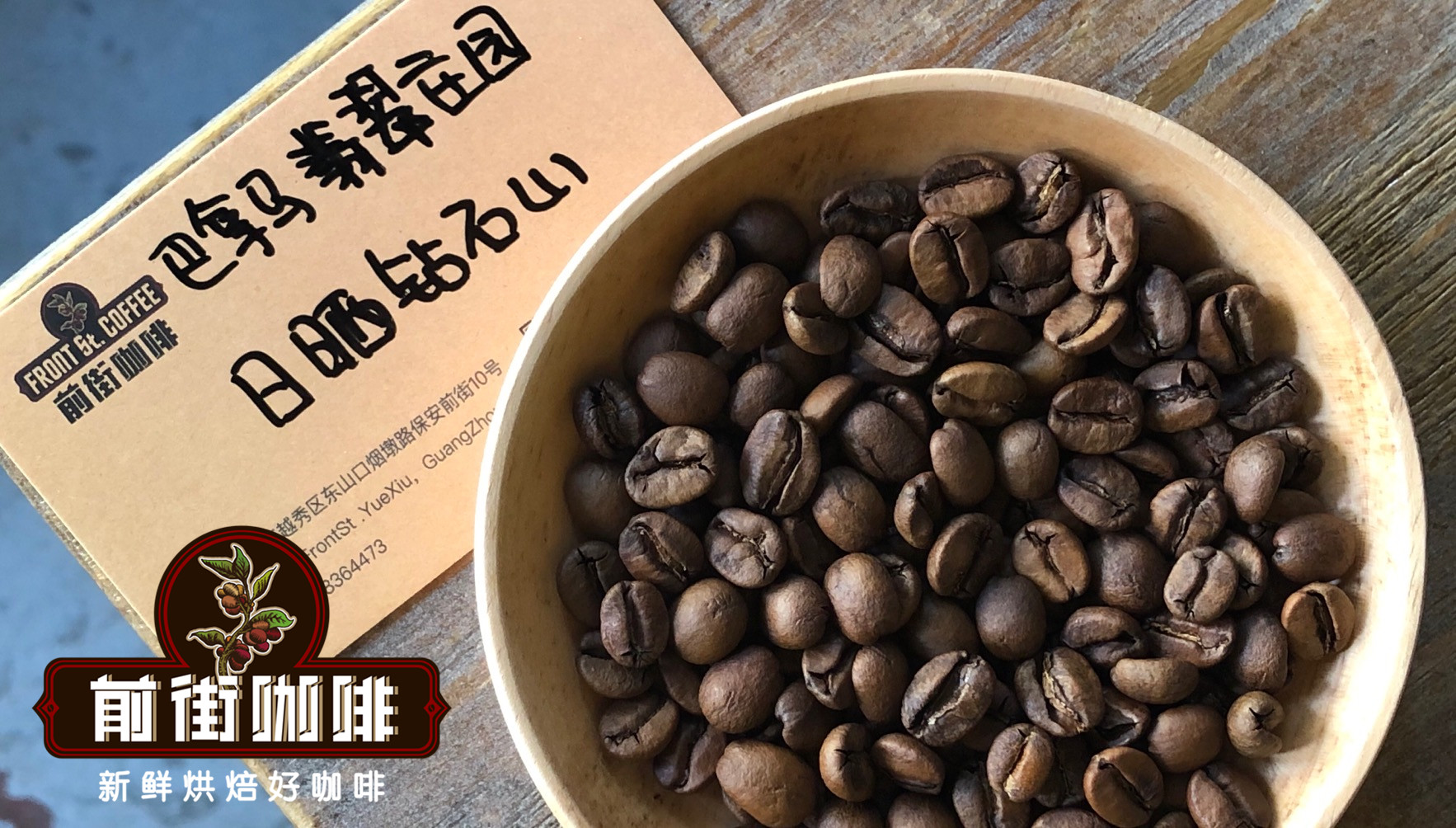
In terms of green bean appearance, this sun-dried Diamond Mountain lot leans yellow with relatively more silver skin attached. Caturra beans are slightly elongated, round, and naturally curved at the tip, while Catuai beans are flatter with distinctly long and pointed tips. A certain coffee brand used a Yangjia 800N semi-direct-fire roaster, roasting 480g of beans. Preheated to 165°C, the roast involved careful control of temperature ramp-up and air vent adjustments. After reaching the yellowing point, it gradually entered the first crack, and the batch was dropped about 1 minute 20 seconds after first crack at a drum temperature of 191°C, resulting in balanced sweetness and acidity.
Cupping results show that this coffee was tested within 8 to 24 hours post-roast using a 200ml ceramic cup, 94°C water, and 20号 sieve-ground coffee with a 70%–75% pass rate, at a brew ratio of 1:18.18. The dry aroma carries fresh citrus and berry notes, while the wet aroma continues the citrus profile. The flavor profile presents citrus, honey, cocoa, and mild fermented wine notes, delivering a balanced and layered cup overall.
For actual pour over brewing, it is recommended to use a V60 #01 filter cone, with water temperature controlled at 90–91°C, 15g of coffee, a 1:15 brew ratio, and medium-fine grind (around 80% through a 20号 sieve). The suggested brewing method is a three-stage pour: start with a 30g bloom for 30 seconds, then pour in a slow circular motion up to 125g for the first pour, wait for the water level to drop, then pour up to 225g before stopping. Total extraction time is about 2 minutes. These parameters highlight bright citrus acidity, nutty and honey sweetness, with a cocoa-toned finish and slight fermentation nuance. The overall mouthfeel is smooth and layered, making it ideal for coffee lovers who enjoy a balanced fruitiness and sweetness.
The above content is compiled by CoffeeHunters, a coffee news website.


