








Introduction:Robusta is often regarded as the representative of low-quality coffee, but in fact, it holds a significant position in the global market. This article delves into the historical origins, flavor characteristics, and caffeine content advantages of Robusta, and explores its practical uses in instant coffee and espresso blends. Through professional blending examples, learn how to use Robusta to enhance the body and crema of coffee. Whether you're a coffee enthusiast or industry professional, you'll gain practical knowledge on bean selection and application.
When it comes to Robusta, many people’s first reaction might be “it doesn’t taste good,” “it’s too harsh,” or even avoiding it altogether. Yet, this coffee bean categorized as “low-end” consistently accounts for nearly 30% of global coffee production and demonstrates irreplaceable value in certain applications. Today, let’s explore the past and present of Robusta—from variety traits to real-world usage—to re-evaluate its role.

The origin of coffee is widely believed to be Ethiopia and Sudan in Africa, where the now-popular Arabica was first discovered and cultivated. Over time, Arabica spread globally and gave rise to well-known varieties such as Typica and Bourbon. These varieties are celebrated for their delicate and diverse flavors, but they are relatively demanding in terms of environment, with weak disease resistance, lower yields, and susceptibility to diseases like leaf rust.
In 1898, a Belgian botanist discovered a distinctly different coffee variety in the Congo region of Africa—its plants were robust, highly disease-resistant, and capable of thriving even at low altitudes. Further research found that this variety contained up to 2% caffeine, nearly double that of Arabica (about 1.2%), making it highly effective at resisting pest attacks. This variety was later officially named ‘Robusta,’ also referred to as ‘Congo’ in some regions.

Today, the main producers of Robusta are concentrated in Vietnam, Indonesia, and Brazil, with Vietnam not only being the largest producer but also dominating global Robusta exports. Due to relatively lenient growing conditions, high yields, and lower costs, Robusta is often used in commercial coffee products, especially in instant coffee and ready-to-drink beverages.
However, the flavor characteristics of Robusta are indeed noticeably different from those of Arabica. Generally, its flavor profile is simpler, often featuring notes of barley tea, roasted almonds, grains, and woody tones, sometimes accompanied by off-flavors reminiscent of rubber or medicine—this is the main reason it is often criticized. But undeniably, Robusta offers a richer mouthfeel, higher body (viscosity), and abundant coffee oils, qualities that give it irreplaceable advantages for specific uses.
For example, in the production of instant coffee, Robusta’s stable performance and low cost make it one of the preferred raw materials. In espresso blends, when beans are selected appropriately, a small amount of Robusta can not only enhance overall body but also increase the richness and stability of the crema, resulting in a fuller and smoother coffee taste.
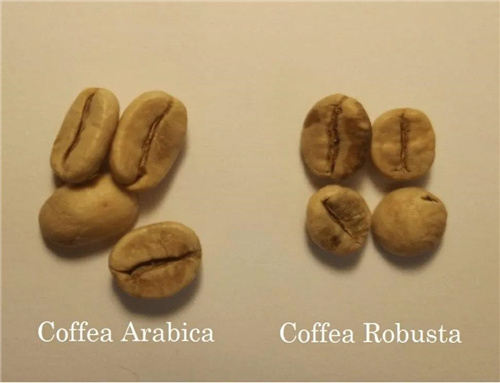
In practical blending applications, many professional roasters skillfully combine Robusta with Arabica to create blends that offer both complexity and a lingering finish. Taking a common commercial blend as an example, it often uses Arabica from stable producing regions like Brazil and Colombia as the base, then blends in a small amount of high-quality Robusta from Vietnam. This combination highlights nutty flavors (such as almond, walnut, and hazelnut) while enhancing oil expression, making it suitable for high-volume commercial use, as well as beneficial for latte art and consistent mouthfeel.
For home users or coffee enthusiasts looking to replicate café-quality espresso at home, it is recommended to choose classic blends with Robusta elements. For instance, some blends use Indonesian Mandheling and Brazilian Arabica as the foundation, complemented by a small amount of Robusta. This not only strengthens the coffee’s body and richness but also improves the crema’s extensibility, making it particularly suitable for milk-based coffees like lattes and cappuccinos, and also beneficial for latte art presentation.
In summary, although Robusta may not match Arabica in flavor finesse, it has unique advantages in disease resistance, yield, price, and specific sensory attributes. Whether you’re a professional or enthusiast, understanding its characteristics and applications can help you make smarter decisions in bean selection, blending, and extraction, thereby enriching your overall coffee experience.
The above content is compiled by CoffeeHunters, a coffee news website.


