







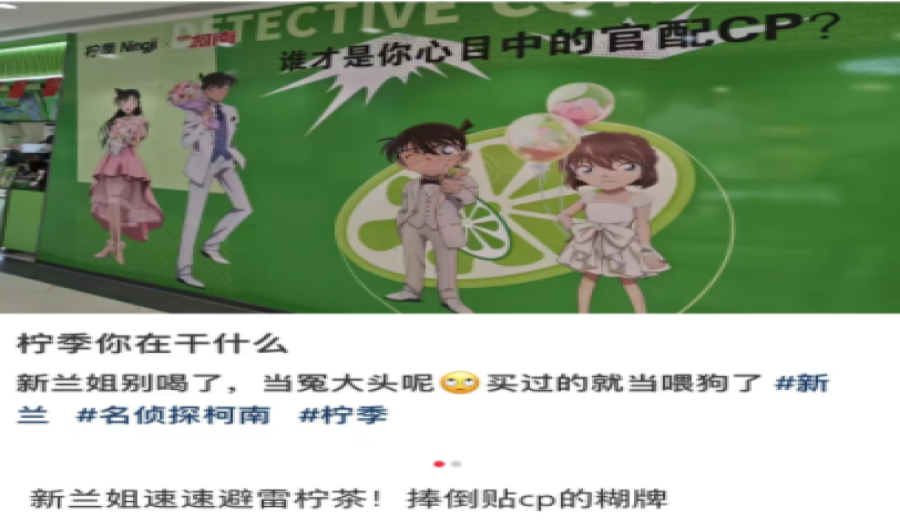
Introduction:The collaboration between hand-shaken lemon tea brand Lin Ji and the classic Japanese anime "Detective Conan" sparked heated online debates after some stores displayed controversial CP posters. This article delves into the full story of the incident — from brand responsibility division, IP respect principles, to common pitfalls in co-branding marketing — helping readers understand the risk management behind brand marketing and consumer expectations.
The hand-shaken lemon tea brand Lin Ji recently announced a collaborative partnership with the well-known Japanese anime "Detective Conan." However, promotional posters displayed at certain outlets unexpectedly triggered an uproar. Featuring the slogan “Who is your ultimate official pairing?” these posters placed characters Conan (a.k.a. Kudo Shinichi) with Haibara Ai and Kudo Shinichi with Ran Mouri side by side, drawing strong dissatisfaction from many original series fans.
Numerous netizens pointed out that in the original storyline, Conan and Haibara Ai are not in a romantic relationship, and such a pairing was seen as a misunderstanding and disrespect toward the original character dynamics. Some hardcore fans further protested, arguing that the stores deliberately created rivalry and controversy between characters to attract traffic — not only stirring conflict among different fan groups but also revealing significant oversights in the brand’s marketing content vetting.
In response to the wave of online criticism, Lin Ji swiftly issued an official apology on October 9, claiming the incident was due to “violations by individual franchisees” and emphasized it was entirely contrary to the brand’s original intentions and requirements. The brand stated that upon discovering the problematic visuals, they had immediately demanded the involved outlets remove the relevant posters and had dealt seriously with the offending franchisees.
Lin Ji further expressed regret in the statement for the negative impact the incident had on the copyright holders and fans of "Detective Conan," and pledged to strengthen internal oversight to prevent similar occurrences in the future. However, this explanation failed to quell online skepticism, with many believing the brand’s attempt to shift all blame onto the franchisees was unconvincing.
Industry insiders familiar with the import process of Japanese IPs analyzed that based on past collaborations, Japanese IP holders are extremely strict when reviewing promotional materials. Content that clearly deviates from the original storyline would almost certainly not be approved for public release if reviewed by the Japanese side. As a result, many suspect the claim of “franchisee-designed independently” is merely an excuse for the brand to evade responsibility, further highlighting flaws in the brand’s marketing material review mechanisms.
This incident is not the first time Lin Ji has faced issues in its marketing activities. In June of this year, the brand also stirred controversy when promoting its “Lemon Baby Festival” by using a celebrity’s name without authorization. At that time, the brand similarly issued an apology, stating it had immediately launched an internal investigation, swiftly removed the related materials, and apologized to the affected celebrity and consumers. Yet, facing another public apology for similar issues within just a few months has led to doubts about the brand’s control capabilities.
For coffee and tea enthusiasts, especially consumers who pay attention to co-branding marketing, this incident serves as yet another reminder: collaborative campaigns are not just cross-industry partnerships between brands and IPs, but also a serious test of mutual respect for the emotions and characters cherished by both sets of fans. How to strike a balance between attracting attention and preserving the spirit of the original work will be a critical consideration in brands’ marketing strategies moving forward.
The above content is compiled by CoffeeHunters, a coffee news website.


