







Introduction:Chinese chain coffee brand Luckin Coffee is planning to enter the Malaysian market, seeking collaboration with a local publicly listed company and formulating a five-year expansion strategy. Currently, Luckin has over 20,000 stores in China, but overseas it only operates 38 directly managed outlets in Singapore. This article delves into the motivations behind Luckin’s Malaysia move, potential partners, how the brand will face fierce competition in Southeast Asia’s tea-drinking market, and the implications of this move on the broader regional coffee industry.
Recent reports suggest that Luckin Coffee is planning to enter the Malaysian market and is currently discussing cooperation details with a local publicly listed company, with a five-year store expansion plan already in place. It is understood that Luckin currently has over 20,000 stores in China, while its overseas presence is limited to Singapore, where it runs 38 directly operated outlets.
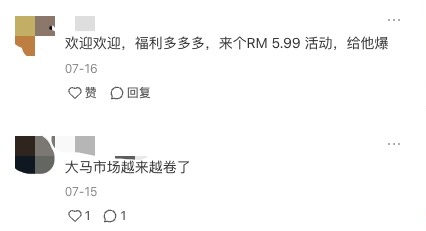
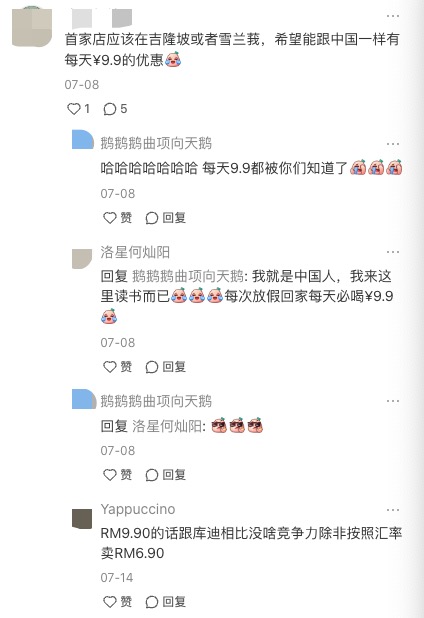
The news of Luckin’s upcoming entry into Malaysia has sparked heated discussion online. Many netizens have expressed anticipation for the brand’s arrival, hoping Luckin will launch attractive promotional offers, such as products priced at RMB 5.99. However, some voices point out that if prices reach RMB 9.9, Luckin may struggle to compete with brands like Couplet Coffee, unless the pricing is around RMB 6.9 to remain competitive.
Some netizens are optimistic that Luckin’s entry will bring more diverse coffee options to Malaysian consumers, but they also worry about intensified market competition leading to industry “involution,” and even profitability challenges. Market analysis suggests that early entrants with good location choices might be profitable, especially as major brands hold advantages in advertising and pricing strategies. However, as more stores open, later locations may face greater operational pressure and even losses.
According to local Malaysian media reports, earlier this year, Luckin had preliminary discussions with Berjaya Group (BJ FOOD), the licensed operator of Starbucks in Malaysia, to explore the possibility of entering the local market through a joint venture. Berjaya Group’s founder, Vincent Tan, is also the exclusive franchise holder of Starbucks in Malaysia and was instrumental in bringing McDonald’s to the Malaysian market.
However, there are also market rumors suggesting that Luckin’s potential partner in Malaysia is not Berjaya Group, but another entrepreneur with a publicly listed company background. As of now, there is no official confirmation on which company will ultimately partner with Luckin to expand its footprint, and the market is closely watching future developments.
In fact, Luckin’s international expansion plans have been in the works for some time. As early as 2019, under the leadership of founder Lu Zhengyao, Luckin originally planned to launch its overseas expansion in the second half of 2020, but this was postponed due to multiple factors including the outbreak of the pandemic and subsequent financial issues. After the new management team took over, although various markets including Southeast Asia, Japan/Korea, and the United States were evaluated, Singapore was ultimately chosen as the first overseas destination to gradually accumulate overseas operational experience.
It is worth noting that in recent years, Chinese tea beverage brands have collectively accelerated their overseas expansion. In 2023, brands including Heytea, Cha Bai Dao, Mixue Ice Cream & Tea, and Chagee successively opened their first stores in the UK, Australia, South Korea, Thailand, and other regions. Among them, Mixue Ice Cream & Tea has surpassed 4,000 overseas stores, Chagee has over 100, and Yihetang officially entered the Indonesian market in August 2024.
The industry generally believes that Chinese tea beverage brands chose Southeast Asia as their first overseas destination primarily due to its geographical proximity, higher cultural acceptance, and the local market not yet being saturated. However, as the market gradually becomes saturated, consumer behavior becomes more rational, and homogenized products flood the market, competition among tea beverage brands has become increasingly fierce, with price wars becoming the norm and overall growth slowing down.
Take Luckin as an example: despite launching as many as 52 new products in the first half of 2024—including Chinese tea-coffee series such as Chu Orange Latte, Little White Pear Latte, Manzui Series, and Huangshan Maofeng Latte, as well as Lemon C Americano, Oatmilk Latte, and Light Coffee Lemon Tea—some of which saw strong initial sales, such as the Little White Pear Latte with over 7.24 million cups sold in its first week and Light Coffee Lemon Tea reaching 5.08 million cups, the brand’s overall profits have declined. In Q1 2024, Luckin’s revenue reached RMB 6.278 billion, up 41.5% year-on-year, but it recorded a net loss of RMB 71.42 million, a significant downturn compared to the RMB 564 million net profit in the same period last year. Analysis points out that this is mainly related to the brand’s ongoing RMB 9.9 promotion strategy, which has significantly lowered the average transaction value.
Against the backdrop of domestic market challenges such as store oversupply, consumption downgrading, and intense price competition, many tea beverage brands, including Luckin, are turning their attention to the Southeast Asian market, with Malaysia becoming a key target in this strategic expansion. Whether Luckin’s local partner will be Starbucks operator Berjaya Group remains to be officially revealed, and the public is also watching how this competition between Chinese and international coffee brands in Southeast Asia will reshape the regional market landscape.
The above content is compiled by CoffeeHunters, a coffee news website.


