







Introduction:Washed-process coffee is often perceived as having pronounced acidity, but this is actually closely related to the processing method. This article delves into the historical background, procedural differences, and flavor characteristics of washed and natural (sun-dried) processing methods, helping you understand why washed beans tend to be cleaner and brighter, while natural beans are richer and more intense. It also provides practical four-pour pour-over parameters to guide you in extracting the delicate floral notes and balanced sweetness of washed coffee—ideal for enthusiasts looking to deepen their understanding of coffee processing and brewing techniques.
In the world of specialty coffee, the washed process has long been celebrated for its clean, bright acidity and clear flavor layers, though it’s often misunderstood as “too acidic.” In reality, these flavor traits are closely tied to its processing method. Since the 18th century during the Dutch colonial period, the washed technique gained popularity across many producing regions as a preferred method for stabilizing coffee quality and reducing mold risks. So why is washed coffee generally more acidic? What are the fundamental differences compared to natural processing? This article will break down the workflows, pros and cons of both methods, accompanied by practical brewing demonstrations, to help you better appreciate the potential of washed coffee.
Traditional Natural (Sun-Dried): Simple Yet Weather-Dependent
The earliest method of coffee processing was actually the natural (sun-dried) method—where freshly harvested coffee cherries were simply laid out in the sun to dry until their moisture content dropped to a safe level, after which the outer skin and pulp were removed to reveal the beans inside. This approach required minimal cost and equipment, but it was extremely reliant on stable weather conditions. Rain or humidity could easily lead to mold or insect infestation, resulting in muddled flavors and inconsistent quality. While the natural process preserves more of the fruit’s sugars, yielding rich sweetness and wine-like notes, it has long been regarded as a more rudimentary and higher-risk method.
The Birth of Washed Processing: For Quality and Hygiene
By 1740, the Dutch—who then dominated global coffee trade—first promoted the washed process in their colonies. This technique involved removing the outer skin and pulp from harvested coffee cherries, then fermenting the seeds (still coated with mucilage, i.e., the sticky fruit layer) in water. Microorganisms broke down the mucilage, accelerating the drying process while effectively suppressing mold and pests. This method not only significantly reduced the impact of weather on quality but also resulted in more uniform and cleaner-looking beans, making it a symbol of high-quality coffee. Especially in the West Indies and Central and South America, washed beans quickly became the market standard.
With the invention of the coffee pulper in 1844, the washed process became further standardized and mechanized, enhancing both production capacity and stability. However, the biggest drawback of the washed method is its extremely high water consumption—processing 200 kilograms of green beans typically requires 10 to 20 tons of fresh water—so processing facilities are usually located only in areas with abundant water resources. Thus, the adoption of washed technology was driven not just by flavor considerations, but also by comprehensive factors like yield, quality control, and economic efficiency.
A Complete Breakdown of the Eight Steps of Washed Processing
The washed process can be roughly divided into eight steps, with the first three (harvesting, sorting, and floatation) being the same as in the natural process. The subsequent steps are as follows:
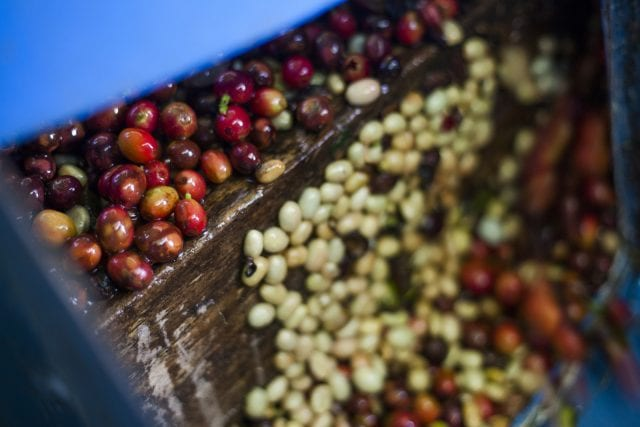
Fourth step: Use a depulper to remove the outer skin and pulp, leaving only the inner seeds;
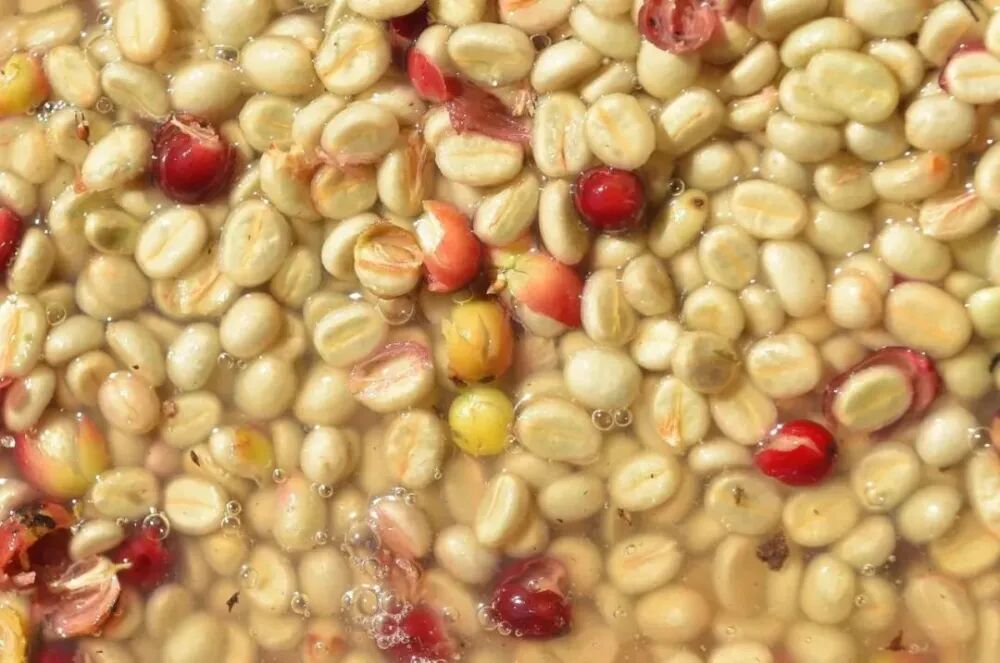
Fifth step: Place the seeds, still coated with mucilage, into a fermentation tank, where microorganisms naturally break down this slippery layer;

Sixth step: After fermentation, residual fermentation bacteria may remain on the bean surface. Rinse with clean water and re-sort; defective beans usually float and can thus be easily removed;
Seventh step: Spread the cleaned beans out to dry naturally or use mechanical drying until the moisture content drops to 10%–14%;
Eighth step: Use a hulling machine to remove the innermost parchment layer and silver skin, completing the entire washed processing workflow. The beans are then ready for packaging and shipping.
Silver Skin Residue: A Visual Difference Between Washed and Natural
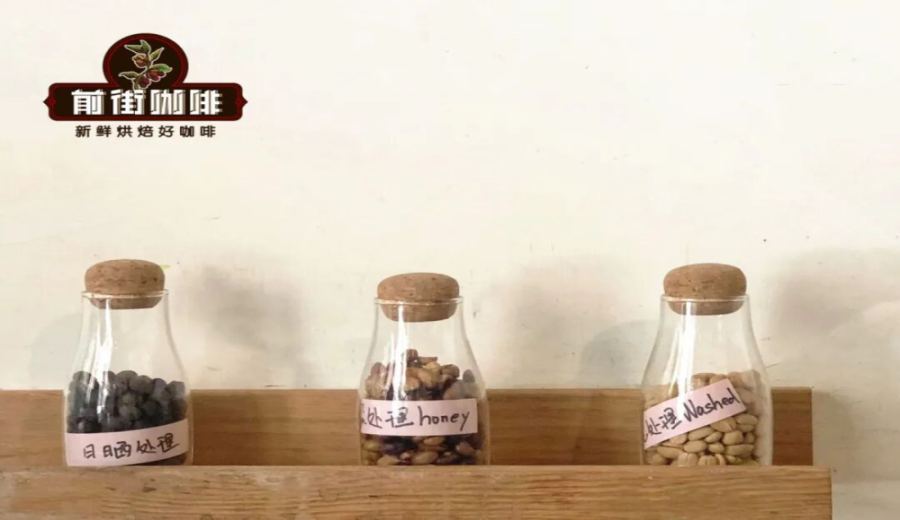
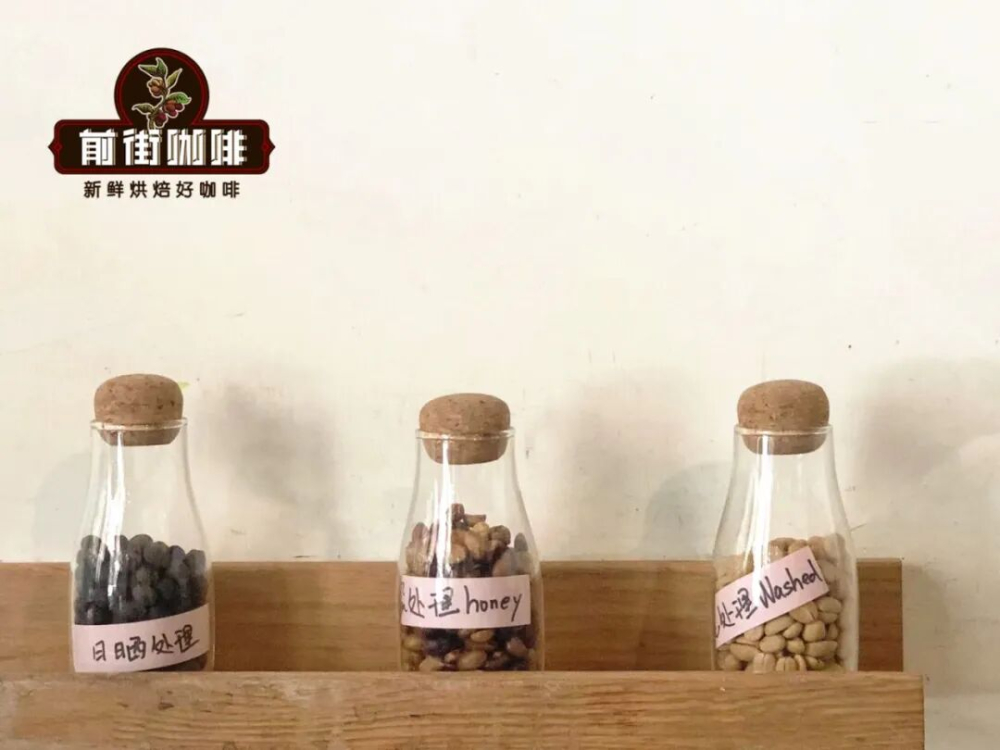
In physical stores, it’s common to see display areas showcasing coffee beans processed by different methods for consumer comparison. Upon closer inspection, you’ll notice that washed beans often have a thin white line in the center of the roasted seed—that’s the silver skin. In contrast, natural beans, due to the continuous state of the outer pulp and silver skin, often shed these layers naturally during roasting, resulting in fewer white fragments in the ground coffee.
Roasters point out that because the silver skin adheres tightly to the bean’s seam, it’s the hardest part to completely remove during roasting. Washed beans, with their more scattered silver skin distribution, often retain small amounts, while natural beans, with their continuous silver skin layers, usually shed them entirely. Additionally, flavor can serve as an auxiliary indicator: washed beans typically exhibit clearer, brighter acidity—like lemon, green tea, or floral notes—while natural beans, influenced by fruit sugars and fermentation, often deliver richer berry, wine-like, and full-bodied mouthfeels.
Real-World Flavor Comparison: Fruit Ding Ding vs. Red Cherry
Take the renowned Yirgacheffe region as an example: one washed-processed coffee showcases fresh green tea, green mandarin, and jasmine aromas, with bright acidity but more restrained sweetness, leaning toward a tea-like profile and clean, refreshing layers. In contrast, another natural-processed coffee from the same region emits complex notes of berries, orange, and lightly fermented black tea, with well-balanced acidity and sweetness, plus a rounder, fuller mouthfeel. Though originating from the same source, the two processing methods yield distinctly different personalities.
Generally speaking, the washed process better highlights a coffee bean’s “base flavors,” such as acidity and floral notes, with clean and distinct flavor lines. Meanwhile, natural and honey processes, by retaining or amplifying the effects of fruit pulp fermentation, present coffee with richer fruitiness, sweetness, and wine-like character, resulting in more complex and layered profiles.
Four-Pour Pour Over: Highlighting the Floral-Fruity Sweetness of Washed Beans
If you enjoy the fresh profile of washed coffee, consider trying medium-light roasted options such as Boquete Gesha, Flower Dance, Walkers Reserve Gesha, Little Tomato, or Alo Washed. Below, using a certain Alo Washed coffee as an example, we demonstrate how to use a four-pour pour-over technique to bring out its delicate floral-tea-like sweetness and soft acidity.
[Brewing Parameters]
Coffee beans: A certain Alo Washed coffee
Coffee dose: 15g
Coffee-to-water ratio: 1:16
Grind size: EK43s setting 10 (approximately equivalent to 80% extraction rate through a Chinese No. 20 sieve)
Water temperature: 90°C
[Steps]
Place the coffee grounds into the pre-wetted filter paper, tap gently to level. First pour: Add 30g of hot water for a 30-second bloom to awaken the coffee grounds;
Second pour: Pour 90g of hot water in a large circle from the center outward, aiming to raise the liquid level to about two-thirds of the filter cup height;
When about half of the coffee liquid has drained (around 1:00 to 1:05), pour the third segment of 60g in small circles to maintain a stable liquid level;
Finally, when the liquid level drops back to the middle of the filter, pour the last 60g in small circles. Total brew time should be around 2:30.
This parameter setup takes into account that washed beans are typically light-roasted with firmer bean structure. Increasing the number of pours helps enhance the release of delicate aromatic compounds and small-molecule acidic-sweet substances, while a slightly lower water temperature avoids over-extraction that could lead to astringency or sharp acidity. The final brewed Alo Washed coffee delivers bright aromas reminiscent of yellow lemon and mango, with a juicy mouthfeel like pomelo tea. It achieves a well-balanced acidity and sweetness with almost no bitterness, making it highly suitable for coffee lovers who favor floral-fruity profiles.
The above content is compiled by CoffeeHunters, a coffee news website.


