








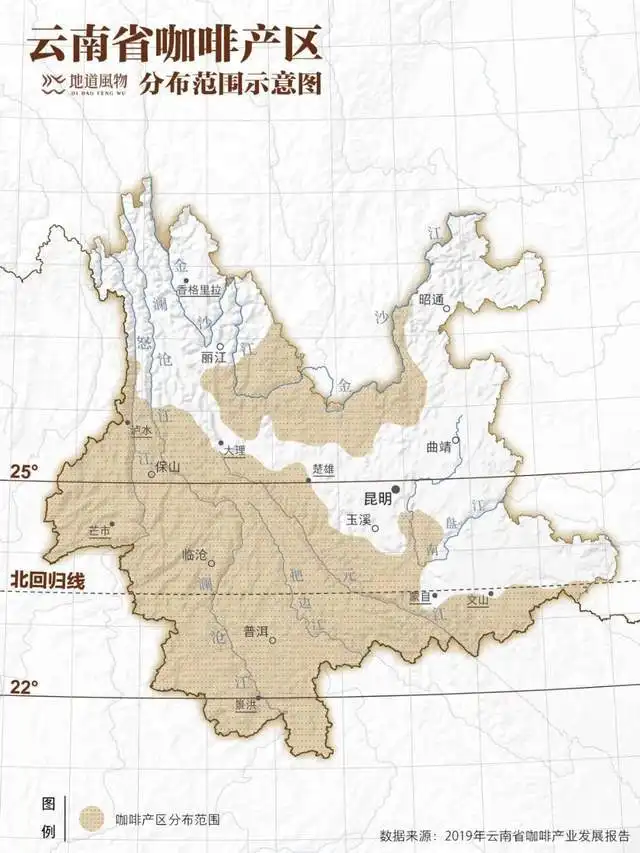
Introduction:As China’s premier coffee-producing region, Yunnan benefits from the advantages of the golden growing belt between 15°N and the Tropic of Cancer, yielding distinctive small-bean Arabica with both fruity aromas and rich body. The four major producing areas—Dehong, Baoshan, Lincang, and Pu’er—each showcase unique flavor profiles due to differences in terrain, altitude, and processing methods. This article delves into the climate conditions, mainstream varietal characteristics, and common processing methods of each region, along with practical pour over and moka pot extraction guidelines to help coffee enthusiasts find their ideal Yunnan beans based on personal taste.
The history of coffee cultivation in China dates back to the late 19th century, when the first coffee seeds were introduced to Binchuan County in Yunnan by French missionaries. Over a century of development later, the region has gradually become an important part of the global specialty coffee supply chain, thanks to the rising trend in domestic agricultural product consumption. Located between 15°N and the Tropic of Cancer, Yunnan’s main producing areas sit at altitudes of 1,000 to 2,000 meters. The mountainous terrain, abundant sunlight, and significant diurnal temperature variation contribute to the unique flavor of small-bean Arabica—rich yet refreshing, with pronounced fruity layers.

The large-scale development of Yunnan’s coffee industry truly began in the mid-1950s. At that time, the planted area once exceeded 4,000 hectares, and by 1997, it had expanded to 7,800 hectares. For a long time, Yunnan dominated national production, accounting for over 70% of planting area and more than 83% of output. Although the early-introduced Typica variety was gradually replaced by Catimor due to its low yield and weak disease resistance, its elegant flavor profile remains highly regarded in the industry. Nowadays, the commonly seen Yunnan small-bean coffee mostly refers to hybrid cultivars dominated by Catimor, balancing stable yields with practicality.

Yunnan’s four core producing areas each boast distinct terroir characteristics: Dehong Prefecture, known as the “Hometown of Chinese Coffee,” had a total coffee planting area of 120,900 mu (approximately 8,060 hectares) by 2011, accounting for 30% of the national total. Over 30,000 mu of these are cultivated in mountainous regions above 1,600 meters, combined with organic farming management, resulting in high-quality beans with balanced flavors and consistent quality. Since the 1950s, when Southeast Asian coffee seedlings were introduced to Baoshan’s Longjiang Dam, the region’s small-bean coffee received a Grade 1 rating in the London market by the late 1950s. In recent years, it has also obtained National Geographical Indication product certification, winning favor among international buyers.
Located in southwestern Yunnan, Lincang is traversed by the Tropic of Cancer, with an average annual temperature maintained between 16.8°C and 17.2°C. The area experiences distinct dry and wet seasons and enjoys abundant sunshine, making it particularly suitable for the growth of the ancient Typica variety. A certain coffee brand has established its own estate here, where its Typica sun-dried beans are renowned for their nutty, apricot, and brown sugar aromas, suitable for various brewing methods such as pour over and cold brew. The Pu’er region, leveraging its tea-growing heritage, began adjusting its coffee industry in the 1990s. Now, 54 townships are involved in coffee cultivation, accumulating extensive growing experience.
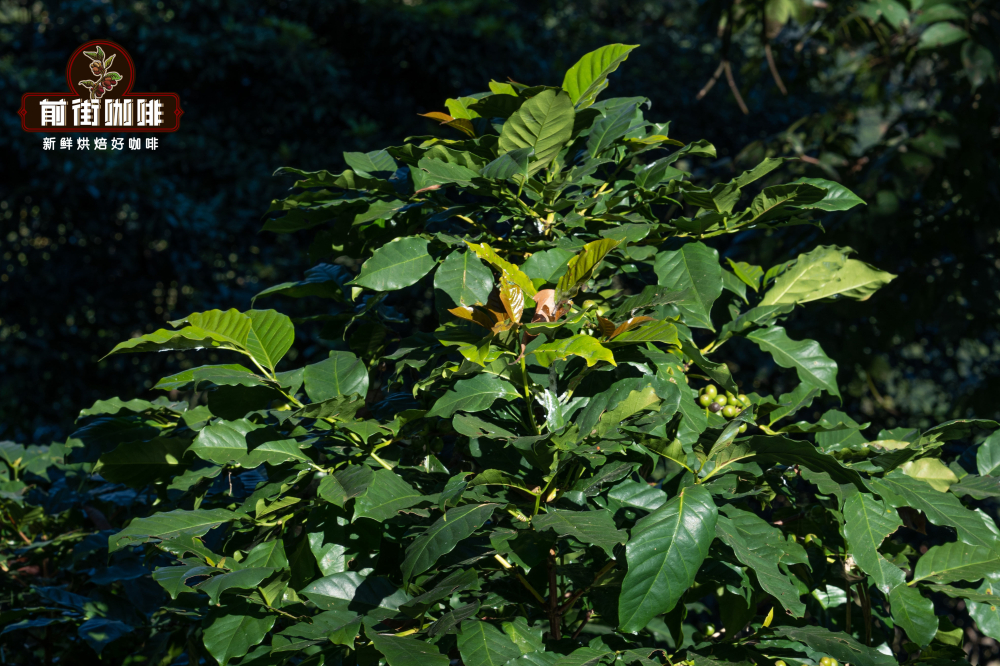
Varietal selection deeply impacts coffee flavor. Yunnan primarily cultivates Catimor, Typica, Bourbon, Caturra, and Catuai, among which Catimor has become the market mainstream due to its strong disease resistance and stable yield. As a classic Arabica heirloom variety, Typica boasts elegant floral and fruity notes with bright acidity but is prone to rust diseases and has relatively low per-unit yield. The Bourbon variety, on the other hand, excels in sweet flavor and high productivity, thriving at mid-altitudes of 1,200 to 2,000 meters, though it requires protection against strong winds and heavy rains. It’s worth noting that while Catimor carries some Robusta genes, which may result in more pronounced bitterness and astringency, careful processing and roasting adjustments can still highlight its rich complexity.
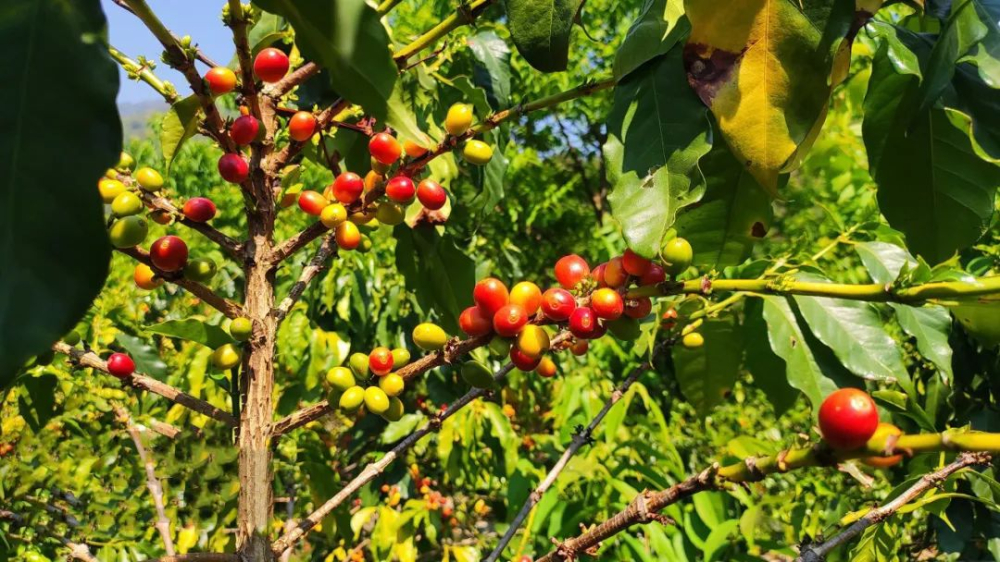
Most Yunnan coffee is processed using the washed method to adapt to the long rainy season and variable climate. However, one coffee brand’s estate innovatively adopts the natural (sun-dried) method for Typica: ripe coffee cherries are evenly spread on raised beds and continuously turned to ensure even drying, allowing the pulp’s sugars to fully penetrate the seeds. This process imparts a richer sweetness and complex aroma to the coffee. This technique is especially suited for consumers seeking a full-bodied taste, with medium roasting bringing out caramel and nutty notes.
For home brewing, the moka pot is a practical choice to bring out the rich flavors of Yunnan small-bean coffee. Its operation relies on steam pressure of 1.5 to 3.0 atmospheres generated by heating the lower chamber, forcing hot water through the coffee grounds to quickly extract an oil-rich essence. It’s recommended to use medium-roasted Yunnan small-bean beans, with flavor profiles centered around chocolate, nuts, and brown sugar. To brew, first pour cold water into the lower chamber, fill the filter basket about nine-tenths full with coffee grounds and gently tamp it flat. Secure the upper and lower chambers, then heat over medium heat. Once a hissing sound occurs, switch to low heat. When the extraction sound changes from a hiss to a bubbling pop, turn off the heat immediately to enjoy a concentrated coffee similar to an espresso.
The above content is compiled by CoffeeHunters, a coffee news website.


