







Introduction:Brewing an ideal espresso is not only dependent on stable extraction parameters—the condition of the coffee puck is also a key indicator to assess. A high-quality puck should be dry, even, and compact in structure. However, in practice, issues such as dents, holes, water pooling, or a soggy texture often occur, negatively affecting flavor. This article delves into the causes behind six common puck abnormalities—including factors like dose, grind size, distribution, and machine pressure—and provides practical adjustment tips to help you precisely optimize extraction and consistently produce high-quality espresso.
The outcome of espresso extraction is not solely determined by flow rate, pressure, and time. The puck left after brewing actually holds many crucial clues. An ideal puck should appear dry, flat, and structurally intact, with uniform color and firm texture. In reality, however, we often encounter problems such as uneven surfaces, visible holes, severe water pooling, one side dry while the other wet, or an unusually dark bottom. These phenomena often reflect inconsistencies in dose, grind size, distribution method, or even espresso machine pressure settings. This article will systematically explore six common puck abnormalities, analyze their root causes, and offer corresponding adjustment strategies to help you consistently brew espresso of uniform quality at home.
 In the process of adjusting espresso, one of the most challenging aspects is the need to repeatedly test variables such as dose, grind size, and brew ratio to achieve an ideal extraction curve within just a few seconds. While we usually evaluate extraction quality by observing flow rate, pressure, and brew time, the puck left behind also silently conveys a wealth of information.
So, what does an ideal puck look like? Just as the coffee bed left after a pour over can indicate whether water was poured evenly, the espresso puck can also reveal the rationality of water flow distribution and grind consistency. Espresso extracts a large amount of soluble material from a small volume of water in an extremely short time using pressurized hot water. Therefore, the final form of the puck becomes one of the key references for judging the success of the shot.
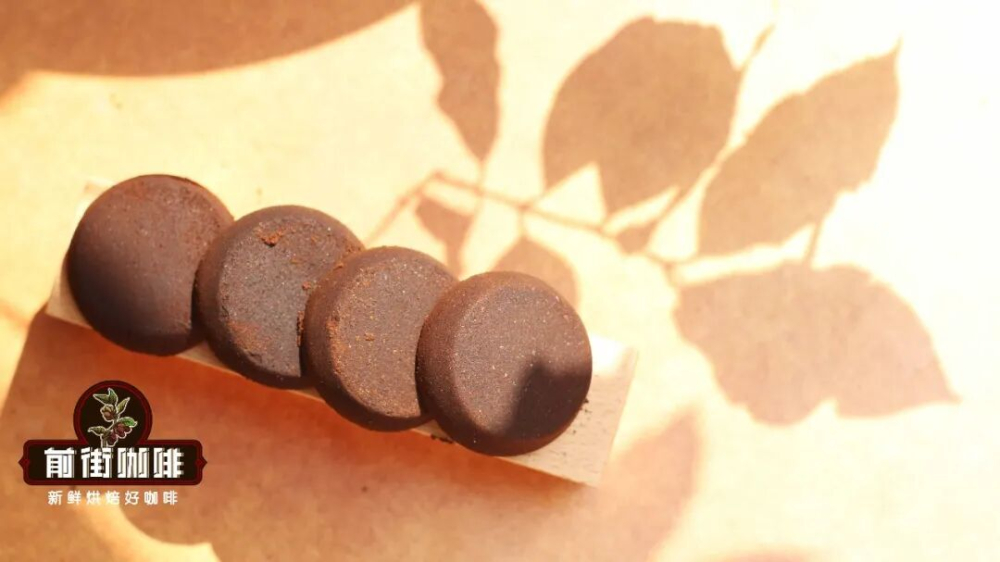 Generally speaking, the ideal state of a puck after extraction should be slightly dry, with a flat surface, no obvious water pooling or holes, and it should come out as a single piece when tapped. The color should be evenly distributed, the thickness consistent, and it should hold together without easily collapsing. However, if your puck consistently fails to form properly or your coffee flavor remains underwhelming, it’s advisable to start troubleshooting from the following two main areas.
1. Puck Surface Is Uneven (Dented or Bumpy)
Both experienced baristas and beginners may encounter situations where the puck surface is uneven. This kind of dented appearance usually means that the hot water lacked sufficient space to flow during extraction. One common cause is an overly thick puck. Generally speaking, lighter-roasted coffee beans expand less after roasting, while darker roasts expand more. As a result, for the same weight, a darker roast will produce a thicker puck layer. When the puck layer is too thick, it tightly adheres to the filter screen after absorbing water, impeding smooth water flow. This not only often leads to an uneven puck surface but is also frequently accompanied by under-extraction, resulting in a coffee flavor that is dull or overly acidic.
Adjustment Suggestion: Try grinding finer and moderately reducing the dose to lower the puck thickness and improve water distribution.
2. Puck Has Visible Holes
The presence of obvious holes in the puck is usually a clear sign of channeling. Since water always chooses the path of least resistance, if the puck density is uneven, hot water will concentrate and flow through the looser areas. This leads to localized over-extraction while other parts are under-extracted, negatively impacting overall flavor balance. It can also sometimes be accompanied by unstable flow rate or splattering.
Adjustment Suggestion: Focus on improving the distribution process to ensure the coffee grounds are evenly spread, paying special attention to breaking up clumps to avoid density differences in localized areas.
3. Severe Water Pooling on the Puck
Contrary to the issue of an overly thick puck, water pooling is often caused by a puck that is too thin, usually related to an excessively fine grind size. When the grind is too fine, the gaps between coffee particles become smaller, increasing overall density and naturally lowering the puck height. If the same-sized portafilter basket is used, a larger gap may form between the puck and the shower screen, causing hot water to stagnate on the puck surface, leading to pooling.
Additionally, the pressure output of home espresso machines is also a critical factor. Many entry-level or home-use machines struggle to consistently achieve the 9-bar pressure required for proper espresso extraction. This not only affects crema formation but can also lead to insufficient extraction, uneven coffee dripping, and even water pooling.
Adjustment Suggestion: Grind coarser and appropriately increase the dose to enhance puck density and height, thereby improving the pooling issue.
4. Puck is Loose, Wet, or Soggy
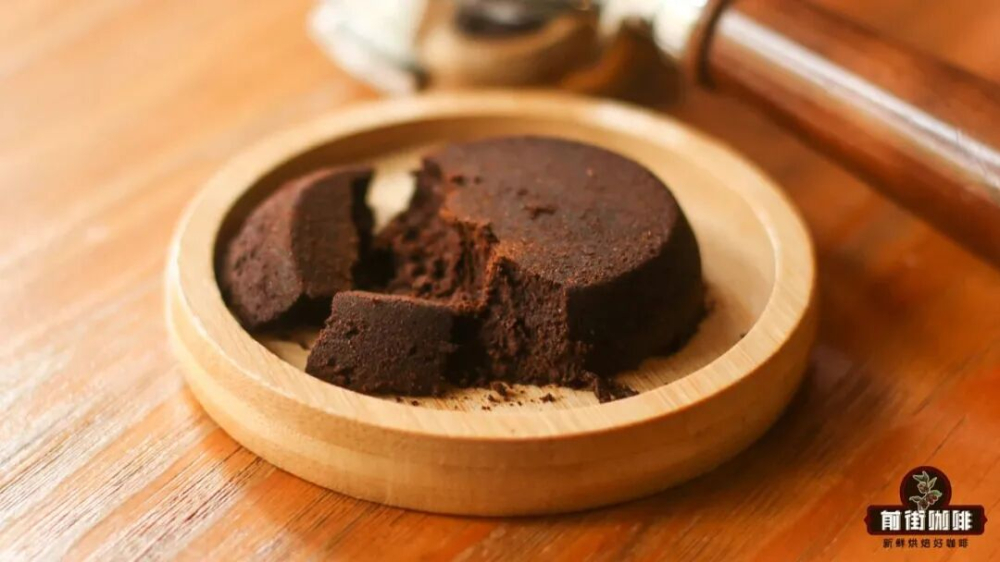
An ideal puck should be compact and have a certain degree of structural support. But if the puck appears loose, wet, or even sticky, it usually indicates that the hot water has exerted too much impact on the coffee grounds, causing the particles to absorb too much water and clump together. Although the flow rate of such a puck might still fall within the standard range (e.g., a 1:2 brew ratio over 25–35 seconds), it often results in overly heavy bitterness. The main cause may be an insufficient dose; it’s recommended to try increasing the coffee dose by 0.5–1 gram. Additionally, using a double-shot basket but only filling half the dose for a single shot can also lead to poor puck structure. It’s advisable to switch to a single-shot basket for better puck support.
Adjustment Suggestion: Moderately increase the dose or switch to a suitable basket size.
5. Puck is Dry on One Side and Wet on the Other
This uneven puck condition is usually caused by uneven tamping pressure, resulting in an uneven puck surface. To achieve a uniform puck, it’s recommended to use the standard tamping technique: use your thumb and index finger to stabilize the tamper on both sides, support the tamper handle with your remaining three fingers and palm, keep your arm vertical, and then apply even downward pressure.
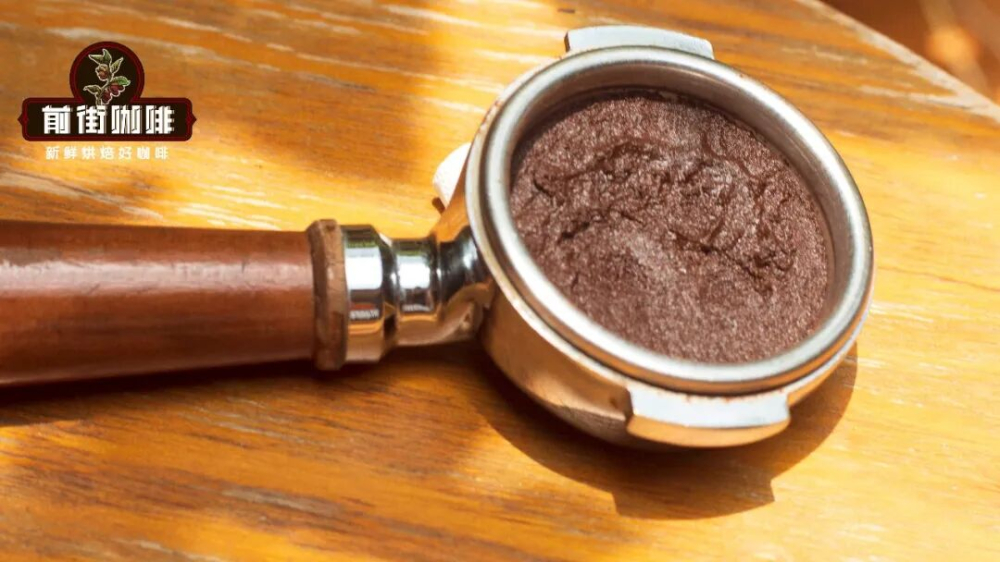
6. Puck Bottom is Darkened
Under ideal conditions, espresso extraction should proceed uniformly from top to bottom, and the puck color should also be consistent from top to bottom. If the portafilter is removed too early, the bottom coffee grounds may not have been fully extracted and will appear wet and darker in color, resulting in a coffee lacking in complexity and a thin finish. To avoid this, it’s recommended to first extract using the standard 1:2 brew ratio. If the time is too long, you can moderately adjust to a coarser grind to optimize the overall extraction rhythm.
The above content is compiled by CoffeeHunters, a coffee news website.


