








Introduction:On a hot summer day, when you crave an iced coffee, you have several great options to choose from. Iced americano, iced pour over, cold brew, and ice drip are the four most common methods of making iced coffee. Each has its own unique brewing principles, time requirements, equipment needs, and final flavor profiles. This article will take a practical approach, detailing the preparation processes, key parameters, suitable coffee bean types, as well as the differences in taste and aroma of these four iced coffee styles—helping you select or brew the perfect iced coffee that suits your needs and conditions.
When summer heat strikes, a refreshing iced coffee is many people’s go-to pick-me-up. But iced coffee isn’t limited to just iced americano. Iced americano, iced pour over, cold brew, and ice drip—these four popular iced coffee brewing methods each have distinct extraction logic, brewing durations, required equipment, and final flavor characteristics. Understanding their differences can help you find the most suitable iced coffee solution based on your personal taste, time availability, and home setup.
First, looking at the extraction methods: both iced americano and iced pour over extract coffee using hot water first, then rapidly cool it down by adding ice cubes; whereas cold brew and ice drip use only cold water for extraction, resulting in a much slower process and thus distinctly different flavor profiles. Next, let’s break down the specific brewing steps, key parameters, and flavor differences of these four iced coffee types one by one.
Iced Americano: Quick to Make, Refreshing to Drink
Iced americano is one of the most common types of iced coffee, and it’s simple and quick to prepare. All you need is to use an espresso machine to brew a shot of espresso, then dilute and cool it with iced water. It is recommended to use about 20 grams of medium-light to medium-roasted coffee beans, with a coffee-to-water ratio of 1:2, extracting around 40 grams of espresso within 25–33 seconds. Then, pour the espresso into a glass containing 90 grams of ice cubes and 180 grams of water. Stir gently, and it’s ready to enjoy.
The resulting iced americano has a relatively refreshing mouthfeel, with more straightforward flavor layers, making it ideal for those who prefer a lighter coffee experience. Since it is brewed hot and then cooled, some of the coffee oils may settle slightly due to the ice, making the overall liquid less visually clear. However, it goes down smoothly and is great for a quick daily pick-me-up.
Iced Pour Over: The Advanced Version of Pour Over Technique, with Clear and Bright Flavors
Iced pour over is essentially a more concentrated hot coffee brewed via pour over method, which is then cooled down by adding ice. This technique retains the clean characteristics of pour over and highlights the primary flavor notes of the coffee beans. For example, using 15 grams of coffee beans, with about 150 grams of 92°C hot water and a grind size yielding about 83% extraction through a #20 filter (approximately equivalent to EK43s setting 9 or C40 setting 22), use a three-stage pouring method: the first stage involves pouring 30 grams of water and letting it bloom for 30 seconds, the second stage adds 60 grams, and the final stage adds another 60 grams, with the total brew time controlled between 1 minute 50 seconds and 2 minutes. At the same time, pre-place 75 grams of ice cubes in the server; once brewing is complete, let the hot coffee drip directly onto the ice to cool and dilute.
This method is suitable for medium-light roasted coffee beans, which can highlight bright notes such as fruity and floral aromas. It has a clean mouthfeel, making it ideal for coffee enthusiasts who pursue complex flavors and enjoy the art of pour over.
Cold Brew Coffee: Long Soaking Time, Soft and Sweet Flavor
Cold brew coffee is made by steeping coarsely ground coffee in cold water for an extended period, typically refrigerated for 8–12 hours. It is recommended to use about 60 grams of medium-light roasted coffee beans, ground to a coarseness similar to fine sugar (approximately 80% extraction through a #20 filter), mixed with 600 grams of cold water at a 1:10 coffee-to-water ratio. Place it in a sealed cold brew container, stir well, and refrigerate. After steeping, remove and shake thoroughly, then filter out the coffee grounds using filter paper to complete the process.
The characteristic of cold brew coffee is its very low bitterness, balanced flavors, and noticeable sweetness. It has a relatively full body, though slightly less clarity than iced pour over. Since it is extracted at low temperatures throughout the process, it reduces the risk of acidity and over-extraction, making it suitable for those who prefer a smooth mouthfeel and easy preparation.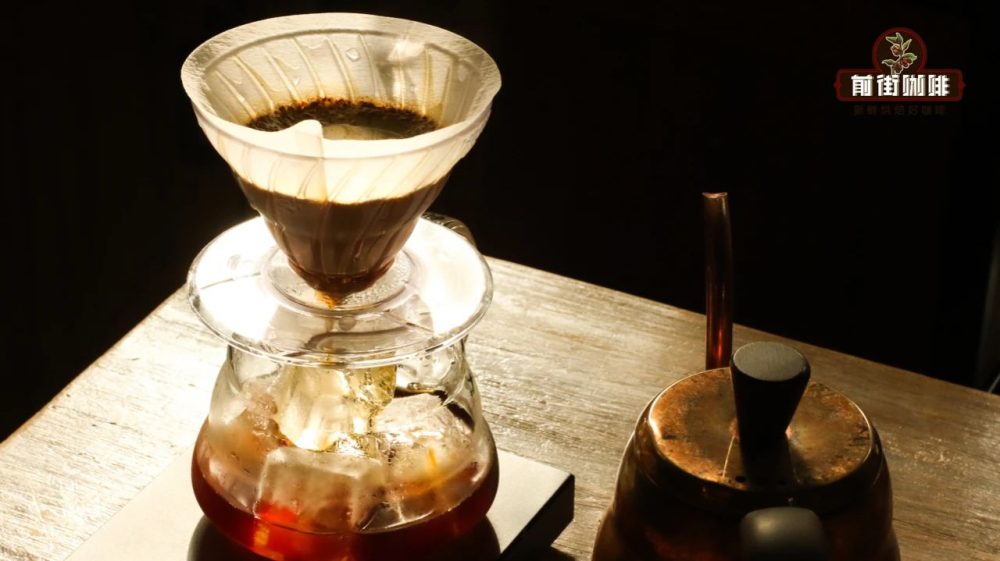
Ice Drip Coffee: Slow Drop Precision Extraction, Deep and Rich Flavor
Ice drip coffee is arguably the longest and most skill-demanding method among all iced coffee styles. It involves dripping ice water at an extremely slow rate of about 7 drops per 10 seconds (approximately 0.2 ml per drop) continuously onto a bed of coffee grounds for extraction. The entire process takes about 6–8 hours. It is recommended to use 60 grams of coffee beans with a grind size similar to pour over, using a coffee-to-water ratio of 1:10 (or adjustable at home to 1:12–1:14). Place two layers of filter paper in the coffee chamber to prevent clogging. Fill the top chamber with a mixture of ice and water (at a 1:1 ratio), allowing the ice water to gradually drip through the coffee grounds, ultimately extracting about 600 grams of coffee liquid.
Due to the long-duration, low-temperature extraction, ice drip coffee can bring out rich fermented aromas such as wine-like notes, nuts, and deep chocolate tones. It has a thick mouthfeel and relatively higher caffeine content. When served over ice, it showcases distinct layers and a long-lasting finish, making it an advanced choice among iced coffees.
Brewing Time and Difficulty Comparison
In terms of time and ease of operation, iced americano and iced pour over are the fastest options, usually taking just a few minutes to prepare; whereas cold brew and ice drip require longer waiting times—the former about 8–12 hours, and the latter about 6–8 hours. Regarding equipment, iced americano requires an espresso machine, while ice drip requires a specialized dripping device, both with higher cost and preparation barriers. In contrast, iced pour over and cold brew have lower equipment demands, generally using common home pour over tools or sealed bottles, making them more beginner-friendly.
Flavor and Mouthfeel Differences Summary
Although the acidity, sweetness, bitterness, and aroma profiles of coffee mainly come from the coffee bean variety and roast level, different brewing methods still affect the final flavor presentation. Iced americano typically has a refreshing mouthfeel and direct flavors but with simpler layers and slightly cloudy liquid. Iced pour over showcases clear, bright fruit and floral notes with a clean, transparent mouthfeel. Cold brew excels in low bitterness, high sweetness, and a full-bodied texture, albeit with slightly less clarity. Ice drip, due to its prolonged low-temperature extraction, delivers unique fermented aromas such as wine notes, with the richest and most intense mouthfeel—making it the flavor champion among iced coffees.
No matter which method you choose, as long as you master the basic parameters and techniques, you can enjoy your own perfect iced coffee even in the peak of summer.

The above content is compiled by CoffeeHunters, a coffee news website.


