







Introduction:You don’t need a professional coffee machine to make a smooth and delicious cold brew latte at home either. This article dives deep into how low-temperature extraction reduces bitterness and preserves aroma, and it also details key parameters such as fresh milk selection, coffee bean variety pairing, coffee-to-milk ratio, and steeping time. It even offers a lazy person’s method and storage tips, making it easy for you to master this stress-free and flavorful home coffee brewing technique.
Want to enjoy a silky-smooth, aromatic latte at home but find yourself without an espresso machine or complex equipment? Don’t worry—by mastering the tricks of low-temperature extraction, you can easily make a rich and velvety cold brew latte even without a coffee machine. This article will take you through the unique charm of milk-brewed coffee, starting with how low-temperature extraction preserves aroma and reduces bitterness, then sharing practical advice on choosing fresh milk and coffee beans, along with useful brewing parameters and steps including coffee-to-milk ratio, grind size, and steeping time. It also includes a simple lazy version method and preservation tips, making it accessible for beginners and advanced home brewers alike.
The world of cold brew coffee is actually quite diverse—it's not limited to black coffee alone. Now, let’s get hands-on and make a smooth, aromatic cold brew latte at home—no coffee machine or expensive gear needed, just a few simple steps.
So-called “milk-brewed coffee” is actually a type of coffee beverage where milk is used instead of water for long-duration, low-temperature immersion extraction. Its appeal lies in a generally softer overall flavor profile—smooth on the palate and not heavy. The principle behind low-temperature extraction is that the cooler environment suppresses the release of larger molecules that tend to produce bitterness, while allowing smaller aromatic molecules enough time to slowly dissolve. As a result, the extracted coffee liquid typically has a clean taste, intense aroma, and richer layers of flavor.
When we apply this low-temperature extraction method to milk—that is, what we call “milk-brewed coffee”—we can further soften the overall flavor. The milk fat and proteins in the milk further slow down the extraction process. Although the concentration may not be as strong as that of a traditional espresso-based latte, what you get in return is a smoother, more approachable flavor, as if the essence of the coffee is gently enveloped within the milky aroma—rich yet not cloying.
Next, let’s look at how to make your very own cold brew latte at home using the simplest tools. First, when it comes to milk selection, it’s recommended to prioritize fresh milk because of its higher lactose and milk fat content, which can bring a smoother, richer texture to the coffee, making the overall mouthfeel more luxurious.
As for the coffee beans, you can choose single-origin beans with clear flavor profiles, gentle acidity, and a full-bodied mouthfeel. For example, Ethiopian Huākuí (Flower Queen), Costa Rican Mozart, or Honduran Sherry-processed beans are all great options. These beans often come with fruity, floral, or caramel-like aftertastes that pair perfectly with milk, creating a layered and rich milk-brewed flavor.
Here’s a set of practical recipe and parameters: use medium-fine ground coffee powder (tested with a Chinese No. 20 standard sieve, with about 85% passing rate),the recommended coffee-to-milk ratio is set at 1:13,place the coffee powder in a tea bag, then put it into chilled fresh milk,with a low-temperature steeping time of 8 to 10 hours,allowing the coffee flavors to slowly release without over-extracting, which could lead to bitterness or off-flavors.
In terms of specific operation, you can take 20 grams of coffee powder, evenly divide it into two tea bags and tie them tightly, place them into a clean sealed container, then pour in 260 grams of chilled fresh milk. Gently shake to evenly soak the coffee powder, then place the whole container in the refrigerator and let it sit for 8 to 10 hours. Once the time is up, remove the tea bags—or pour out the mixture—and you can enjoy a smooth and fragrant cold brew latte. Be especially mindful that since milk spoils easily, it’s recommended to consume it within 12 hours after preparation to ensure freshness and hygiene.
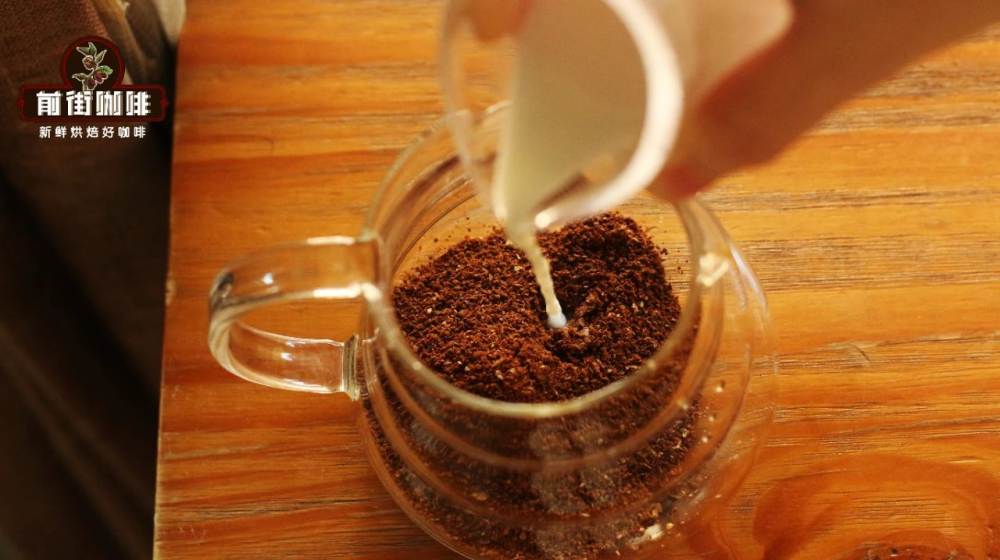
If you want something even simpler, there’s also a lazy version: simply weigh an appropriate amount of coffee powder according to the capacity of the milk carton, place it in a tea bag, directly put the tea bag into the milk carton, seal the opening with plastic wrap, and refrigerate for steeping. It’s simple and convenient.
So, should you drink the finished cold brew latte right away, or can it be kept refrigerated? According to actual testing, freshly filtered milk-brewed coffee has a rich milk-tea color, with aromas of hazelnuts and roasted peanuts, and a smooth, full-bodied taste. However, if left for too long—especially overnight—while the taste doesn’t change much, the aroma gradually weakens. In addition, milk has a limited shelf life, so it’s best to enjoy it fresh—not only for optimal flavor, but also to avoid any risk of stomach discomfort.
The above content is compiled by CoffeeHunters, a coffee news website.


