








Introduction:Want to brew a richly flavored, layered iced pour over coffee at home? Many people complain that their homemade iced pour overs lack aroma and taste too weak—often the result of subtle issues with coffee-to-water ratio, ice selection, grind size, and pouring technique. This article dives deep into four core skills: the scientific balance of ice-to-water proportions, the ideal grind setting for iced pour over, the technique of pulse pouring, and how to choose ice that won’t dilute flavor. Learn to avoid common mistakes and craft iced pour overs that rival those from specialty shops.
In the peak of summer, an iced pour over not only cools you down but also showcases the coffee’s complexity and bright acidity. Yet many coffee enthusiasts find their homemade versions either flat in flavor or lacking aroma—sometimes even tasting like weak black water with ice. In truth, iced pour over isn’t just “hot pour over with ice added”—it requires full adjustments for low-temperature extraction, including coffee-to-water ratio, ice amount, grind coarseness, and pouring pace.
To make a full-flavored iced pour over, first understand its basic principle: high-temperature quick extraction pulls out ample flavor compounds and aromas, then ice rapidly chills the brew. This locks in volatile aromatic substances and achieves moderate natural dilution. This combo of “hot extraction + ice chilling” is key to iced pour over’s vibrant acidity and clarity.
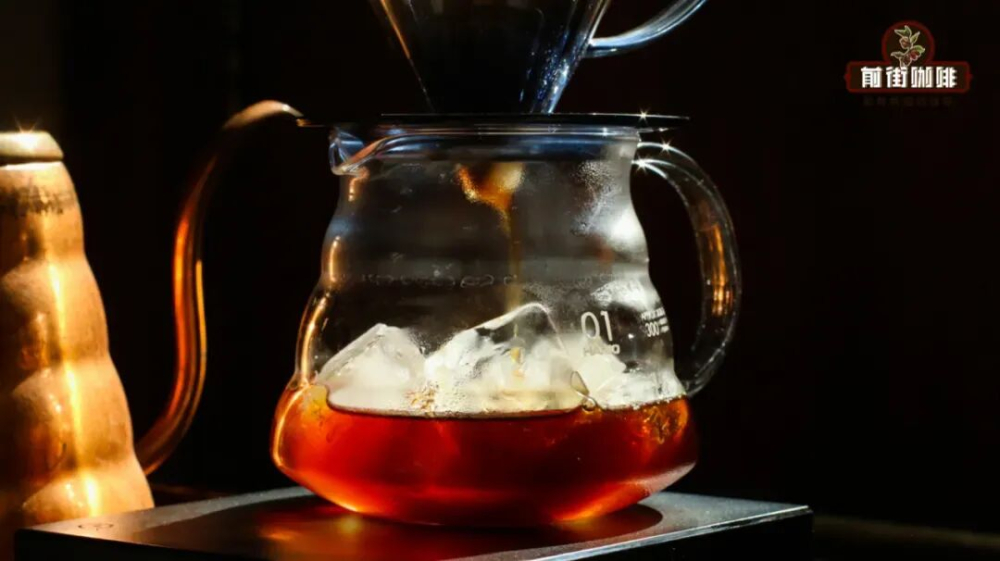
A common mistake is brewing hot coffee first, then pouring it over ice to cool. This often causes aroma to dissipate in the heat, and rapid dilution by ice leaves the coffee bland. The correct approach is to adjust the hot water ratio—replace about one-third of the originally needed hot water with ice. For example, if you normally use 15g coffee with a 1:15 ratio (total 225g hot water), switch to 75g ice + 150g hot water for iced pour over. If using 20g coffee with 300g hot water, adjust to 100g ice + 200g hot water.
If you’d rather skip calculations, try this handy formula:Coffee weight × 10 = hot water volume; coffee weight × 5 = ice weight. For 15g coffee, that’s 150g hot water + 75g ice. This recipe works well with most common beans and is beginner-friendly.
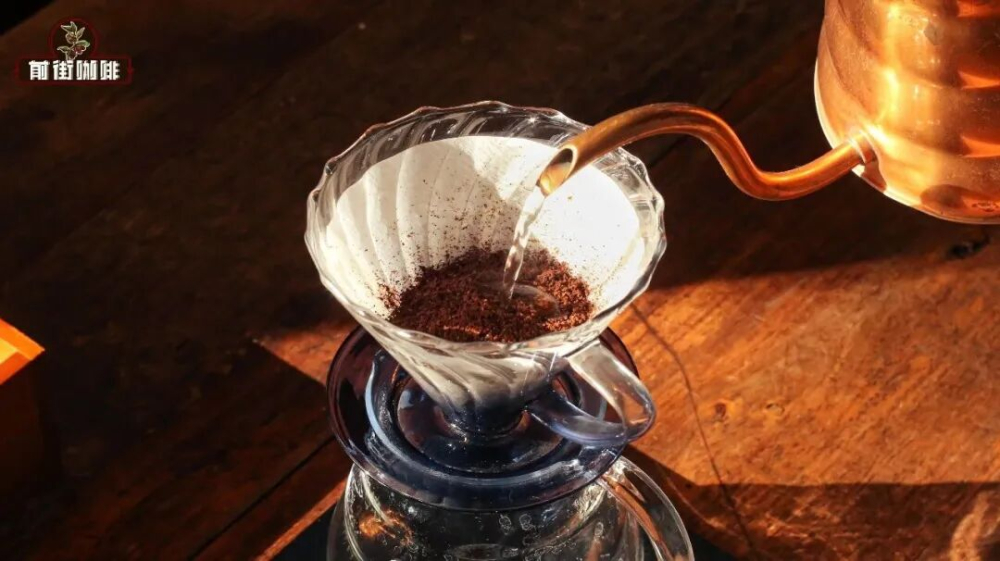
Besides adjusting ice-water ratio, grind size is another key factor. Since total pour-over water for iced pour over is one-third less than standard hot brews, keeping the same grind leads to under-extraction in later stages—resulting in thin, one-dimensional flavor. So, adjust your grind to be0.5 to 1 notch finer than your usual hot pour over, increasing coffee-water contact for better extraction.
For example, if you usually grind at 10 on an EK43s for balanced light-to-medium roasts (like Ding Ding, Panamanian Geisha, or Sidamo), adjust to 9.5 for iced pour over. For medium-to-dark roasts (like Golden Mandheling, Queen Estate, or Blue Mountain No.1), keep it at 10 or fine-tune just 0.5 finer. With hand grinders, generally go one notch finer to enhance flavor release.
Pouring technique also needs adaptation for iced pour over. With reduced total water, pouring all at once in the traditional way leads to too short extraction time—failing to fully draw out desirable compounds. To maintain an ideal brew time (~1:45 to 2:00), usesmall, multiple pours in stages.
Take 15g coffee: instead of pouring 150g water all at once (common in hot pour over), try four pours for iced pour over—30g → 40g → 40g → 40g (total 150g). If that’s too fussy, simplify to three pours: 30g → 65g → 55g, still effectively managing brew time and flavor balance.

Finally, don’t overlook ice’s impact on final flavor. Many home brewers use small, homemade ice cubes that melt quickly in hot coffee—not only diluting the brew but making it watery and dulling aroma. Choosehard, large-format ice cubes; they melt slowly, preserving a longer-lasting cool taste and richer flavor.
For even better results, try the “ice-chilling method”: slowly pour hot-brewed coffee over a pile of ice, letting it cascade and cool between the cubes. This avoids localized overheating, keeps flavors concentrated during cooling, and minimizes unnecessary dilution. Ideal for coffee lovers who chase fine flavor details.
The above content is compiled by CoffeeHunters, a coffee news website.


