








Introduction:Jamaican Blue Mountain coffee is hailed as a representative of the world’s finest coffees, and its unique flavor profile is inseparable from its rigorous production process. This article delves into the natural conditions of the Blue Mountain coffee-growing region, its exquisite processing methods, and analyzes the optimal roast level for pour over brewing. It also introduces the flavor characteristics and brewing recommendations of the classic Blue Mountain No. 1 beans, offering you a comprehensive understanding of the essence of this legendary coffee.
What enables Blue Mountain coffee to maintain its position at the pinnacle of global specialty coffee? The answer lies not only in its exceptional geographical location on the island of Jamaica in the Caribbean, but also in the extremely high standards applied to every step of the process—from planting, harvesting, processing to exporting. This article will start with the geographical environment of the Blue Mountains, taking you through how Blue Mountain coffee develops its unique flavors in an environment of high altitude, frequent fog, and volcanic soil, while detailing the full journey from harvesting to roasting. It will also explore which roast level is best suited for bringing out its delicate layers when brewed using the pour over method.
The Blue Mountains are located in eastern Jamaica, with the main peak reaching an elevation of 2,256 meters, making it the highest point in the Caribbean. This area boasts not only magnificent natural landscapes but is also one of the few places in the world capable of growing premium-quality coffee. The local volcanic soil is fertile, the air is fresh and unpolluted, and the high humidity combined with abundant rainfall—especially the frequent morning fog throughout the year—creates a unique growing environment for Blue Mountain coffee. Thanks to these exceptional conditions, Blue Mountain coffee not only delivers outstanding flavor but has also become one of the most expensive coffees in the global market.

Blue Mountain coffee is cultivated on steep mountain slopes, which not only increases the difficulty of farming but also makes the harvesting process extremely labor-intensive. Only skilled local female workers can accurately select coffee cherries that are perfectly ripe in such rugged terrain. During harvesting, special care is taken to ensure that fruits picked too early or overly ripe will directly affect the final flavor of the coffee. After picking, the coffee beans must undergo pulp removal on the same day, followed by a 12 to 18-hour fermentation stage to remove the remaining mucilage layer. Subsequently, they are washed, sorted, and then naturally dried on water-polished stone surfaces or thick fabric until their moisture content is reduced to the ideal range of 12% to 14%. Finally, the beans are placed in specialized storage piles to rest for a period of time before being taken out for roasting and grinding as needed. Any lapse in this entire process can lead to a significant decline in flavor.
The Blue Mountain coffee harvest season generally runs from June to November each year, relying entirely on manual picking to ensure that only fully ripe coffee cherries are harvested. From green bean processing, washing, fermentation, dehydration, sun drying, hulling, to the final roasting, each step is overseen by designated quality control personnel to ensure that every batch of Blue Mountain coffee maintains consistently high quality.
It is worth mentioning that due to the rarity and high value of Blue Mountain coffee, the Jamaican government has special regulations regarding its packaging and transportation. Unlike the common burlap sack method, premium Blue Mountain coffee is packaged and transported in wooden barrels—the only coffee-producing region in the world that still insists on using wooden barrels. In addition, all exported Blue Mountain coffee must obtain a quality certification issued by the Jamaica Coffee Industry Board (JCIB). Each shipment is sampled, roasted, ground, and cupped by official quality supervisors to ensure it meets strict international standards before being allowed for export.
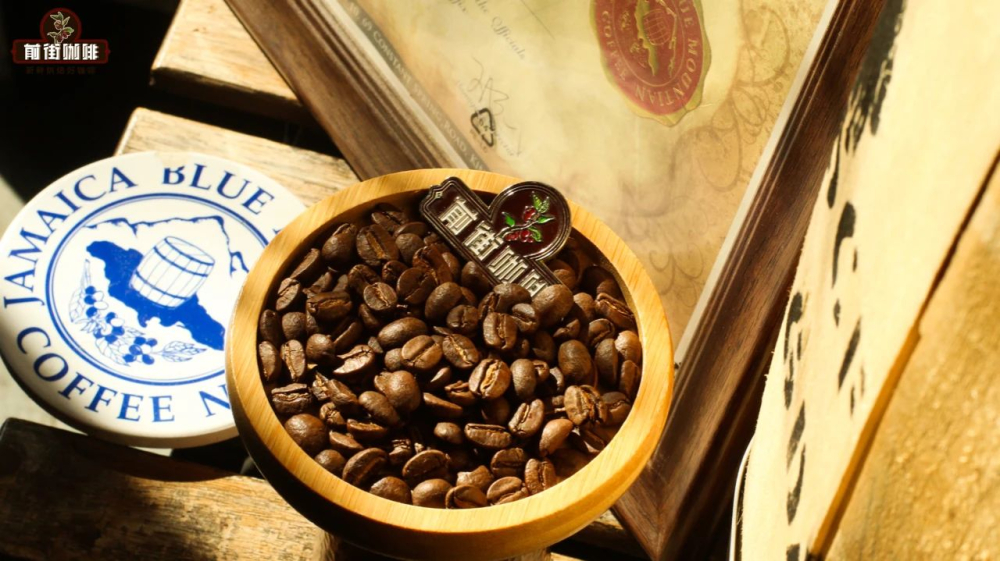
Taking the commonly available Blue Mountain No. 1 as an example, these coffee beans are plump in appearance, with noticeably larger bean size compared to regular coffee beans. Its flavor profile is well-balanced, with bright acidity that is not overly sharp, complemented by elegant aromas and a rich body, and a finish that carries a hint of mild bitterness without overpowering the cup. The overall flavor harmony is well-structured with distinct layers, making it highly suitable for pour over brewing, and it can also be enjoyed through tools like French press, siphon, or drip bags to experience its pure black coffee flavor. For roast level, a medium roast is used, which preserves the inherent regional characteristics and fruity-floral notes of the beans while enhancing the aftertaste during drinking.
If you choose to brew Blue Mountain No. 1 using the pour over method, it is recommended to use a medium-fine grind, with water temperature controlled between 90°C and 92°C, and a multi-pour extraction technique—for example, starting with a 30-gram bloom for 30 seconds, then pouring in stages until the total water volume reaches about 240 milliliters. The total extraction time should ideally be around 2 to 2 minutes and 30 seconds. These parameters allow the coffee to showcase pronounced roasted hazelnut, chocolate, cream, and caramel aromas, along with a cookie-like gentle sweetness. The four taste elements—acid, bitterness, sweetness, and umami—are perfectly balanced in the mouth, with a long-lasting and memorable aftertaste.
The above content is compiled by CoffeeHunters, a coffee news website.


