







Introduction:When buying coffee beans, have you ever been confused by labels such as AA, G1, SHB, PB? These letters actually represent the rigorous green coffee grading systems of various countries. This article takes an in-depth look at the green bean grading standards of major origins such as Ethiopia, Kenya, Costa Rica, Jamaica, and Brazil—from defect rates, bean size, altitude to cup quality—helping you truly understand the grading logic behind each coffee bean and grasp their practical significance in the market.
When selecting coffee beans, you often come across indicators such as AA, G1, SHB, and PB. These letters may seem arbitrary, but each set represents the green bean grade standard of a particular origin. Many consumers, upon first seeing these codes, often wonder: which grade is higher? Which one represents better quality? This article will take you deep into the grading logic of the world’s major coffee-producing regions, helping you choose the coffee beans that suit you more accurately.
Why do coffee beans need to be graded? Just as fruits in the market are categorized by size and appearance, coffee beans vary in quality from batch to batch due to differences in growing environments and processing methods. To help buyers and consumers better understand the quality and value of coffee beans, producing countries have established different grading systems based on their own planting conditions and market demands, serving as references for quality and pricing.
Why is there no unified global standard for coffee bean grading? This is because significant differences exist in geography, climate, coffee varieties, and processing techniques across regions. For example, Ethiopia, where smallholder farmers dominate and bean shape and size vary greatly due to diverse varieties, uses defect rate as the primary grading criterion. In contrast, countries like Costa Rica and Guatemala, with notable altitude variations, determine bean hardness and potential based on elevation. As a result, grading standards vary by region and cannot be globally unified.
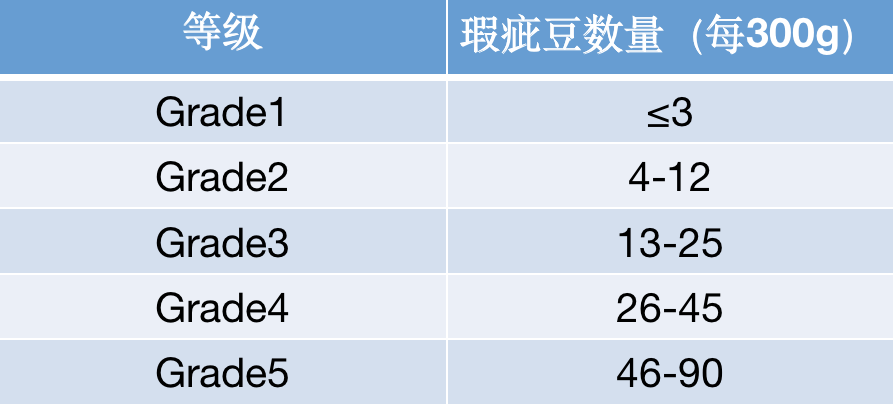
Ethiopia is a representative country that primarily uses defect rate as the grading basis. Here, the number of defective beans allowed per 300 grams of green coffee determines the coffee’s grade—for instance, G1 grade allows no more than 3 defective beans, while G2 permits 4 to 12. Many Ethiopian specialty coffees, such as Yirgacheffe, Guji Hambela, and Sidamo Kochere, fall under the G1 grade, indicating an extremely low defect rate and relatively superior quality.
Kenya is known for its bean size and unique varieties, with common grades including AA, AB, and PB. Among these, AA usually represents the largest coffee beans, while PB stands for Peaberry, referring to coffee cherries that develop only one seed instead of the usual two. Due to their rarity and often intense flavors, peaberries are considered premium items—even if similar in size to regular beans—and are sometimes sold at prices close to AA. It’s recommended to start exploring Kenya’s unique flavor profile with its Small Tomato variety.

Central American countries such as Costa Rica, Guatemala, and Panama mostly use altitude as the main grading criterion. Generally speaking, the higher the altitude, the harder the coffee beans and the richer the flavor. While all these countries use SHB (Strictly Hard Bean) as the highest grade, their definitions of altitude thresholds vary slightly: Costa Rica defines it as above 1200 meters, Guatemala as 1350 meters, and Panama as above 1400 meters. Therefore, even if both are labeled SHB, the actual altitudes represented can differ, affecting flavor potential.
Jamaica’s grading system combines both bean size and altitude. Jamaican Blue Mountain coffee is divided into three grades based on altitude: Blue Mountain, High Mountain, and Prime, with Blue Mountain No.1 being the highest grade and globally recognized as one of the top-tier coffees. Additionally, bean size is further categorized from No.1 to No.3, influencing grading and pricing. Blue Mountain coffee belongs to the highest-grade Blue Mountain No.1, representing both altitude and size advantages.
As for Brazil, its green bean grading standards take into account a combination of factors: defect rate, bean size, and cup quality. Brazilian green coffee packaging often includes labels such as NY2 SC-17/18 Good Cup, where NY2 indicates the defect rate grade (with NY2 being the highest), SC-17/18 refers to bean size between 17 and 18 mesh, and Good Cup is the cup quality rating, which includes categories like Fine Cup, Good Cup, and Fair Cup. This comprehensive evaluation method gives Brazilian coffee a certain level of consistency and flavor performance, making it an important base for many blended coffees.
In summary, grading labels like AA, G1, SHB, and PB may seem confusing, but they each have clear evaluation logic—only tailored to the specific conditions of each producing region. Understanding these grading criteria can help you make wiser decisions when purchasing coffee beans. In the roasted bean market, however, these grade distinctions often become blurred, with most emphasis placed solely on the highest grade. Therefore, when shopping, consumers should still focus on the actual flavor and processing method of the coffee to find the cup that best suits their taste.
The above content is compiled by CoffeeHunters, a coffee news website.


