








Introduction:The coffee grounds bed in pour over isn’t just leftover residue—it’s a visual representation of extraction status. From the integrity of the coffee “walls” to the shape of the bottom of the bed, it can reveal details about grind size, pouring technique, and water flow control. This article takes an in-depth look at six common abnormal coffee grounds patterns, including muddy, sea salt-like, uneven, flat-bottomed, and layered beds, helping you diagnose issues from the appearance of the bed and adjust grind size and pouring methods to improve pour over stability and flavor performance.
The charm of pour over coffee lies in its high degree of controllability, but for beginners, it’s not easy to accurately judge whether each brew is optimal. In addition to relying on taste perception, observing the coffee grounds bed left after brewing is also an intuitive and effective reference. An ideal grounds bed should present a uniform conical shape, with neat coffee walls and loosely packed coffee particles resembling a honeycomb—this indicates stable pouring and proper water flow control.
If the coffee bed shows abnormal shapes such as being muddy, sea salt-like, uneven, flat-bottomed, or layered, it often suggests problems during extraction—possibly incorrect grind size, unstable pouring technique, or the need to adjust water flow and swirling speed. Observing these bed characteristics can help you identify the root cause and gradually improve pour over quality.

Many coffee enthusiasts who are just starting to learn pour over often take photos of the coffee bed after brewing and ask: “Does this kind of bed mean the coffee will taste good?” In reality, about 70% of a cup of coffee’s flavor depends on the bean’s inherent quality and freshness, while the remaining 30% is closely related to water quality, grind size, water temperature, brew ratio, and technique. Therefore, even if the beans are of high quality, improper brew parameters can still affect the final outcome.
It’s recommended that beginners, when evaluating brew results, use not only taste but also the state of the coffee bed as an auxiliary reference. Under standard parameters—using a 1:15 brew ratio, a grind size that allows 70–80% of particles to pass through a #20 standard sieve (similar in coarseness to granulated sugar), a water temperature of 90–93°C for medium-light roasts and 86–89°C for medium-dark roasts, with total brew time controlled between 1 minute 50 seconds and 2 minutes 10 seconds—if the coffee bed shape is still not ideal, you can look for directions to adjust.
The so-called coffee grounds bed refers to the indentation structure formed by residual coffee grounds in the filter after all hot water has been poured in and extraction is complete. This structure reflects various variables during pouring, such as whether the water flow is even, the swirling speed is appropriate, the grind size is suitable, and can even provide some insight into the coffee beans’ storage condition.
If you find that your coffee’s flavor is inconsistent each time you brew and can’t clearly pinpoint the issue, consider starting with observing the coffee bed, gradually identifying possible causes, then adjusting your brew strategy to enhance overall performance.

① Muddy Bed: A Warning Sign of Over-Fine Grind
As the name suggests, a “muddy bed” looks like mud—wet and sticky, possibly with a few bubbles floating on the surface. This is usually because the coffee is ground too finely, causing water to pass through slowly, extending extraction time and ultimately resulting in over-extracted bitter and astringent flavors. In this case, check your grinder settings and adjust to a slightly coarser grind to slow water flow and avoid over-extraction.
② Sea Salt Bed: A Sign of Over-Coarse Grind
Opposite to the muddy bed, a “sea salt bed” has a coarse-grained base, like scattered coarse salt, indicating the grind is too coarse, allowing water to pass through too quickly, leading to under-extraction, and often resulting in thin, one-dimensional flavors. This is usually caused by grinder settings being too high or using unsuitable grinding tools (like a food processor). It’s recommended to adjust to a finer grind and confirm that your grinder can produce evenly sized particles.
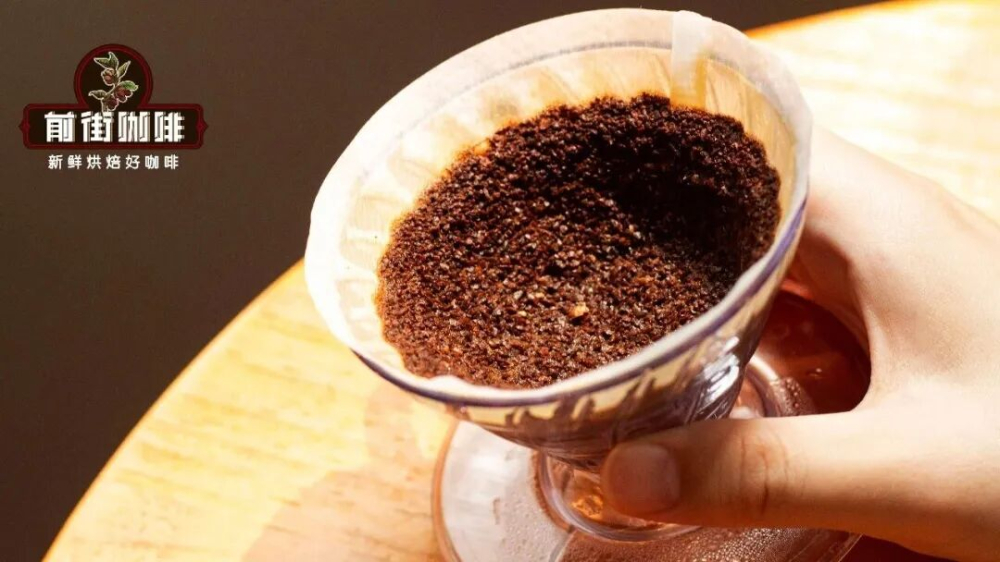
③ Uneven Bed: Uneven Pouring
When the surface of the coffee bed is noticeably uneven, it indicates uneven water distribution during pouring—possibly due to the water stream not being vertical or swirling off-center, causing some areas to receive more water and others less. This can lead to unclear flavors and a dull mouthfeel. It’s advised to keep the water stream vertical and swirl at a steady speed to ensure even distribution across the coffee bed.
④ Flat-Bottomed Bed: Incorrect Pouring Path
The hallmark of a “flat-bottomed bed” is that the upper half of the coffee bed has almost no coffee grounds, looking as though it’s been flattened by water. This usually happens because pouring is overly concentrated at the edge of the filter, washing the stacked coffee grounds down to the bottom, resulting in under-extraction in the center. It’s suggested to focus the water flow on the center of the coffee bed during the latter stage of pouring and control the swirling range to avoid over-washing the edges.
⑤ Layered Bed: Over-Extraction in the Center, Under-Extraction Around
A layered bed is common among cautious brewers who prefer small water streams and limited swirling, causing continuous pouring in the center while outer grounds remain largely untouched. This leads to over-extraction in the middle and under-extraction at the edges, resulting in extreme flavor imbalance. It’s recommended to gradually expand the swirling range after blooming, and perform a split pour when the liquid level rises to 3/4 of the filter to ensure even saturation across the entire coffee bed.
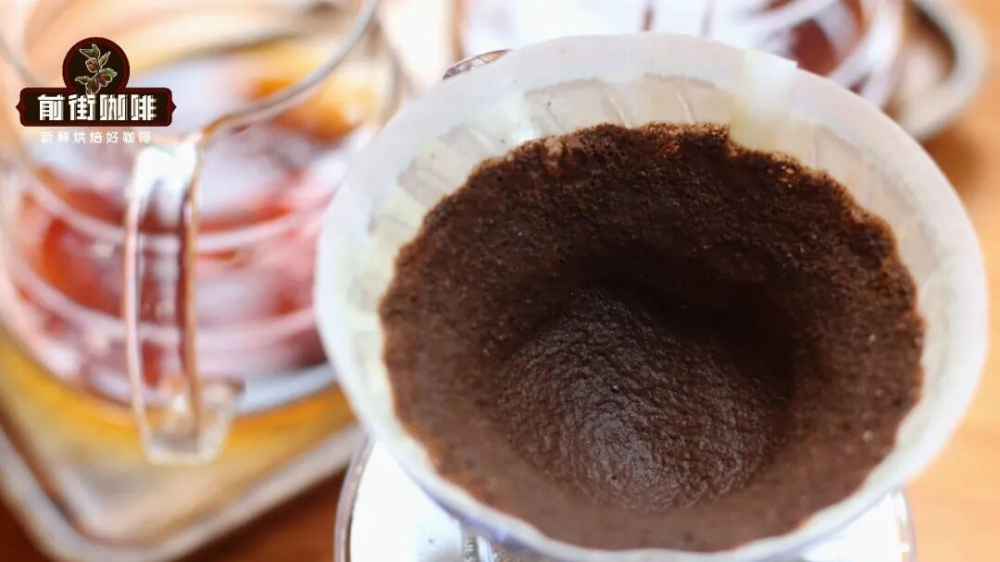
⑥ Cracked Wall Bed: Consequences of Damaged Coffee Walls
This type of coffee bed is characterized by a clear separation between the walls and the base. It’s usually caused by pouring too forcefully on the outer edges, directly impacting the coffee walls and breaking their structure, resulting in inadequate extraction in some areas. The solution is to adjust the strength of water flow on the outer edges, avoid directly hitting the walls, and maintain a stable pour to preserve the integrity of the coffee bed.
The above content is compiled by CoffeeHunters, a coffee news website.


