







Introduction:Sidamo is one of Ethiopia’s most renowned specialty coffee regions, celebrated for its unforgettable floral and fruity aromas and multi-layered flavors. This article takes you deep into the geography, historical naming origins, microclimate characteristics of the Bensa town within the region, and mainstream processing methods. It also extends to describing the cupping profile of representative sun-dried processed coffees and V60 pour-over parameters, offering a comprehensive understanding of this high-altitude coffee sanctuary.
When it comes to Ethiopia’s specialty coffee, Sidamo is definitely a classic name that can’t be overlooked. Known for its captivating floral notes and rich fruitiness, it is a dream origin for many coffee enthusiasts. Located in the highland area of the East African Rift Valley, Sidamo receives an annual rainfall of about 1550 to 2220 millimeters. Coupled with fertile soil and moderate altitude, it provides an ideal growing environment for coffee trees. Coffees from this region generally exhibit high acidity, a full body, and a complex layering of spices, florals, and fruit flavors.
The Story Behind the Geography and Name
Although the commonly seen Chinese translation is “西达摩” (Xīdámó), this term actually originates from the phonetic variation of the local indigenous ethnic group “Sidama.” From the late 18th century to the early 19th century, the region was affected by external invasions, and the indigenous pronunciation “Sidama” was misheard as “Sidamo,” thus forming the familiar name we know today. Although in the 1990s the Ethiopian government redefined administrative regions based on ethnicity and language, officially renaming the area “Sidama,” the name “西达摩” had already established international recognition, and previous trademark registrations also used the old name Sidamo®, so most consumers still habitually refer to this region as “西达摩.”
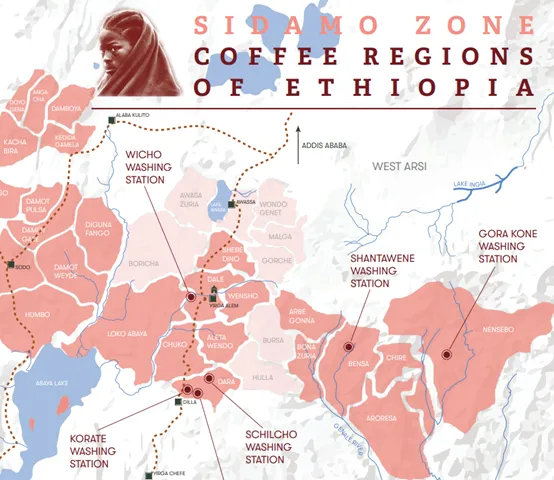
In recent COE (Cup of Excellence) competitions, some micro-regions within the Sidamo region have performed particularly outstandingly, including four neighboring small towns—Arbegona, Bensa, Bura, and Bona Zuria—all located in the Sidamo plateau area. Notably, in the 2021 COE competition, all five farms that made it to the finals came from Bensa town, showcasing the exceptional quality of this micro-region.
The Microclimate and Coffee Characteristics of Bensa Town
Bensa town has an altitude ranging from approximately 1800 to 2300 meters, making it a typical high-altitude coffee-growing area. In such high-altitude environments, coffee cherries ripen more slowly, which is conducive to the accumulation of flavor compounds, resulting in coffees that often possess more complex fruit aromas and higher acidity clarity. In this region, you can easily taste intense fruit fragrances, sometimes even with a hint of fresh strawberry notes.
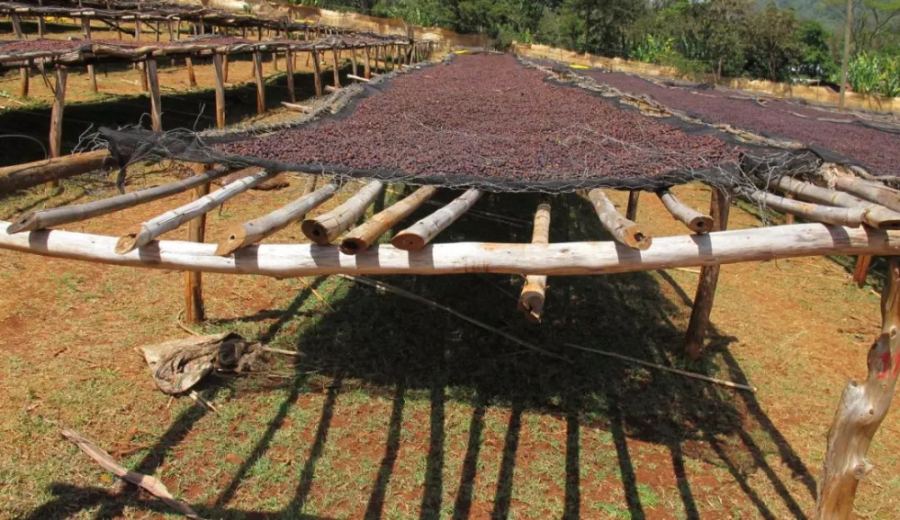
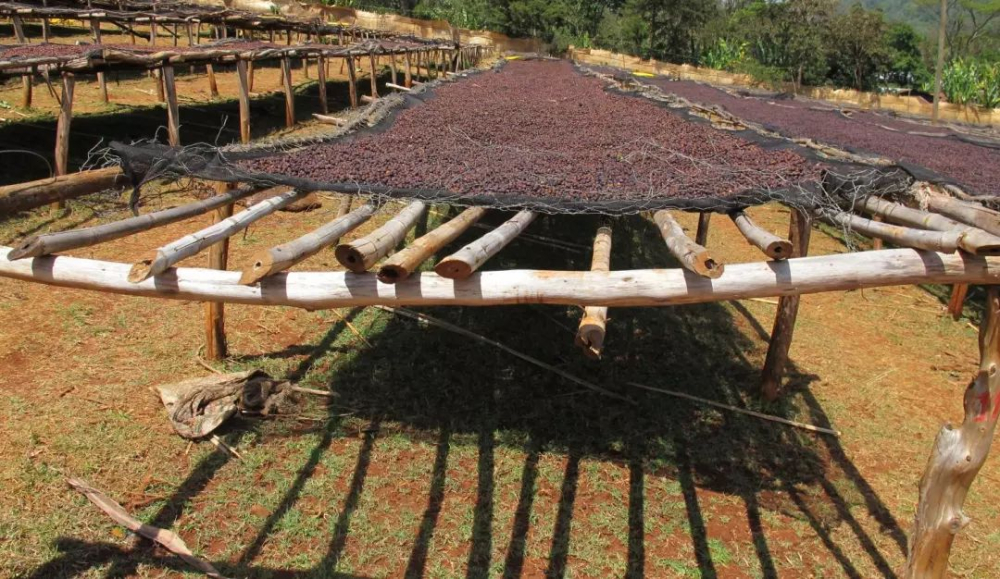
Coffee beans from Bensa can be processed using various methods such as washed, natural (sun-dried), and red honey. Among these, washed Bensa coffee is known for its bright acidity and refreshing aroma. During the processing, coffee cherries undergo strict sorting, pulping, fermentation, and are then thoroughly washed with clean water before being placed on drying beds to slowly dry. During the initial drying phase, they need to be turned every 2 to 3 hours to prevent mold or uneven heating, with the entire drying process lasting about 12 to 15 days until the moisture content drops to11.5%the target standard, at which point it is considered complete.
It’s worth noting that the pronunciation of “Bensa” is similar to that of a traditional herbal tea from China’s Guangdong region called “癍痧” (Bānshā), but it actually has no relation to the tea. Bensa coffee has delicate and mild flavors, a rich mouthfeel, and a long aftertaste, making it a representative of high-altitude specialty beans highly recommended by many baristas.

Common Coffee Varieties in the Region
Ethiopian coffee varieties can generally be divided into two main categories: one is traditional local varieties, such as Dega, Wolisho, and Kurume; the other is a series of numbered strains cultivated by JARC (Jimma Agricultural Research Center), such as 74158 and 74165. In the 2020 and 2021 COE competitions, the majority of coffees representing the Sidamo region were from JARC’s numbered strains. The 2020 champion variety from West Arsi’s Sidama Bura town was 74158, while in 2021 it was 74165 from Bensa town, showcasing the region’s strong potential in varietal selection and breeding.
An Example: Ethiopian Sun-Dried Alo Coffee Released by a Brand — From Processing to Cupping
To allow coffee lovers to experience the unique flavors of the Bensa micro-region, a brand recently launched an Ethiopian sun-dried Alo coffee from a high-altitude area, using the region’s typical sun-dried processing method. During processing, farmers first select fully ripe coffee cherries and send them to the Hatessa processing station for initial sorting and skin color classification, removing underripe or overripe fruits to ensure uniform ripeness of each cherry before proceeding with subsequent sun-drying.
The initial stage of sun-drying is crucial—as the fresh cherries have high moisture content, they need to be turned every few hours to prevent mold or off-flavors. Throughout the sun-drying process, the cherries are spread in a very thin layer to ensure good ventilation and even drying. Generally, the sun-drying period lasts about 14 to 18 days until the moisture content reaches the target standard, after which they are packaged and stored.
Cupping results show that this Ethiopian sun-dried Alo coffee has distinct floral and fruity aromas. The dry fragrance reveals magnolia, pineapple, yellow peach, and small Taiwanese mango notes, accompanied by a gentle fermented sweetness. On the cupping table, the tropical fruit acidity and sweetness are particularly prominent, especially the layered flavors of pineapple, passionfruit, and perfumed lemon, along with a subtle black tea-like finish. As the temperature cools, stone fruits such as yellow peach and dried apricot gradually emerge, with clear and varied acidity.
V60 Three-Stage Pour-Over Parameter Recommendations
To recreate the amazing flavors of this coffee at home, you can refer to the following V60 pour-over recommendations:
- Filter: V60
- Water Temperature: 92-93°C
- Coffee Dose: 15g
- Coffee-to-Water Ratio: 1:15
- Grind Size: Fine sugar-like (approximately 78% extraction through a standard #20 sieve)
Three-Stage Pouring Steps:
- First Stage: Pour water equal to twice the coffee dose (about 30g), bloom for 30 seconds to allow the coffee grounds to fully expand.
- Second Stage: Pour water in small streams in a circular motion from the inside out, stopping at a total of 125g, then wait for the coffee bed to drop to about half the filter.
- Third Stage: Continue pouring with the same fine stream until reaching 225g, and let all the coffee liquid drip through. Total time is about 2 minutes.
Through precise parameter control and careful handling, this sun-dried coffee from Bensa town, Ethiopia, will bring you layers of tropical fruit flavors and a delicate aftertaste, making it an essential specialty choice for exploring the Sidamo region.
The above content is compiled by CoffeeHunters, a coffee news website.


