







Introduction:Many coffee beginners often judge roast levels by thinking "acidic = light roast, bitter = dark roast," but in the professional field, roast levels are actually precisely graded using Agtron color values. This article delves into eight roast levels from light to espresso roast, explaining the flavor transitions and acid-bitter differences at each stage in conjunction with the timing of first and second cracks. It also clarifies the meanings of terms like city roast, and provides practical extraction parameter suggestions for medium-light and medium-dark roasts to help you more intuitively understand coffee roast levels and avoid misconceptions caused by technical jargon.
Many coffee enthusiasts tend to judge roast levels by assuming "acidic means light roast, bitter means dark roast," but in the industry, professionals use a more scientific and precise standard—Agtron color values (also known as caramelization analysis values)—to evaluate the roast degree of coffee beans. Through this metric, we can more accurately understand the roast state of each coffee bean and thereby predict its flavor profile and acid-bitter balance.
In the coffee roasting process, the "first crack" is considered the starting point of the beans being "fully matured." Coffee can be dropped at any point after the first crack; the earlier it’s dropped, the lighter the roast; the later, the darker. The Agtron color value is used to quantify this process, dividing roast levels into eight grades. The higher the value, the lighter the roast; the lower the value, the darker the roast.
The lightest grade is Light Roast, with an Agtron color value of 95, usually dropped during the first crack dense phase (when the beans are still actively cracking). Such coffees often exhibit bright and lively acidity, making them suitable for drinkers who prefer a fresh taste.
Next isCinnamon Roast, with an Agtron color value of 85, typically dropped around the time just before or after the first crack ends. At this stage, the beans are still primarily acidic but begin to show slight sweet notes, making it a good choice for beginners trying light roasts.
Medium Roast has an Agtron color value of 75, usually dropped shortly after the first crack has fully ended. At this stage, the coffee’s flavor is mainly sweet, accompanied by some fruity acidity, and is a common roast level for many single-origin coffees.
When the roast progresses toHigh Roast, with an Agtron color value of 65, it is typically dropped about 1 to 2 minutes into the pause between the end of the first crack and the start of the second crack. At this stage, the coffee’s flavor presents nutty and caramel notes, with an overall balanced profile and almost no acidity.
City Roast, with an Agtron color value of 55, is usually dropped around the start of the second crack. At this stage, the coffee’s flavor shifts toward bitterness, with richer caramel aromas, and is the preferred roast level for many consumers who enjoy a balanced taste.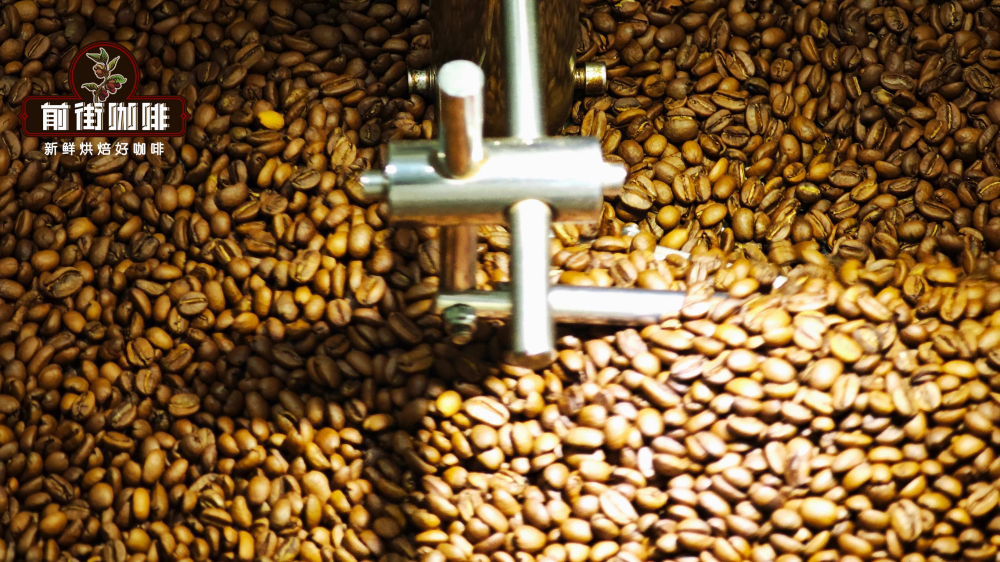
Going further down isFull City Roast, with an Agtron color value of 45, typically dropped just before the second crack becomes dense. By this point, the coffee is already quite dark, with a more intense, burnt, and bitter taste, suitable for those who prefer a strong flavor profile.
French Roast, with an Agtron color value of 35, is usually dropped around the time the second crack becomes dense. At this stage, the coffee bean surface begins to release oils, and the flavor is dominated by intense smokiness and bitterness.
The darkest isItalian Roast, with an Agtron color value of 25, typically dropped around the end of the second crack. At this stage, the coffee beans appear black and glossy, with oils having seeped to the surface, and are mainly used for making espresso.
In reality,coffee with an Agtron value of 65 and above is predominantly bitter in flavor. However, extremely dark roasts such as French and Italian roasts are becoming less common in the market, as modern consumers increasingly prefer roast profiles that preserve the original flavors of the coffee.
If these eight professional roast grades are directly presented to general consumers, it can easily cause confusion. For example, "High Roast" isn’t the darkest, and terms like "City Roast" or "Full City Roast" are difficult for newcomers to understand. As a result, many consumers often feel at a loss when faced with these terms.
It is recommended that the simplest way to distinguish roast levels is by assessing the coffee’s acidity, sweetness, and bitterness. Coffees with noticeable acidity generally fall into the medium-light roast category; those primarily bitter are mostly medium-dark roasts. By using flavor descriptions, consumers can more intuitively understand the roast degree of the coffee.
For example, if the flavor description includes "lemon, citrus, berries" and other acidic fruits, it usually indicates an acidic bean within the medium-light roast range; if it mentions "melon, grapes, mildly acidic fruits," it may be a sweeter bean within the medium-light roast. Meanwhile, flavors with distinct sweetness like "cane sugar, maple syrup, chocolate" often belong to medium-medium-dark roasts, while flavors that are bitter with some sweetness, such as "nuts, dark chocolate, caramel," are typically found in medium-dark to darker roasts.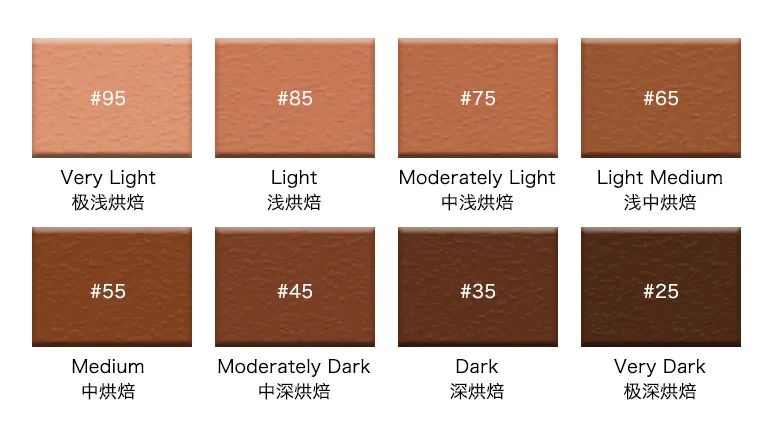
This classification also aligns with actual extraction parameters. Formedium-light roast coffee beans, it is recommended to use water at 90–93°C, with a grind size of 75% to 80% through a #20 sieve. If you prefer more pronounced acidity, you can opt for higher water temperature and finer grind; if you prefer sweetness, slightly lower water temperature and coarser grind are advisable.
As formedium-dark roast coffee beans, it is recommended to use water at 86–89°C, with a grind size of 70% to 75% through a #20 sieve. If the flavor leans toward bitterness, it is suggested to use lower water temperature and coarser grind to balance the overall taste.
In summary, the Agtron color value provides a scientific and practical grading standard for roast levels, allowing us to more accurately grasp the flavor characteristics of coffee. By understanding flavor descriptions and adjusting extraction parameters appropriately, even coffee beginners can more easily find beans that suit their taste preferences.
The above content is compiled by CoffeeHunters, a coffee news website.


