








Introduction:Iced pour-over coffee is beloved for its refreshing taste and vibrant flavors, but subtle details in the brewing process can significantly impact the final outcome. This experiment uses a base of 15 grams of coffee grounds and a 1:10 coffee-to-water ratio to explore how adding ice before or after brewing affects extraction flavor, aroma complexity, and mouthfeel clarity. Using Ethiopian Yirgacheffe washed beans as an example, it provides practical parameters and sensory analysis to help you master more precise iced pour-over techniques.
Iced pour-over coffee has gained popularity in recent years, but how you handle the details often determines the direction of the flavors. This experiment is based on a coffee-to-water ratio of 1:10 (i.e., 15 grams of coffee to 150 grams of hot water) with an additional 100 grams of ice prepared for cooling and dilution. The focus is on observing whether adding the ice to the server before pouring the water or only after the coffee has been brewed affects the final flavor profile.
The coffee used in this experiment is a washed Yirgacheffe from Ethiopia. This region boasts abundant forest resources and is considered one of the gene banks of coffee, as well as the legendary birthplace of the Geisha variety. After undergoing washed processing, these beans exhibit soft white floral notes along with bright fruit tones such as sweet orange, dried apricot, peach, green grape, and yellow lemon—qualities that are well-highlighted through iced pour-over brewing.

In terms of grind size adjustment, because iced pour-over extraction takes longer, the grind is generally set slightly finer than for hot pour-over. For the beans used in this test, if using a hot pour-over method, the recommended grind setting on an EK43s grinder is 10 (approximately 80% passing through a #20 sieve), but for iced pour-over, it’s adjusted to 9 (85% passing rate). This helps improve extraction efficiency at lower water temperatures. Additionally, for light roast coffee, the water temperature is suggested to be controlled between 90–91°C, while for medium to dark roasts, it can be lowered to 87–89°C to balance acidity and body.
The experiment first tested the “ice added first” method: 100 grams of ice were placed in the server beforehand, then the filter cone and paper were set up, followed by pouring in 15 grams of ground coffee, with the scale reset to zero. The first stage involved pouring 30 grams of hot water for a 30-second bloom, followed by pouring 70 grams of hot water in a circular motion from the center outward. Due to the finer grind, the coffee bed absorbed water more quickly, and the drawdown was relatively slower. When the water level dropped halfway, an additional 50 grams of hot water were poured until all the coffee liquid had dripped through, after which the filter was removed. The total extraction time was about 1 minute and 40 seconds. Finally, the filter was gently swirled to ensure thorough mixing and cooling of the coffee with the ice.
The other test group used the “ice added after” method: under the same conditions, hot water and coffee grounds were poured in, following the same sequence of a 30-second bloom, 70 grams of circular pouring, and the subsequent 50-gram pour, maintaining the same total extraction time of 1 minute and 40 seconds. However, the 100 grams of ice were only added to the server after the coffee had finished brewing, then the mixture was swirled to rapidly cool and evenly blend the coffee.
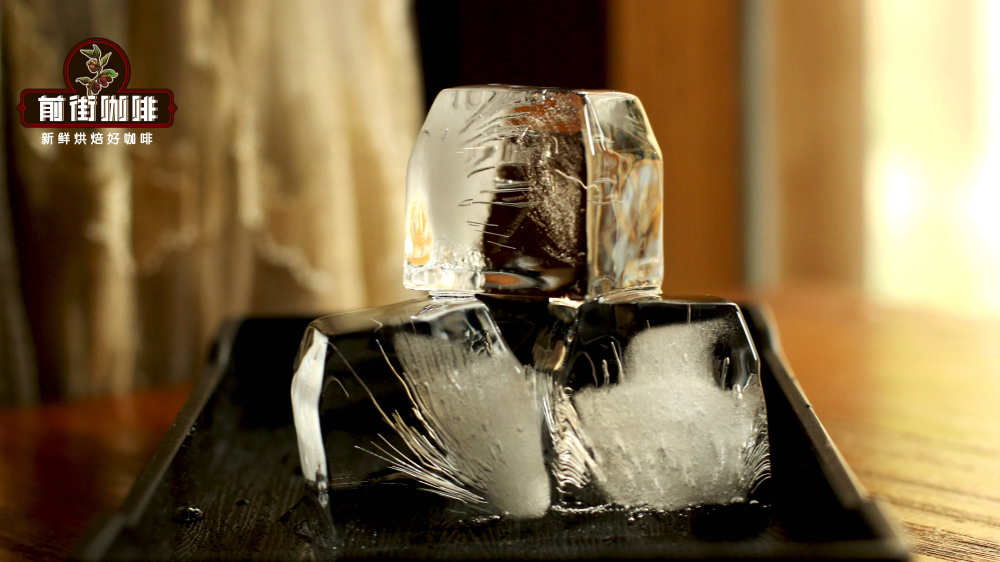
After multiple rounds of tasting and comparison, it was found that there was no extreme difference in the overall flavor profiles between the two methods. But upon closer evaluation, the “ice added first” coffee had a cleaner, crisper mouthfeel, with subtler aromas mainly centered around floral and fruity notes. On the other hand, the “ice added after” coffee exhibited richer, more concentrated aromas, a slightly more layered taste on the palate, and a marginally higher flavor density. However, for casual drinking without direct comparison, the difference between the two is actually quite minimal.
Further observation revealed that in the “ice added first” setup, the ice melted rapidly after the coffee was poured in, leading to a quicker and more even drop in the overall liquid temperature, resulting in a more refreshing mouthfeel. In contrast, when ice was added afterward, the coffee had already cooled somewhat at room temperature before encountering the ice, causing the ice to melt more slowly and thus preserving more substances brought out by hot extraction, leading to slightly stronger flavor concentration.

In summary, adding ice before or after brewing in the iced pour-over process each has its own characteristics. The former tends toward a clean and refreshing profile, suitable for those who prefer a lighter mouthfeel; the latter delivers a more intense and layered experience, ideal for those seeking concentrated flavors. Regardless of which method you choose, as long as you control the grind size, water temperature, and pouring rhythm well, you can brew high-quality iced pour-over coffee. We hope this practical test can provide inspiration and reference for fellow coffee enthusiasts, making home brewing more intuitive and enjoyable.
The above content is compiled by CoffeeHunters, a coffee news website.


