







Introduction:Dirty coffee has become a viral favorite in the specialty coffee scene in recent years, thanks to its unique blend of hot and cold textures and striking visual layering. But do you know how it evolved from a simple iced latte? This article delves into the brewing principles, flavor profile, and the journey of Dirty coffee from Japan, Hong Kong, to Taiwan—helping you better understand this popular espresso-based creative drink.
Dirty coffee is an innovative beverage that combines hot espresso with cold milk. It’s beloved for its visual contrast and layered taste experience as the hot coffee slowly seeps into the chilled milk. The appeal of this small-format drink in the specialty coffee market isn’t just its eye-catching look—it also delivers a rich sensory shift within just a few sips, transitioning from intense to mild, and from hot to cold.
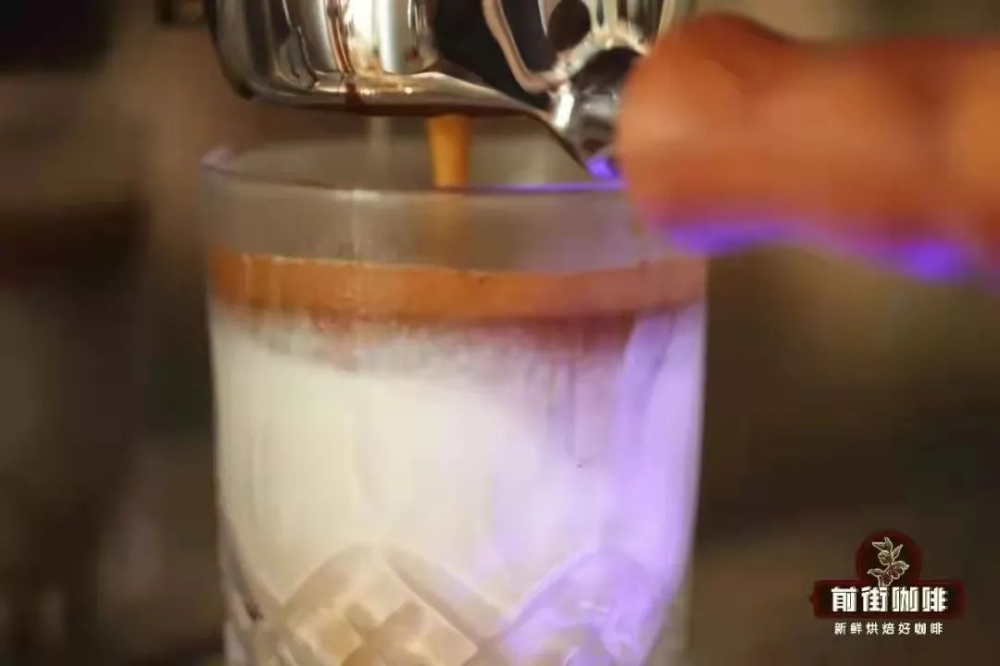
From a technical standpoint, the concept behind Dirty coffee isn’t complicated. A common method involves using a pre-chilled glass cup of about 200 ml, into which 160–170 ml of cold milk is poured. If bubbles form on the milk’s surface, it’s recommended to skim them off gently with a spoon to ensure a clearer visual separation when the coffee is added. The cup is then placed directly under the coffee machine’s spout for espresso extraction. It’s important to position the cup close to the spout to minimize the impact force and prevent the coffee from quickly mixing with the milk—thus preserving the captivating layered effect.
In fact, this presentation style—espresso poured over milk—was often referred to domestically as “layered coffee” in its early days, traceable back to an experimental creation by a Beijing café around 2014. Inspired by techniques from Hong Kong baristas at the time, it remained a niche practice. As the specialty coffee shop culture grew, this method of pouring espresso directly into milk gradually spread within the industry, spawning various Chinese names such as “琥珀” (Amber), “汙” (Stain), “白夜” (White Night), and “髒咖啡” (Dirty Coffee). Among these, “Dirty” ultimately gained widespread popularity due to its intuitive name and viral appeal.
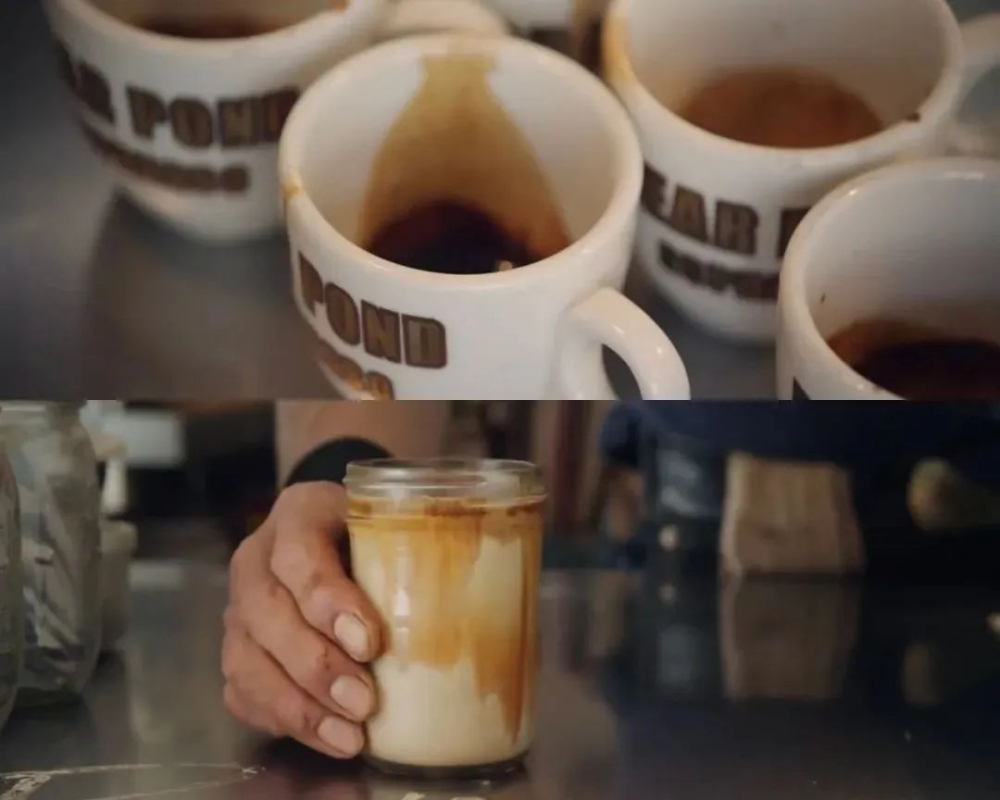
When discussing the origins of Dirty coffee, it was actually popularized by Japanese barista Masayuki Tanaka, who opened Bear Pond Espresso in Kita-Shimizu, Tokyo, in 2009. He featured this distinctive drink on his menu as B.P Dirty. What set this version apart was Tanaka’s use of a proprietary espresso blend called “Angle Stain (Angel’s Stain),” along with his insistence on using a bottomless portafilter. This allowed him to visually monitor the flow rate and pattern of the espresso, thereby controlling the extraction rhythm to create tear-like streaks in the cup.
What made B.P Dirty unique was its use of dark-roasted beans, a high dose of coffee grounds, an extremely low extraction yield, and very high concentration—all served as a double shot. These factors resulted in an unusually slow descent of the coffee into the milk. Even without pre-chilling the cup, it maintained a strong visual layered effect. However, despite its innovation, B.P Dirty didn’t achieve mass popularity in Japan but was later introduced and imitated by coffee professionals in Hong Kong and Thailand, further propelling its international reach.
So, why has such a seemingly simple small coffee become such a widely loved viral drink? The reasons can be summarized into the following three points:
First, Dirty coffee is inherently “viral-ready.” Between 2018 and 2019, the “dirty” food trend was at its peak—for example, the wildly popular “dirty matcha” series capitalized on a “messy” aesthetic. Early Dirty coffee also used milk foam and cocoa powder to create similar visual effects. Though there was no clear or unified standard at the time, it successfully captured consumer attention. (In fact, many viral products have short lifespans—for instance, the once-trendy “forgiveness green” matcha series is now rarely seen.)
Over time, specialty coffee shops helped solidify the definition of Dirty: pouring freshly extracted hot espresso slowly into cold milk to create a visual contrast of “hot meeting cold,” resulting in the so-called “dirty” effect. This striking image is not only dramatic but also highly shareable on social media.
Second, Dirty compensates for the visual shortcomings of traditional iced coffee. Regular iced coffee served in transparent cups typically shows only a monotonous gradient from golden to brown. In contrast, Dirty showcases dynamic beauty—the dark coffee liquid drips drop by drop into the white milk, gradually staining the entire cup. This visual process is highly engaging and has become a favorite subject for coffee enthusiasts to photograph and share.
Lastly, Dirty offers a multi-layered drinking experience. Many iced lattes may also have layers, but consumers often stir them together right away. The charm of Dirty lies in encouraging you to sip and savor the shifts across different stages. A standard serving of Dirty is usually finished in three to four sips: the first sip delivers a bold, warm shot of espresso, with pronounced coffee aroma and a slight coolness from the milk;
The second sip transitions into the blend zone where coffee and milk are not yet fully integrated—you can taste a creamy, smooth flavor reminiscent of milk chocolate. By the third sip, chilled milk dominates, and the coffee aroma becomes a subtle aftertaste. Since no ice is added, the texture remains full-bodied without dilution, and the progression from hot to cold, bitter to sweet, is distinct—this is one of the key reasons why Dirty stands out and has become a classic favorite for many.
The above content is compiled by CoffeeHunters, a coffee news website.


