







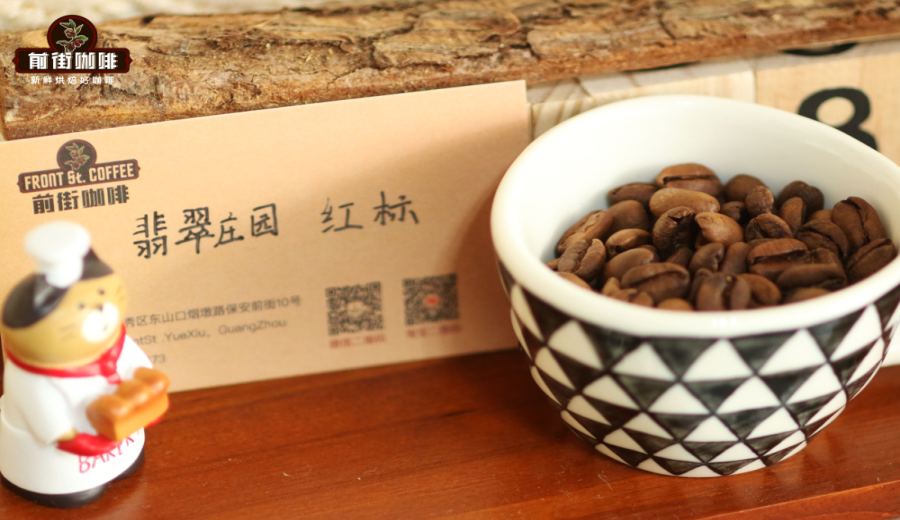
Introduction:Wondering why Red Label Geisha is the pinnacle of specialty coffee and how it differs from other Red Labels? This article explains the grading logic of Panama’s Hacienda La Esmeralda’s Red, Green, and Blue Label Geishas, helps you understand the definitions of Gesha Village’s Gold and Red Labels, and shares the evolutionary story of Geisha—from its Ethiopian origins to becoming the star of international auctions. It also provides pour over parameters and techniques for Hacienda La Esmeralda’s Red Label Natural Geisha, helping you truly appreciate this legendary bean.
Geisha (Geisha) coffee has long been a legend in the specialty coffee world, and the Red Label Geisha produced by Panama’s Hacienda La Esmeralda is the crown jewel of this variety. However, there is more than one producer using the term “Red Label” for their Geisha products—for example, Africa’s Gesha Village Coffee Estate also has a product with the same name. So, what’s the difference? How did Hacienda La Esmeralda manage to elevate Geisha onto the global stage and even turn it into an auction star with sky-high prices? This article will give you a complete understanding of the grading logic behind Hacienda La Esmeralda’s Red, Green, and Blue Labels, analyze the definitions of Gesha Village’s Red and Gold Labels, revisit the journey of Geisha from Ethiopia’s wild forests to Panama’s auction scene, and finally offer pour over brewing suggestions and steps for the Red Label Natural Geisha to help you truly understand this top-tier coffee bean.
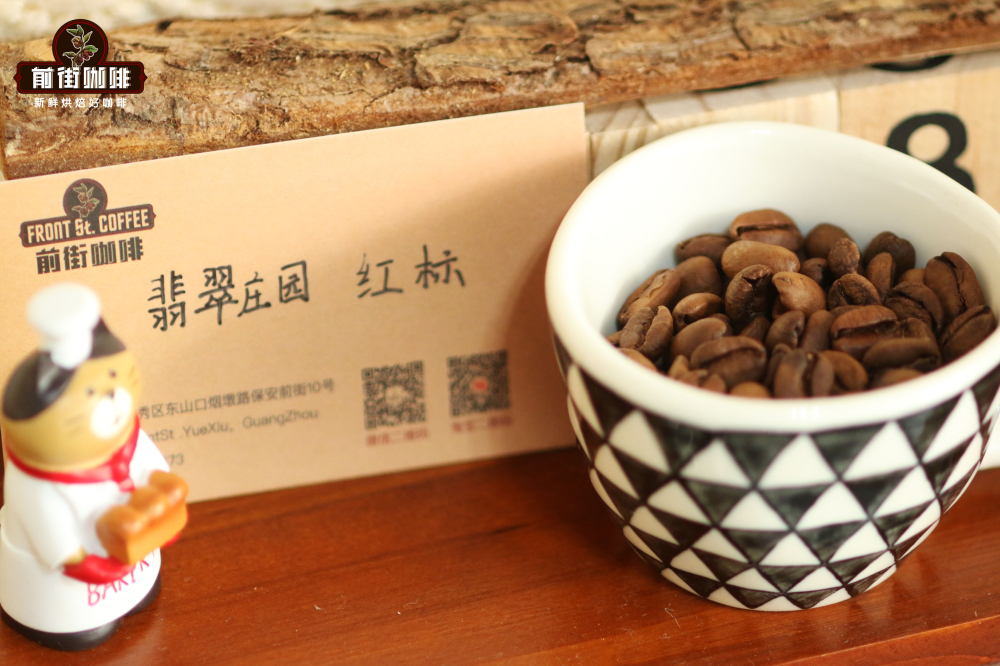
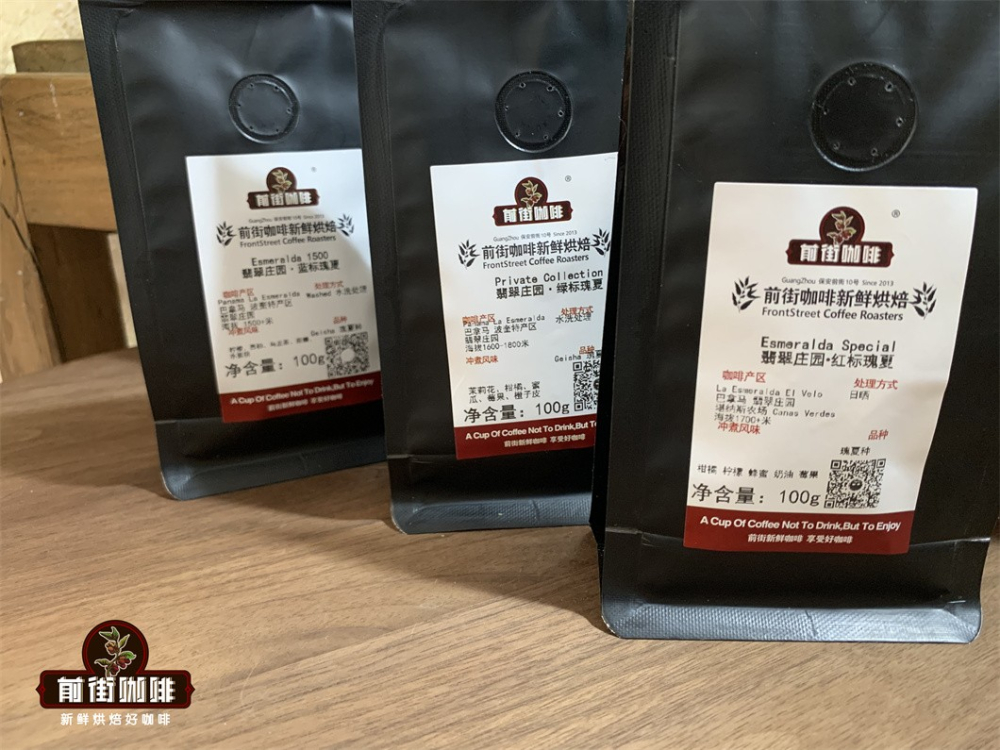
Red Label Geisha refers to the highest-grade Geisha variety coffee beans from Panama’s Hacienda La Esmeralda. These beans are not only highly acclaimed in the market but also frequent champions in various coffee competitions, repeatedly setting new records for the highest auction prices of green beans. So, what exactly is the grade of Red Label Geisha? The Peterson family, founders of Hacienda La Esmeralda, classified Geisha into three main grades—Red Label, Green Label, and Blue Label—based on cupping performance across different plots. This grading system has become an important reference in the industry for evaluating Geisha quality.
The grading from Hacienda La Esmeralda, from highest to lowest, is: Hacienda La Esmeralda Special (also known as the market’s Red Label, some of which include auction lots), Private Collection (marketed as Green Label), and Las Rocas (formerly known as Blue Label). The distinction between these grades is actually based on the background color of the product packaging labels—for instance, the Red Label’s label background is red, making it intuitive for consumers to recognize. Among them, the coffee cherries for Red Label Geisha all come from high-altitude regions between 1600 and 1800 meters, with cupping scores exceeding 91 points, primarily sourced from the estate’s three renowned farms: Jaramillo, Canas Verdes, and El Velo. These high-altitude environments, while increasing the difficulty of planting and harvesting, also create the most captivating floral and fruity aromas and clear flavor layers of Geisha.
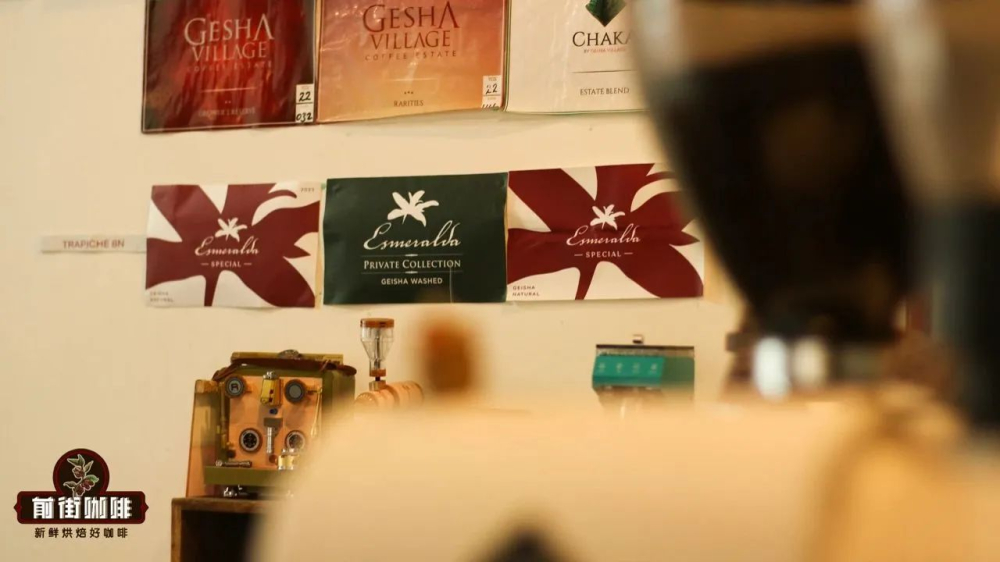
The most representative among Red Label Geisha are the auction lots. Every year, the estate holds auctions for specific plots, and each selected Red Label auction batch has its own unique number, representing the complete harvest from a single plot. For example, the Mario plot in the Jaramillo farm is one of the most well-known auction batches. A previously introduced Red Label Geisha came from the Mario plot, processed using the natural (sun-dried) method, and when brewed, it exhibits rich aromas of honey, citrus, rose, cream, multiple fruits, and black tea—making it a classic representative of the Red Label.
However, because the market often uses label colors to distinguish grades, confusion can easily arise. For example, Africa’s Gesha Village Coffee Estate in Ethiopia also offers a Geisha product with a red-label background, commonly known as “Red Label,” but its official name is “Growers Reserve.” This Geisha comes from the Bench Maji region and is part of Gesha Village’s premium product line, accounting for about 15% of the estate’s total production, with cupping scores required to meet or exceed the SCA standard of 88 points. Above Gesha Village’s Red Label is an even higher-tier “Gold Label (Rarities),” which accounts for just 10% of total production. Each batch can be traced back to a specific plot, making it Gesha Village’s top-tier non-auction Geisha product—equivalent in positioning to Hacienda La Esmeralda’s Red Label, but with more regional rarity characteristics.
So, why has Hacienda La Esmeralda’s Geisha become a global benchmark for specialty coffee? The story begins with the origins of Geisha. Geisha was first discovered in 1931 in Ethiopia’s Kaffa forest in the south, where it was sought as a new disease-resistant variety and was named after the nearby Geisha mountain. By the 1990s, the Peterson family, founders of Hacienda La Esmeralda, acquired the high-altitude Jaramillo farm. At the time, many coffee trees on the farm were affected by leaf rust, but Geisha showed stronger resistance, leading to its gradual cultivation as a separate variety and transplantation to even higher altitudes.
In 2003, Hacienda La Esmeralda first cupped Geisha and discovered its rich floral aroma, clean taste, and lingering notes of berries, citrus, and bergamot—characteristics that laid the foundation for the classic flavor profile of Panamanian Geisha today. The following year, this bean competed in the Best of Panama (BOP) competition under the name “Geisha,” setting an auction record at $21 per pound. Later, its price soared to $804 per pound in 2018 and even exceeded $1029 per pound in 2019, making it one of the most expensive coffee beans in the world.
Geisha’s success also led Hacienda La Esmeralda to become the first estate to implement strict grading for the Geisha variety. They divided Geisha-growing areas into three core plots: Canas Verdes, Jaramillo, and El Velo, with each plot further subdivided into smaller sections to ensure the traceability of each Geisha batch. For example, the Mario and Bosque plots in Jaramillo are star plots that have won awards in international competitions multiple times and are the source of many Red Label Geishas.
So, how should Geisha be brewed for the best flavor? Due to its complex floral and fruity notes, roasters usually opt for a medium-light roast to preserve its bright acidity and layered aromas. However, medium-light roasted beans are harder and require a higher extraction rate to fully express their flavors, so it’s recommended to use slightly higher water temperature and finer grind size, with a 1:16 coffee-to-water ratio. Additionally, to balance extraction and highlight the sweet-acidic profile, the V60 filter cone is recommended. Its unique rib design and spiral channeling help extend the contact time between water and coffee, bringing out a more delicate mouthfeel.
Here are the recommended pour over parameters for Hacienda La Esmeralda’s Red Label Natural Geisha: Use a V60 filter cone, water temperature around 92°C, 15 grams of coffee, 1:16 coffee-to-water ratio, and a grind size close to superfine sugar (about 80% of particles passing through a #20 sieve). First, wet the filter paper and preheat the filter cone, then add the coffee grounds and gently tap to level. The first pour is 30 grams of water for a 30-second bloom; the second pour brings the total to 125 grams, maintaining an even circular motion; when the water level drops halfway, continue pouring to reach 240 grams to complete the extraction, with a total brew time of about 2 minutes. This brewing method fully releases the aroma and layers of Geisha. On the palate, you’ll experience bright acidity with notes of jasmine, citrus, and tropical fruits, followed by a tea-like finish and smooth aftertaste. As the temperature drops, the flavor transitions reveal even more complexity.
The above content is compiled by CoffeeHunters, a coffee news website.


