







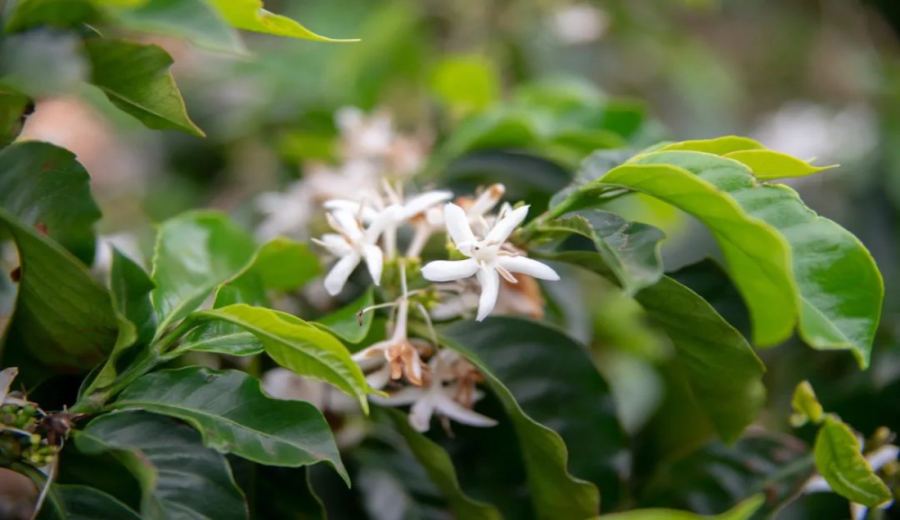
Introduction:Since winning the championship at the Best of Panama (BOP) competition in Panama in 2004, the Gesha coffee variety has become a legendary cultivar in the specialty coffee world. This article delves into the origin of the Gesha variety, the evolution of its name, explores the connection between its birthplace in Ethiopia and the Panamanian Boquete region where it rose to fame, and explains how to use appropriate pour over parameters to fully showcase its delicate flavors such as citrus, floral notes, and honey — an essential guide for specialty coffee enthusiasts and those wanting to gain a deeper understanding of Gesha.
Since winning top honors at Panama’s “Best of Panama (BOP)” competition in 2004 with high scores, Gesha coffee has consistently remained at the pinnacle of the specialty coffee market. It has not only repeatedly set new auction price records but also become a key component in many barista competition winning recipes. This high-altitude-grown coffee is renowned for its unique citrus, floral, and tea-like flavor profile, attracting countless coffee lovers eager to try it.
However, many people are often puzzled by its name when they first encounter Gesha: why is it called “艺妓咖啡” (Geisha coffee) by some in the Chinese-speaking world, and “瑰夏咖啡” (Gesha coffee) by others? In fact, both names refer to the same coffee variety — Gesha. So how did these two names come about, and why did “瑰夏” eventually become the mainstream term?
In the early days in Japan, because the pronunciation of “Gesha” was similar to the Japanese word “芸者 (げいしゃ, meaning geisha),” it was initially transliterated as “艺妓咖啡.” This name then spread from Japan to Taiwan, becoming the common term in the Chinese market in its early days. However, later on in mainland China, Mr. Yuan from the Dreamer Coffee bean company (前咖梦露生豆公司) suggested changing the name to “瑰夏,” a more poetic translation that emphasizes its elegance and rarity, as he felt that the term “艺妓” could evoke unnecessary cultural associations and had no relevance to the coffee itself. Gradually, “瑰夏” became the prevailing usage.
As for the origin of the Gesha variety, it can actually be traced back to the 1930s in Africa. At that time, exploration teams from British colonies discovered this coffee tree near the “Gesha Mountain” in southwestern Ethiopia and took samples back for research. However, it was not specifically named at the time, and only its origin, the Gesha mountain area, was recorded. Later, these coffee tree seeds were introduced to research stations in Kenya and Tanzania. Due to their good resistance to leaf rust, they were further introduced to Panama for variety improvement and adaptability testing.
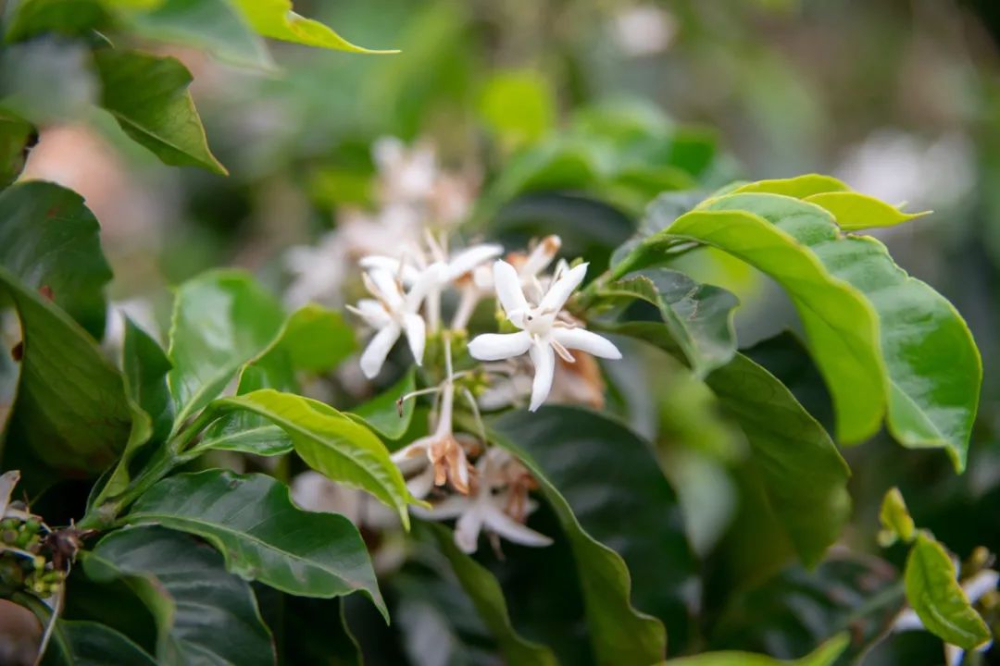
It wasn’t until 2003 that the management team at Panama’s Geisha Estate (formerly known as Hacienda La Esmeralda) unexpectedly discovered during routine cupping that beans produced by certain coffee trees had a flavor profile distinctly different from other sections — notably bright citrus aromas, delicate floral notes, and a crisp acidity. These characteristics caught the attention of the estate owners, who then separated these trees, harvesting and processing them individually.
In 2004, these beans from the special section participated in the BOP competition for the first time and immediately stood out with extremely high scores, winning the championship. They were subsequently sold at auction for a record price of $21 per pound at the time. Genetic testing later confirmed that these coffee trees were indeed genetically identical to the original plants from Gesha Mountain in Ethiopia, and thus they were officially named Gesha — the very Gesha we know today.
As Gesha’s fame spread, more and more farms in Panama began planting this variety. Estates such as Elida Estate, Aurora Estate, Debora Estate, and Nueva Granada Estate have all achieved outstanding results in international competitions with their Gesha offerings. However, when it comes to origin and representative growing regions, none can rival the Panamanian Boquete region, which is also the top choice for many beginners trying Gesha coffee.
If you’ve already purchased a bag of Gesha coffee beans from Panama’s Boquete region and want to brew it at home to achieve a competition-level flavor, mastering the correct pour over parameters is crucial. Since Gesha is grown in high-altitude environments, the beans are relatively hard and dense, and are prone to sinking and clogging the filter basket’s drainage holes during brewing. Therefore, it is recommended to use a grind size with about 78% passing through a Chinese standard No. 20 sieve — similar in coarseness to fine sugar — which helps ensure stable extraction.
It is recommended to use a Hario V60 filter cone, with a coffee-to-water ratio set at 1:16 — that is, 15 grams of coffee grounds to 240 milliliters of water. This ratio maintains a reasonable extraction rate while keeping the overall coffee concentration between 1.15% and 1.25%, better highlighting the delicate flavor layers of Gesha. For water temperature, it is advised to keep it at 91°C to avoid over-extraction caused by excessively high temperatures, which could diminish its subtle citrus and floral characteristics.
In practice, you can use the classic three-stage pour over method: start with pouring 30 grams of water for the bloom, letting it sit for about 30 seconds to allow the coffee grounds to fully expand and release aroma; then proceed to the second stage by pouring water in small circles up to 125 grams, and once the water level drops to about half, continue pouring in circles up to a total of 225 grams; finally, wait for the dripping to finish. The overall brewing time is recommended to be between 2 minutes 10 seconds and 2 minutes 20 seconds, yielding a balanced and layered cup.
With the above parameters and technique, you will be able to fully experience the unique charm of Gesha coffee beans from Panama’s Boquete region: the cup opens with clear citrus and white floral notes, the mid-palate offers a refreshing tea-like sensation reminiscent of green tea, and the finish lingers with a natural honey-like sweetness. The overall flavor is well-layered, with balanced acidity and sweetness — a true representation of a premium specialty coffee worthy of savoring.
The above content is compiled by CoffeeHunters, a coffee news website.


