







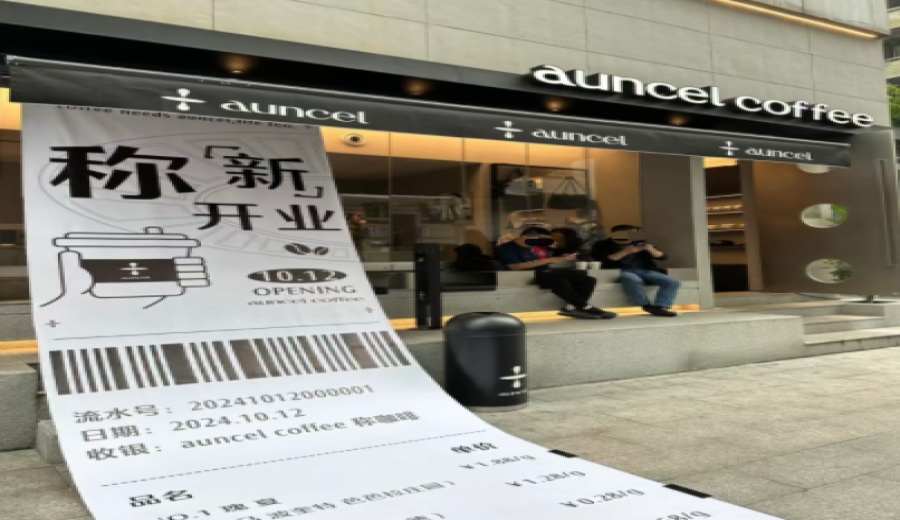
Introduction:A coffee shop in Chengdu has broken away from traditional sales models by introducing an innovative service where customers can purchase coffee beans by weight, with grinding and brewing handled via a conveyor belt assembly line. From bean selection and the visual experience of weighing to a standardized extraction process, the price of each cup varies from just a few yuan up to thirty or forty yuan depending on the coffee variety. This article takes you behind the scenes to explore the practical details of this novel model, its flavor performance, as well as its potential and challenges within the competitive coffee market.
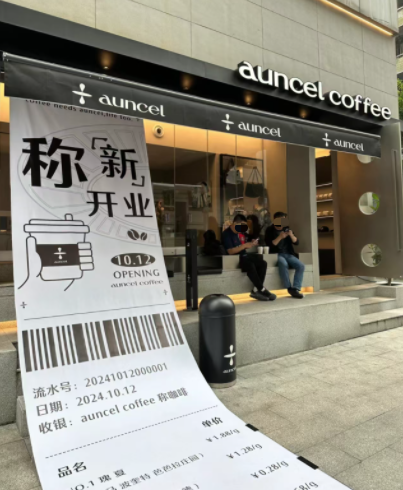
In most coffee shops, customers are accustomed to ordering by the cup, with baristas recommending beans and brewing on the spot. However, a uniquely styled coffee shop has emerged near Tianfu Square in Chengdu’s Jinjiang District—Auncel Coffee (also known as “Weigh Coffee”)—which completely overturns this tradition. This small shop, spanning around 30 square meters with a minimalist black-and-white design and centered around an L-shaped long bar counter, has not only attracted coffee enthusiasts eager for photo opportunities but also sparked widespread discussion for its innovative “coffee by the gram + conveyor belt brewing” concept.
Upon entering the shop, the most eye-catching feature is the L-shaped long bar counter that resembles a laboratory assembly line. Unlike typical cafés, this space neatly arranges over ten professional machines, each responsible for a different stage of the process. Customers first select their preferred coffee beans from a display case—beans sourced from various growing regions and processed using diverse methods.Priced at between 0.28 and 1.88 yuan per gram, the recommended amount is around 15 grams for those who prefer lighter flavors, while 18 to 20 grams is suggested for those seeking a richer taste.
After selecting their beans, customers hand them over to staff for weighing, commencing a truly unique “coffee journey.” The bar counter functions essentially as a miniature assembly line, with three staff members each handling a specific task: weighing, grinding, and brewing. The coffee beans are transported along the conveyor belt to each workstation in sequence, creating a tightly integrated process. From the initial weighing to the final serving of the coffee, the entire procedure takes roughly just three minutes.
During the grinding stage, staff adjust the grind size using the appropriate grinder based on the characteristics of the selected beans and the customer’s preference for hot or cold drinks, ensuring optimal flavor release.The extraction parameters are meticulously fine-tuned by experienced staffaccording to the coffee variety and grind size, guaranteeing that every cup of pour over coffee delivers stable, layered flavors. This semi-automated approach not only improves efficiency but also enhances the visual appeal of the extraction process.
This “factory-style” pour over model has drawn many coffee enthusiasts eager to experience it firsthand. Some customers note that for around ten yuan, they can enjoy flavors comparable to professional pour over brews—offering better value than the common nine-yuan-nine sugar-laden coffees on the market and allowing them to better appreciate the coffee’s complex aromatic layers. Others appreciate being able to watch the entire process—from weighing and grinding to brewing—as a special form of participation and visual enjoyment.
Nevertheless, this innovative model has also sparked some debate. Industry insiders point out that although selling coffee by the gram lowers the barrier to entry and makes specialty coffee more accessible, the highly standardized assembly line operation may impact the interactive experience between baristas and customers. Some even worry that this model could create competitive pressure for independent specialty coffee shops or devolve into a gimmick for equipment displays and product sales, rather than a genuine business model innovation.
In today’s increasingly competitive coffee market, Auncel Coffee’s experiment offers the industry new food for thought. Whether through transparent operations to build consumer trust or leveraging high cost-performance to attract new customer segments, whether this gram-based bean sales and conveyor belt brewing model can sustainably develop still remains to be further validated by the market. If you’re a fan of pour over coffee, why not try it out for yourself and experience this new style of coffee service that combines efficiency with personalization?
The above content is compiled by CoffeeHunters, a coffee news website.


